



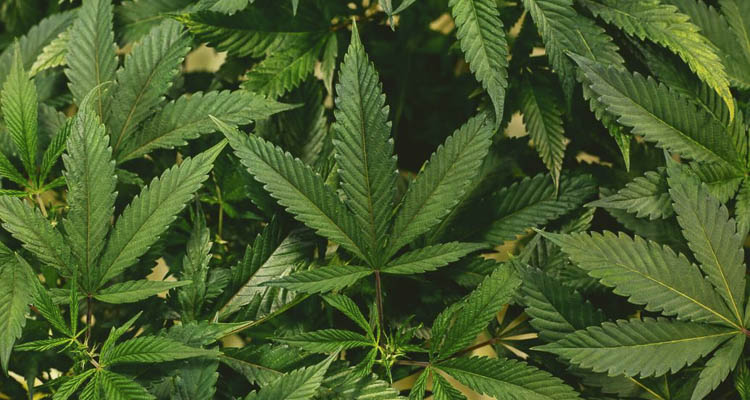
The Justice Department confirmed that the Drug Enforcement Agency is proposing to move marijuana from Schedule I status to Schedule III status under the Controlled Substances Act
Brett Davis
The Center Square Washington
The Biden administration’s move to reclassify marijuana as a lower-risk substance has broad implications for the cannabis industry at large, including in Washington state, a pioneer in the legal cannabis industry.
On Dec. 6, 2012, Washington became the first state in the nation to legalize recreational use of marijuana and the first to allow recreational marijuana sales, alongside Colorado. Washington had previously legalized medical marijuana in 1998.
On Tuesday, the Justice Department confirmed that the Drug Enforcement Agency, agreeing with the U.S. Department of Health and Human Services, is proposing to move marijuana from Schedule I status to Schedule III status under the Controlled Substances Act.
Schedule I status means the federal government thinks there is no accepted medical use and a high potential for abuse. Schedule I drugs include heroin and LSD. Federal law prohibits the cultivation and possession of Schedule I drugs, except for approved research studies.
Marijuana has been a Schedule I drug since 1970.
Schedule III substances are considered to have medical use and moderate to low potential for physical and psychological dependence. Prescription drugs such as anabolic steroids, ketamine and testosterone are in the Schedule III category.
The Justice Department’s proposal means the federal government would recognize the medical use of cannabis, but wouldn’t legalize it for recreational use.
Aaron Pickus, media relations head at the Washington CannaBusiness Association, an organization representing Washington’s licensed and regulated cannabis and hemp business, applauded the federal government’s expected change in marijuana classification.
“This is an important incremental step that will one day improve the lives of patients and better support economic opportunity for those working and investing in Washington’s safe, quality-controlled and regulated cannabis marketplace,” he said in an email to The Center Square.
According to Marijuana Business Daily, Washington’s marijuana market has cooled a little recently but is still robust.
The Evergreen State sold about $1.13 billion in adult-use marijuana through November 2023, down just slightly from the $1.18 billion it sold during the same period in 2022.
Pickus pointed out that moving marijuana to Schedule III has major tax policy implications for state-legal cannabis businesses. If reclassification is ultimately implemented, marijuana businesses can officially take federal tax deductions that they’ve been barred from under an Internal Revenue Service code known as 280E.
“This decision also begins the process to resolve the issue of 280E, a longstanding challenge for legal businesses who were blocked from making normal tax deductions on their federal returns,” Pickus explained.
However, he pointed out that the federal government still needs to address the fact that many financial institutions don’t want anything to do with money from the marijuana industry for fear it could expose them to legal trouble from the federal government.
“We call on lawmakers to advance additional opportunities to support a safe, viable legal marketplace that keeps products out of the hands of kids by adopting the SAFER Banking Act, removing Washington’s ban on access to capital for local businesses and further aligning the regulations governing the legal cannabis industry with the same expectations that workers and business owners in any other legal industry are afforded,” Pickus said.
The Secure and Fair Enforcement Regulations, or SAFER, Banking Act would allow banks to provide services to the cannabis industry in those states where it’s now legal.
Conventional wisdom is that marijuana businesses in Washington and other states are susceptible to and targeted by criminals because they are largely all-cash enterprises.
Another ongoing challenge faced by the marijuana industry in Washington is the growing potency of cannabis products.
This report was first published by The Center Square Washington.
Also read:
- Fiscal fallout: $375 million bond debt indirectly funding operating budget
 Shifting $375 million from a loan fund impacts local infrastructure as Washington state covers operating costs with bond debt, prompting concern among officials and advocacy groups.
 - Lawsuit aims to block new eligibility requirements for WA sheriffs
 Four sheriffs are suing over a state law that sets new eligibility rules, arguing it undermines voter authority by allowing removal for certification issues.
 - Opinion: The growing gap between public voice and political power
 Todd Myers describes how large-scale protest and sign-ins often fail to sway state leaders, and argues authentic influence is most likely found through local action.
 - City of Battle Ground seeks applicants for Salary Commission vacancy
 Battle Ground seeks a resident to join its independent Salary Commission, which reviews compensation and health benefits for local elected officials through 2027.
 - Opinion: Who is winning the race for affordable power?
 Hydroelectric power keeps Washington competitive, but new laws and carbon pricing are driving up electricity costs for residents each year.
 - Vancouver Fire Department assists with Columbia River Marina fire response
 Vancouver Fire Department joined Clark-Cowlitz and Scappoose crews to help fight a vessel and dock fire at Goble Marina, assisting in river operations where one boat sank and another was partially submerged.
 - White House govt. Funding request for 2027 cuts $73 billion
 President Trump’s budget seeks to boost defense funding while cutting $73 billion from agencies like the EPA, NASA, and Agriculture, prompting sharp criticism from Democratic leaders.
