



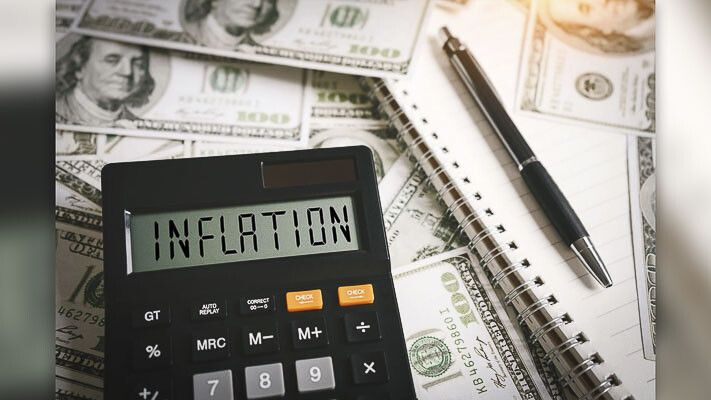
In the Economic and Revenue Forecast Council’s preliminary June forecast, it predicted a national GDP increase of 1.1% in 2023
Logan Washburn
The Center Square Washington
Washington state is predicting an economic “slowdown” in the U.S., according to a recent forecast.
“The forecast expects a slowdown in U.S. economic activity this year and in early 2024,” said Stephen Lerch, executive director of the state’s Economic and Revenue Forecast Council. “Compared to our March forecast, this slowdown has been shifted forward in time.”
In the council’s preliminary June forecast, it predicted a national GDP increase of 1.1% in 2023, 0.7% in 2024, 2% in both 2025 and 2026 then 1.9% in 2027. It based these numbers on May’s Blue Chip Forecast, according to Lerch.
“I don’t think this forecast qualifies as having a recession,” he said. “A commonly used definition is having two successive quarters of negative GDP growth.”
The council predicted Washington’s employment will increase 2.3% this year, and that its employment growth will average 0.7% from 2024 to 2027.
“We expect slower growth during the remainder of the forecast as the U.S. economy slows,” the forecast reads.
Washington’s unemployment rate has been rising since a low of 3.9% in June 2022. While the state’s unemployment declined from 4.6% in February to 4.3% in April, the forecast predicted a peak rate of 5% in 2024. The council expects it will fall to 4.5% by 2027.
At the same time, the state added 30,900 nonfarm payroll jobs from January to April, while the council only expected an increase of 3,200.
“Policymakers have been trying to bring together and balance out the supply and demand for workers,” Paul Turek, state economist for Washington’s Employment Security Department, previously said.
The council also predicts national oil prices will decrease. It predicted in March the price per barrel in the third quarter of 2023 would be $77, but now expects the price will be $74 per barrel. By 2027, the council expects the price will be $63 per barrel.
“Lower oil prices are a positive for Washington and other states that do not have oil wells,” Lerch said. “They enable consumers and businesses to spend less on energy-related expenses and more on other goods and services, or increase saving.”
The Center Square reached out to Turek for comment, but did not hear back in time for publication.
This report was first published by The Center Square Washington.
Also read:
- POLL: After hearing state leaders describe the I-5 Bridge as vulnerable in an earthquake, what is your reaction?
 State and local leaders describe the I-5 Bridge as structurally at risk but recommend drivers continue crossing it while complex replacement plans unfold.
 - Opinion: Historical state income tax and another massive operating budget highlight the end of the 2026 legislative session
 Rep. John Ley details the passage of a state income tax, an expanding $80 billion budget, and new Clark County infrastructure funding following the 2026 legislative session.
 - VIDEO: Legal challenges certain as Gov. Ferguson prepares to sign new income tax
 Senate Minority Leader John Braun and other legislators expect legal challenges and initiative efforts to follow Gov. Ferguson’s signature on Washington’s new income tax law affecting high earners and businesses.
 - Vancouver Fire Department honors firefighters, community members at annual awards ceremony
 Acts of bravery, including river rescues and life-saving interventions by both residents and first responders, were recognized at the Vancouver Fire Department’s annual awards ceremony.
 - ‘Cram the Cruiser’ to benefit Battle Ground and Prairie High Schools
 Officer Phil Anderson’s food pantry at Battle Ground High inspired Prairie High to launch its own, providing snacks and building bridges between students and law enforcement.
 - Opinion: Fighting for transparency in Washington government
 A recent court decision allows Washington lawmakers broad new secrecy over internal records, as advocates report rising obstacles to government transparency and public engagement.
 - New Washington law clarifies what is an ‘election’
 After a court ruling challenged the state’s definition of “election,” lawmakers clarified the law to prevent double voting and maintain the integrity of Washington’s ballots.
