



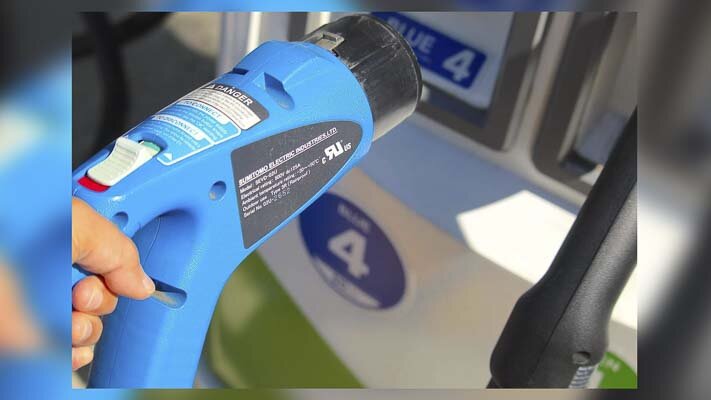
To meet the 3 million mark, Washington state will need to install 250,000 ports every single year starting this year – in 2021, just 460 were built
TJ Martinell
The Center Square Washington
The state of Washington has a goal of ending the sale of new gasoline vehicles by 2035. It also has created a Transportation Electrification Strategy, or TES, to ensure “that electric vehicle incentives and infrastructure are accessible and available to all Washingtonians.”
However, it’s going to need a lot more charging ports.
According to the Electric Vehicle Council, the state will need 3 million by 2035. It’s not yet known whether this includes both private and public charging ports.
Either way, the state has a long way to go.
Currently, there are roughly 4,500 public EV chargers in the state, mostly level 2 charging ports and just under 1,000 direct current fast charging ports.
Charging infrastructure is one of the critical aspects of making EV use en masse practical. Recently US Secretary of Energy Jennifer Granholm went on a road trip across the country to promote EV use, but the fleet hit a snag when there weren’t enough chargers for them all to use.
To meet the 3 million mark, Washington state will need to install 250,000 ports every single year starting this year – in 2021, just 460 were built.
Then there’s the cost, a topic that was raised at the state Electric Vehicle Coordinating Council’s most recent meeting on Wednesday. The council is preparing a draft update to the TES, which will include more details about the EV charger requirements.
Regarding the goal of 3 million charging ports, EV Council Co-Chair Tonia Buell said “my biggest question is how are going to do that?” She also told meeting participants that she did not know of any funding sources at this time that might cover the costs.
Those costs will vary depending on the type of charger installed. The average cost of installation is $300 to $1,500 cost for single EV port level 1, $6,000 for single EV port level 2, and $10,000-$40,000 for DC fast charging port.
However, in an email to The Center Square, Buell wrote that this just represents the equipment side of installation costs, which can be three times higher. According to the Oregon Department of Transportation, the total installation cost for a 350kW DC fast charging port can be as high as $172,000.
While a level 1 charger cost is estimated to be far less, it’s not considered practical for EVs used daily. A 30-minute charge on a level 1 port will only get a vehicle five miles, whereas a DC fast charger can provide enough energy for an EV to go 200 miles or more.
Even if the state only needed to install level 1 charging ports, the estimated price tag would still be $3 billion, and $18 billion if only level 2 charging ports were installed.
The TES draft update will include a forecast of what types of charging ports will need to be built.
Right now, there are 104,000 all-electric vehicles registered in Washington, placing it fourth in the nation in terms of total EVs. Another challenge for the coordinating council is how to get more drivers into EVs, which can cost more than what many households earn annually.
The TES draft update will be available for comment next month. The state Department of Commerce will submit the final draft to the state Legislature by the end of the year.
This report was first published by The Center Square Washington.
Also read:
- Washougal High School students restoring native habitat on campus
 Students in the Washougal High School Green Team are restoring the campus courtyard into a native habitat learning space with support from local grants and community partners.
 - Letter: ‘HSD needs to give a detailed line-item accounting of where the last levy went, and of how they plan to use this one’
 Randall Schultz-Rathbun urges Hockinson School District to provide detailed, transparent accounting of past and proposed levy spending before asking voters for additional funds.
 - Rep. David Stuebe sponsors bill to strengthen enforcement of auto insurance laws and protect Washington drivers
 Rep. David Stuebe has introduced HB 2308, a bill aimed at strengthening enforcement of Washington’s auto insurance laws and increasing accountability for repeat uninsured drivers.
 - See Brush Strokes In Motion this week at RedDoor Gallery in Camas
 RedDoor Gallery in Camas is hosting multiple live art demonstrations through January, featuring local and regional artists working in paint, clay, and mixed media.
 - Letter: Interstate Bridge Replacement’s Park & Ride insanity
 Bob Ortblad criticizes the Interstate Bridge Replacement Program’s proposed Park & Ride garages, arguing the costs are excessive and unlikely to receive federal funding.
 - Opinion: Vancouver councilors responsible for stoking irrational fears in the community
 Clark County Today Editor Ken Vance sharply criticizes a Vancouver City Council declaration on immigration enforcement, arguing it fuels fear, undermines law enforcement, and lacks supporting evidence.
 - Kaiser Permanente employees volunteer at Clark County Food Bank on MLK Jr. Day
 Kaiser Permanente employees volunteered at the Clark County Food Bank on Martin Luther King Jr. Day, inspecting and repacking food as part of a regional day of service.
 wpDiscuz
