



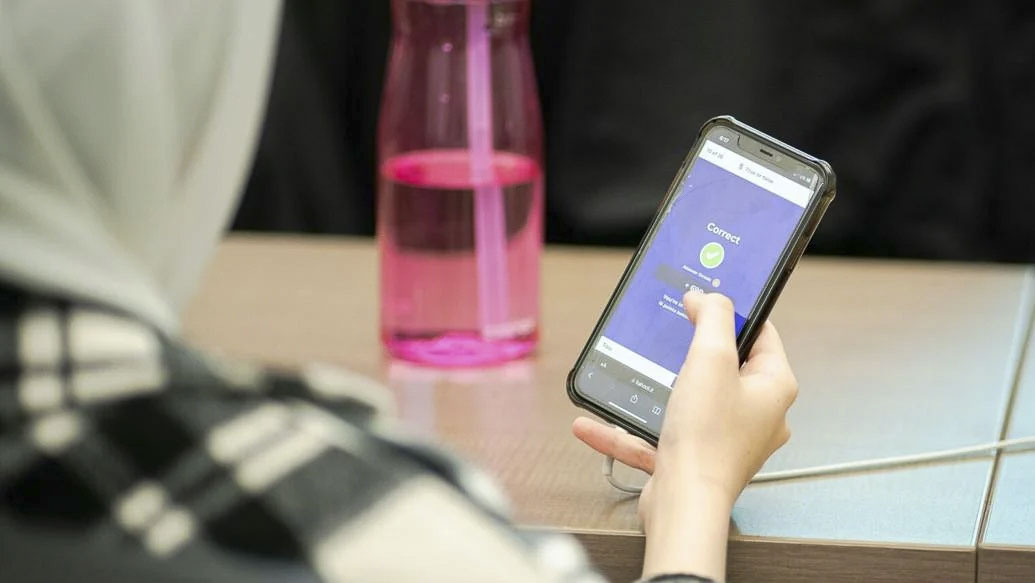
Superintendent Chris Reykdal issued new guidelines this week to encourage districts to implement policies that limit cell phone use during class time, starting in the 2025-26 school year
Carleen Johnson
The Center Square Washington
As more school districts across the country move to ban cell phones during class time, the Office of Superintendent of Public Instruction has issued a call for Washington schools to overhaul their cell phone policies.
Superintendent Chris Reykdal, who is running for reelection, issued new guidelines this week to encourage districts to implement policies that limit cell phone use during class time, starting in the 2025-26 school year.
As previously reported by The Center Square, several states including Arizona, California and Montana are moving to restrict student cell phone use.
Reykdal’s opponent in the campaign for superintendent is David Olson, a longtime member of the Peninsula School Board in Gig Harbor, which issued restrictions on student cell phones more than a year ago.
Peninsula was the first large district in Washington to restrict student phone use.
“I don’t think Reykdal could afford to ignore this,” Olson said during an interview with The Center Square. “He’s doing it, in my opinion, as a knee jerk because he doesn’t have any choice because this is resonating with voters who really like this policy.”
When Olson’s district was initially debating cell phone restrictions, some parents raised concerns about being able to reach their child in an emergency.
“Our students can keep them in their backpacks, turned on but muted, and they can’t have them out during class,” Olson explained. “We also block social media, so even when they’re on their school issued devices they can’t get on social media.”
Olson said test scores have improved, and the district hasn’t had nearly as many student discipline issues since the policy change.
“I had a parent email our school board a couple days ago, and she told me her child was so much improved emotionally and socially because of it, and she was thanking us over the moon,” he said.
OSPI’s guidelines suggest that schools work closely with their communities to develop policies that suit local needs while ensuring consistency across the board. The initiative also emphasizes the need for exceptions for educational purposes and accommodations for students with disabilities, as outlined in their Individualized Education Programs.
“Our challenge to school leaders to revise their cell phone policies is part of a broader strategy to support our students’ mental health and prepare them for success in our digital world,” Reykdal added.
Olson said his district continues to work on issues involving student discipline, which have been a growing concern since the pandemic, but have improved since the cell phone restrictions took effect.
“I’ve met several former teachers who quit the profession because they couldn’t get their students off their phones,” Olson said. “It’s getting better though.”
This report was first published by The Center Square Washington.
Also read:
- Dollars flowing into a pair of hotly contested WA congressional races
 Amanda McKinney leads 4th District GOP field with $523,892 raised, while Braun trails significantly behind incumbent.
 - Final Supplemental Environmental Impact Statement published for Interstate Bridge Replacement Program
 Federal agencies published the final environmental impact statement for the Interstate Bridge replacement project.
 - Belkot appeals judge’s decision to dismiss her case against Clark County
 Belkot’s attorney says the federal appeals court will hear the case in several months after judge dismissed all five claims.
 - Union baseball, softball teams honor military, veterans, and first responders
 Baseball and softball teams combined efforts to recognize military heroes and first responders with ceremonial pitches.
 - Union baseball, softball teams honor military, veterans, and first responders
 Baseball and softball teams combined efforts to recognize military heroes and first responders with ceremonial pitches.
 - Speed cameras designed to bring added safety to work zones
 WSP issued 65,000 infractions in first year, with 59,000 being penalty-free first offenses as program expands statewide.
 - Cathy Doriot retiring as the Ridgefield Chief of Police
 Chief Cathy Doriot expanded Ridgefield PD with detective, sergeants, officers and drone program during her tenure.
