



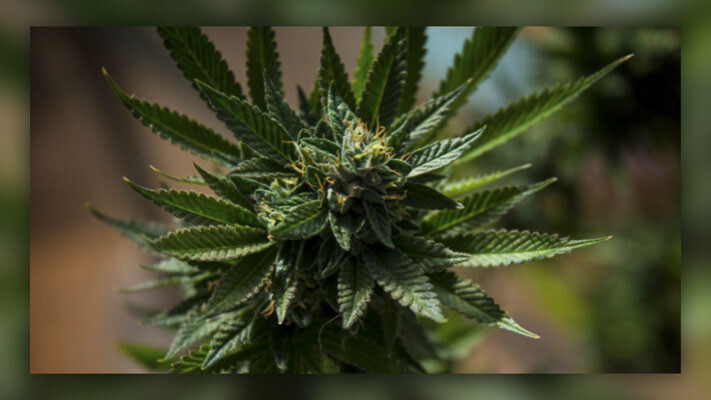
House Bill 5123 will also ban most employers from declining to hire a worker if a drug test shows the presence of ‘non psychoactive cannabis metabolites’
Logan Washburn
The Center Square Washington
Washington state will ban hiring discrimination over pot use starting Jan. 1, 2024.
Gov. Jay Inslee, a Democrat, signed Senate Bill 5123 into law on May 9. The bill will ban most employers from discriminating against a job applicant for their cannabis use “off the job and away from the workplace.” The bill will also ban most employers from declining to hire a worker if a drug test shows the presence of “non psychoactive cannabis metabolites.”
“This is a victory against discrimination toward people who use cannabis,” said state Sen. Karen Keiser, D-Des Moines, in a press release.
The measure passed the state Senate by a vote of 30-18 and the state House by a vote of 56-41. Democratic state Sens. Noel Frame, Sam Hunt, Patty Kuderer, Mark Mullet, Joe Nguyen, Emily Randall, Derek Stanford, Kevin Van De Wege and Lisa Wellman joined Keiser in sponsoring the bill.
State Rep. Suzanne Schmidt, R-Spokane Valley, voted against the bill.
“We really feel like you’re taking rights away from the employers. This is a real safety issue,” she said in a speech on the House floor. “It is the employer’s responsibility to provide a safe work environment, and we feel that this bill is taking that ability away.”
Keiser said she thinks the bill will open the job market to new applicants.
“It makes no sense to limit our state’s workforce by deterring qualified job applicants, especially at a time when the number of unfilled positions is at historic highs,” Keiser said. “This legislation opens doors for people who might otherwise not even put in an application.”
The measure does allow hiring decisions based on “scientifically valid” drug tests that do not detect “non psychoactive cannabis metabolites.” The bill only applies to pre-employment testing and does not preempt state or federal laws requiring drug testing. Employers can require drug testing, including for cannabis, so long as they are not provided the results.
This bill does not apply to jobs with a federal background check or security clearance, in airlines or aerospace, in state law enforcement, in fire departments, in dispatching or emergency medical services, in corrections or where impairment poses “substantial risk of death.”
The Center Square reached out to the offices of Keiser and Stanford for comment but did not receive a response in time for publication.
This report was first published by The Center Square Washington.
Also read:
- Opinion: Washington’s broken trust
 Dave Upthegrove’s 80,000-acre forest ban is forcing rural school districts into state financial control and massive teacher layoffs.
 - Opinion: Cue the revenuers
 State hiring 300 tax collectors this summer even though income tax revenue won’t arrive until 2029.
 - Opinion: Everything about TriMet screams ‘poor management’
 Rep. John Ley examines TriMet’s $850 million operating loss and 75% cost increase for MAX light rail service.
 - Vancouver City Council approves resolution asking IBR to extend light rail to Library Square
 Council wants light rail extended beyond waterfront to connect with C-TRAN at Library Square station.
 - KinderCare Learning Center set to open center in Battle Ground
 State Representatives McClintock and Ley will speak at the 11 a.m. ribbon-cutting ceremony on April 18.
 - Camas-Washougal Community Chest and partners award 37 grants to local organizations
 Three foundations partner to distribute grants funding emergency food assistance, shelter programs, and watershed monitoring.
 - Camas-Washougal Community Chest and partners award 37 grants to local organizations
 Three foundations partner to distribute grants funding emergency food assistance, shelter programs, and watershed monitoring.
 wpDiscuz
