



Currently, nine other states have task forces dedicated to combating organized retail crime
Brett Davis
The Center Square Washington
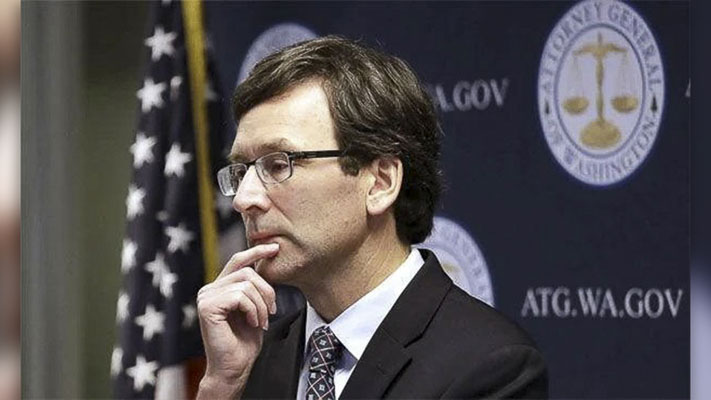
Washington State Attorney General Bob Ferguson is asking the state Legislature for $1.5 million annually to fund the creation of a 10-member organized retail crime unit in his office.
The request follows Ferguson’s convening of an organized retail crime task force earlier this year to improve cooperation between law enforcement agencies in dealing with the matter in Washington. Next year’s 105-day legislative session begins on Jan. 9.
Organized retail crime is the large-scale theft of retail merchandise with the intent to resell the items for financial gain. It typically involves a criminal enterprise employing people to steal large quantities of items from a number of stores and a fencing operation that converts the stolen goods into cash.
An analysis by the Retail Industry Leaders Association estimates organized crime groups stole $2.7 billion from Washington retailers in 2021, the second highest in the nation per capita.
“Washington law enforcement agencies have limited resources to tackle these sophisticated crimes,” Ferguson said in a news release the day before Thanksgiving. “A modest investment in a centralized statewide organized retail crimes unit will hold criminals accountable and deter crimes which cause significant economic harm to our state.”
The day after Thanksgiving, known as Black Friday, marks the traditional beginning of the Christmas shopping season, as well as the start of heightened efforts at preventing organized retail crime.
“As the retail industry continues to recover from the pandemic, there has never been a more critical time in Washington state to address the growing impacts of organized retail crime on public safety and the safety of our customers and retail employees,” Renée Sunde, president and CEO of the Washington Retail Association, said in a statement. “Funding the unit is an important part of a multi-pronged approach to coordinate the efforts of state and local law enforcement, prosecutors, retailers and policymakers at multiple agencies and levels of government.”
In addition to coordinating retail crime investigations across multiple jurisdictions and efficiently deploying resources, the new unit will also be able to prosecute cases referred to the Attorney General’s Office by county prosecutors. Absent such a referral, the office has no jurisdiction over criminal matters.
Organized retail crime, a multibillion dollar per year industry, is a primary driver of retail shrink – the loss of inventory that can be attributed to causes other than sales – across the nation.
According to the National Retail Federation’s latest National Retail Security Survey, shrinkage reached $94.5 billion in 2021, up from $90.8 billion in 2020. The report found that retailers saw an average 26.5% increase in organized retail crime incidents over the previous year, with retailers also noting an uptick in violence and aggression associated with organized retail crime.
Currently, nine other states have task forces dedicated to combating organized retail crime. Arizona and Michigan are among the most recent states to establish similar organized retail crime units in their state attorneys general’s offices.
This story was first published by The Center Square Washington.
Also read:
- Vancouver Police arrest barricaded man
 Terry Meyers, 58, faces multiple assault charges after pointing firearm at neighbor and barricading himself.
 - 49th Legislative District Democrats share their reasons for backing state income tax at Town Hall
 Three Democrat legislators defended the new income tax affecting only those earning over $1 million annually.
 - Letter: Freeze the scope and build the bridge
 Vancouver resident calls for project discipline after 22 years of planning and nearly half a billion in costs.
 - Ekklesia Theatre presents ‘Every Brilliant Thing’
 Interactive theatre production donates 50% of ticket sales to local counseling services.
 - Opinion: Public workers’ First Amendment rights are getting attention – in Idaho, not Washington
 Idaho moves to stop public schools from collecting union dues through government payroll while Washington continues favoring unions over worker choice.
 - Opinion: Lawsuit filed against the unconstitutional income tax in Washington state
 Former Attorney General Rob McKenna and Supreme Court Justice Phil Talmadge challenge the 9.9% income tax in Klickitat Superior Court.
 - Vancouver Police investigate domestic violence homicide
 Vancouver Police Major Crimes Unit investigating after woman found dead with knife wounds on NE Oakbrook Circle.
 wpDiscuz
