




HB 1000 would expand what the state considers a ‘major violation’ of the Uniform Controlled Substances Act to include fentanyl
Tim Clouser
The Center Square Washington
After failing to launch last session, the Washington State Republican Party is attempting to raise the stakes around dealing, trafficking and possessing fentanyl with legislation that, if approved, would lead to harsher sentences.
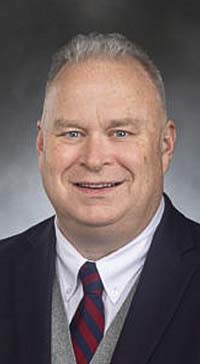
Washington State Republican Party Chair Rep. Jim Walsh, D-Aberdeen, filed House Bill 1000 on Tuesday ahead of the 2025 legislative session. Walsh pushed the same measure during the last session, but his bill never went before a committee for a hearing and failed to make it out of the House.
HB 1000 would expand what the state considers a “major violation” of the Uniform Controlled Substances Act to include fentanyl. Major violations of the UCSA qualify for longer sentences outside of the standard range, meaning the dangerous yet popular opioid would join the list.
According to the proposed bill, the following would be added to the UCSA if approved: “The current offense involved the knowing delivery or distribution of fentanyl, precursor chemicals used in the illicit manufacture of fentanyl, or a counterfeit substance containing fentanyl, and resulted in substantial bodily harm as defined in RCW 9A.04.110, permanent impairment to cognitive functions, or death of another person.”
Walsh told The Center Square that the intent is to restore the felony status for fentanyl-related offenses, mainly trafficking and dealing, but said it could apply to possession as well.
The Washington Supreme Court struck down the state’s drug possession law with the 2021 Blake Decision. The ruling followed a case in which a Spokane woman argued she wasn’t aware there was methamphetamine in the pants that she got from a friend.
The court ruled that the law was unconstitutional because it made unknowing possession illegal; that was until the Legislature convened for a special session two years later to fix the mistake that cost taxpayers millions of dollars, opting to make intentional possession a gross misdemeanor.
“We should have fixed it the first time by inserting the word knowingly into the statute. We didn’t do that. We went on this long adventure of decriminalization and semi-decriminalization,” Walsh said. “You know, I don’t agree with the state Supreme Court very often, but I think in this case, they were on the mark. We just need to add knowingly.”
Fentanyl proliferation has reached crisis levels over the past few years nationwide and is now the leading cause of death for citizens between 18 and 45 years old. According to the U.S. Drug Enforcement Administration, the DEA seized over 77 million fentanyl pills last year and almost 12,000 pounds of powder, the most in any single year and “enough to kill every American.”
Washington’s position along Interstate 5, Interstate 405 and Interstate 90 makes it a gateway for trafficking up north and to the east; last year, the DEA Seattle Field Division seized 3.7 million fentanyl pills and over 280 pounds of powder through the state, Oregon, Alaska and Idaho, according to DEA reporting.
Out of that seized, the DEA took 4.8 million lethal doses off the streets last year in Washington alone. Despite this, at least 1,085 people died from fentanyl in King County, the most populous in the state, a roughly 47% increase from 2022 to 2023, according to DEA data.
“The purpose of the policy change is not to be vindictive toward addicts. We want addicts to get treatment,” Walsh said. “The drug courts are having a hard time incentivizing people to accept diversion. So, let’s make it a felony again. Let’s get some of these people in court and offer them a real choice. You know, get in treatment, get sober, or you’re going to face a felony.”
This report was first published by The Center Square Washington.

Also read:
- ‘Our new normal’: WA confronts another year of drought
 Casey Sixkiller says every watershed in Washington has dropped below 75% of normal water supply.
 - Schools expect minimal impact with Title IX pacts rescinded
 Federal officials rescinded agreements with six school districts, saying previous administrations misapplied Title IX protections.
 - Former WA Supreme Court justice joins legal effort against income tax
 Phil Talmadge and Rob McKenna have joined forces with the Citizens Action Defense Fund to oppose Washington’s new tax on high-income earners, raising legal and constitutional questions.
 - Makeover in store for Congress with flood of lawmakers headed for the exits
 A wave of exits from Congress—over 65 lawmakers—will usher in unfamiliar faces and decrease veteran expertise, shifting the political landscape in Washington.
 - Opinion: Sheriffs fight back
 Four county sheriffs are suing to block a new law giving a governor-appointed board power to decertify and remove sheriffs, bypassing voter oversight in Washington.
