



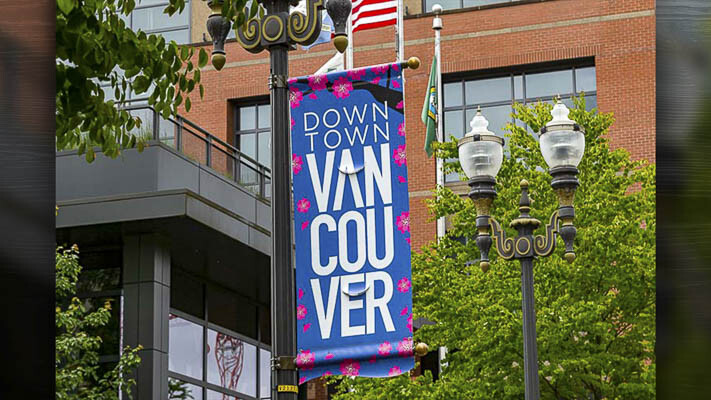
Rep Chris Corry says a Democratic plan of giving cities and counties the ability to increase property taxes by 3 percent a year to raise more revenue is not the way to go
Carleen Johnson
The Center Square Washington
As Washington state Democrats push for a three-fold increase in property taxes to raise revenue for cities and counties, a member of the minority Republican party suggests he has “a better way that does not raise taxes.”
Rep Chris Corry, R-Yakima, says a Democratic plan of giving cities and counties the ability to increase property taxes by 3% a year – compared to the current 1% cap – to raise more revenue is not the way to go.
Instead, Corry’s HB 2336 would reduce the state sales tax by one-half percent and let local governments raise revenues through a voter approved one-half percent sales tax
“I am pushing for a hearing but am not getting any positive feedback right now, though I think this is a great alternative to just go ahead and telling cities and counties raise property taxes. This is net-neutral to the taxpayers which is important to me, especially when you look at ballooning budgets.”
Corry pointed to the fact Washington state has a 3-billion dollar budget surplus and said, “If some of our local cities and counties are struggling we need to give them the option of being able to fund a lot of the mandates we’ve put on them through the last several years.”
“It’s really easy for us in Olympia to say, “go ahead we’ll remove that cap for you,” but that doesn’t address the realities that a lot of our local elected officials are facing.”
During a Tuesday briefing with reporters, Democratic Majority Leaders were pressed on the housing affordability crisis.
“I think everybody would like to see predictability in their budget, said Joe Fitzgibbon, D-Burien. “On one hand I think we hear from folks who say a 3% increase for property taxes is too much, but a 15% increase in rents is too low.”
Corry tells The Center Square, “In a state that has a 3-billion dollar surplus we can fund priorities while also providing some direct tax relief or the ability for cities and counties to not have to come to us asking for money they can do directly.”
His bill was referred to the House Local Government Committee but has yet to receive a hearing, with Feb. 1 being the deadline for bills to pass out of the committee they are referred to.
This report was first published by The Center Square Washington.
Also read:
- Former WA Supreme Court justice joins legal effort against income tax
 Phil Talmadge and Rob McKenna have joined forces with the Citizens Action Defense Fund to oppose Washington’s new tax on high-income earners, raising legal and constitutional questions.
 - Makeover in store for Congress with flood of lawmakers headed for the exits
 A wave of exits from Congress—over 65 lawmakers—will usher in unfamiliar faces and decrease veteran expertise, shifting the political landscape in Washington.
 - Opinion: Sheriffs fight back
 Four county sheriffs are suing to block a new law giving a governor-appointed board power to decertify and remove sheriffs, bypassing voter oversight in Washington.
 - Obituary for Lucille ‘Erma’ Christenson Madore – April 22,1924-March 13, 2026
 Known for her love of music and family, Lucille ‘Erma’ Christenson Madore lived through nearly 102 years and leaves a large, grateful legacy in Vancouver.
 - Fiscal fallout: $375 million bond debt indirectly funding operating budget
 Shifting $375 million from a loan fund impacts local infrastructure as Washington state covers operating costs with bond debt, prompting concern among officials and advocacy groups.
 - Lawsuit aims to block new eligibility requirements for WA sheriffs
 Four sheriffs are suing over a state law that sets new eligibility rules, arguing it undermines voter authority by allowing removal for certification issues.
 - Opinion: The growing gap between public voice and political power
 Todd Myers describes how large-scale protest and sign-ins often fail to sway state leaders, and argues authentic influence is most likely found through local action.
