



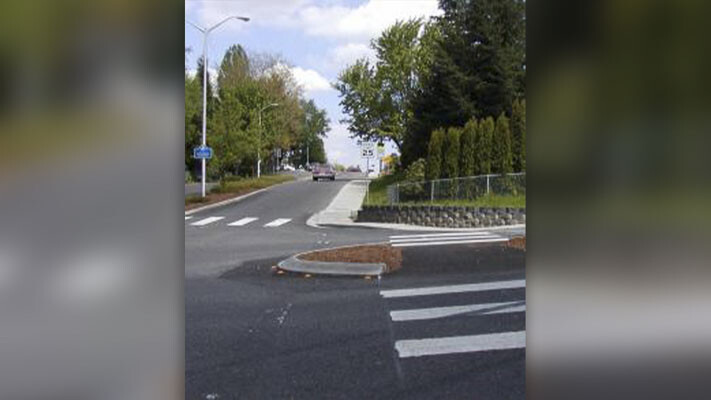
The program will allocate approximately $300,000 for traffic calming projects and has opened the call for project locations phase of the program
VANCOUVER – Vancouver community members are invited to submit traffic concerns and champion project locations for possible selection through the 2023 Neighborhood Traffic Calming Program to help slow traffic and increase street safety in local neighborhoods. The program will allocate approximately $300,000 for traffic calming projects and has opened the call for project locations phase of the program.
Community members interested in pursuing a traffic calming project for their neighborhood street must submit an official request using a simple online web form. Traffic calming applications will be accepted January 1 to February 28, 2023. After project locations are submitted by the end of February, project proponents will work through the program’s evaluation process with final project selection occurring in late October. The comprehensive program document, including timelines and requirements, can be viewed here or online, www.cityofvancouver.us/TrafficCalmingProgram.
The program encourages residents to champion project locations through the competitive selection process for funding and implementation. Past projects have included signing and surface striping, speed cushions/tables, radar feedback signs and street trees.
Vancouver’s Neighborhood Traffic Calming Program works in close partnership with the independent, community-led Neighborhood Traffic Safety Alliance (NTSA). The program offers various resources and project opportunities for community members seeking to slow local traffic, while creating a more livable community. Each year, neighborhood residents are invited to get involved in the program by shepherding projects through the competitive process, working closely with City staff and the NTSA as they proceed.
Guidelines for proposals to the Neighborhood Traffic Calming Program include:
– Residents/neighborhood associations may submit only one application per program year.
– A project proponent must champion the project proposal through the entire evaluation and selection process. If there is no project proponent, the proposal will not be considered for the program.
– Preliminary project cost estimates will be capped at $150,000 per project.
– Infrastructure projects (proposals that include adding a traffic calming device or structure onto or in the street) will be limited to only residential and collector arterial streets.
– Principal arterials will not be considered for the neighborhood program as they have higher traffic volumes and are typically reviewed, evaluated and considered through other City efforts.
– All projects must meet speed/volume criteria and demonstrate community support.
Funding for the Neighborhood Traffic Calming Program is available through a combination of Real Estate Excise Tax (REET), Transportation Benefit District (TBD) fees and multiple other revenue sources. Project costs are coordinated through several different strategies and partnerships within City departments to maximize cost efficiencies.
More details about Vancouver’s Neighborhood Traffic Calming Program, proposal guidelines and project proponent requirements can be found on the City’s website at www.cityofvancouver.us/TrafficCalmingProgram.
Information provided by city of Vancouver.
Also read:
- VIDEO: WA income tax signed into law with legal challenge right behind
 A 9.9% income tax affecting high earners in Washington faces swift legal opposition and a proposed citizen initiative seeking repeal.
 - Income tax signed in Washington with a legal challenge close behind
 A new law will tax households earning over $1 million, with funds aimed at expanding credits for lower-income residents. Lawsuits and challenges are already underway.
 - Peter Silliman announces candidacy for Clark County Council
 Peter Silliman, small business owner and Charter Review Commissioner, is seeking the District 5 seat and promises action on transparency, housing, and park development.
 - Opinion: Defend bail now or face more chaos on our streets
 A proposed Washington court rule would cap bail for most misdemeanors and allow defendants to bypass bondsmen, raising concerns about accountability and public safety.
 - County seeking young people to fill 10 volunteer positions on Youth Commission
 Young people ages 12-19 from across Clark County can now apply for at least 10 open seats on the Youth Commission, providing input on community decisions.
 - State Representatives McClintock and Ley answer questions at town hall in Battle Ground
 Residents voiced rising concerns about property taxes, school funding debates, the impact of new income tax legislation, and major costs tied to the Interstate Bridge plan.
 - As Washington gets an income tax, the fight to overturn it begins
 Opponents are organizing lawsuits and potential ballot measures to challenge the new 9.9% income tax on Washington households earning over $1 million.
