



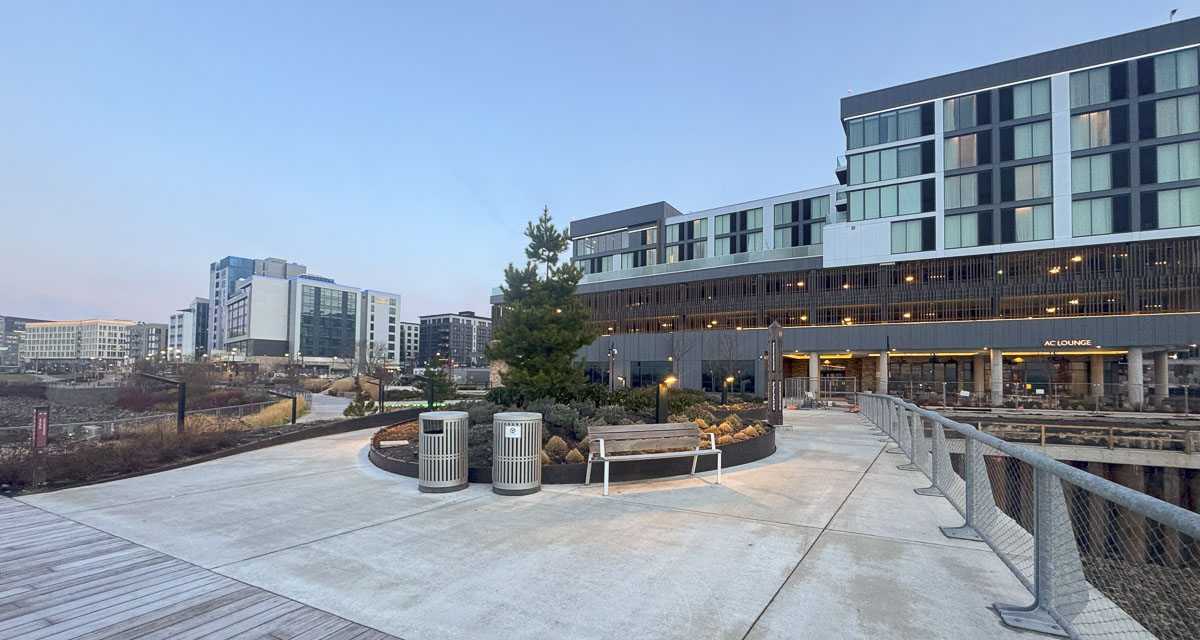
The 0.92-acre site will be converted into a six-story 95-unit building offering a mix of different sized apartments
Spencer Pauley
The Center Square Washington
The city of Vancouver is set to break ground soon on a new affordable housing community in the planned Waterfront Gateway District.
The ceremonial groundbreaking on the project is scheduled for Aug. 27 and marks the first construction milestone in the city’s efforts to develop the 6.4-acre Waterfront Gateway District.
The project also continues the city’s commitment to boost its affordable housing capacity through the Affordable Housing Fund, which voters approved in 2023. The property tax levy renewal increases the Affordable Housing Fund’s allocation from $6 million to $9.5 million annually through 2033.
The tax levy is set at 30 cents per $1,000 of assessed value, so an average-valued home in Vancouver ($510,190) pays approximately $153 annually.
The city dedicated $1.27 million from its Affordable Housing Fund toward the project and sold the land for $1 to ensure affordability, leverage the state’s construction sales tax exemption and reduce impact fees.
The 0.92-acre site will be converted into a six-story 95-unit building offering a mix of different sized apartments.
“This groundbreaking symbolizes more than the start of construction; it is a sign of our commitment to creating affordable housing in Vancouver,” Mayor Anne McEnerny-Ogle said in a statement.
The project will be developed by Colas Development Group and Native American Youth and Family Center.
“The partners assembled on this project represent … values that will shape the future of our Waterfront Gateway and ensure it remains a place where all Vancouver residents can thrive,” McEnerny-Ogle said.
According to a press release from the city, the affordable housing project intends to attract Native American families and individuals earning between 50% and 60% of the area’s median income.
In May, Vancouver awarded a total of $11.15 million to five projects that create and preserve 330 affordable rental housing units as part of its continued affordable housing efforts.
Vancouver’s Waterfront Gateway District redevelopment will connect the city’s Columbia River waterfront with the historic downtown area. The redevelopment also advances the city’s strategic plan by providing housing to the area, a priority, and designing new public spaces for city events and gatherings.
The development is expected to be complete by February 2027.
This report was first published by The Center Square Washington.
Also read:
- Former WA Supreme Court justice joins legal effort against income tax
 Phil Talmadge and Rob McKenna have joined forces with the Citizens Action Defense Fund to oppose Washington’s new tax on high-income earners, raising legal and constitutional questions.
 - Makeover in store for Congress with flood of lawmakers headed for the exits
 A wave of exits from Congress—over 65 lawmakers—will usher in unfamiliar faces and decrease veteran expertise, shifting the political landscape in Washington.
 - Opinion: Sheriffs fight back
 Four county sheriffs are suing to block a new law giving a governor-appointed board power to decertify and remove sheriffs, bypassing voter oversight in Washington.
 - Obituary for Lucille ‘Erma’ Christenson Madore – April 22,1924-March 13, 2026
 Known for her love of music and family, Lucille ‘Erma’ Christenson Madore lived through nearly 102 years and leaves a large, grateful legacy in Vancouver.
 - Fiscal fallout: $375 million bond debt indirectly funding operating budget
 Shifting $375 million from a loan fund impacts local infrastructure as Washington state covers operating costs with bond debt, prompting concern among officials and advocacy groups.
 - Lawsuit aims to block new eligibility requirements for WA sheriffs
 Four sheriffs are suing over a state law that sets new eligibility rules, arguing it undermines voter authority by allowing removal for certification issues.
 - Opinion: The growing gap between public voice and political power
 Todd Myers describes how large-scale protest and sign-ins often fail to sway state leaders, and argues authentic influence is most likely found through local action.
