



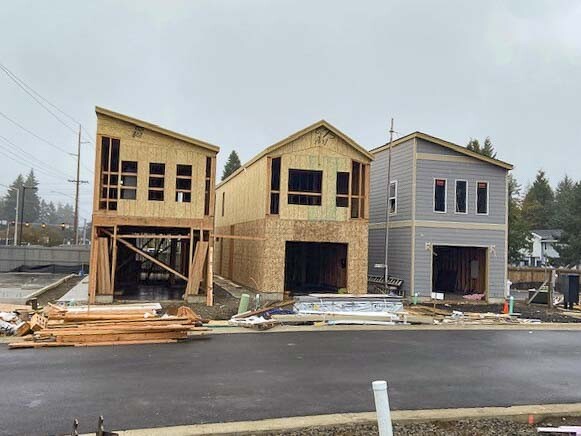
The funding is expected to help create nearly 230 units of essential housing in the city
VANCOUVER – The city of Vancouver has been awarded $3,487,233 in state grants for four affordable housing projects, the Washington Department of Commerce announced on Tuesday. The funding is expected to help create nearly 230 units of essential housing in the city.
The breakdown of grant amounts for each project is as follows:
Datepark Residence – 72 units – $2 million
Datepark Residence will be a 72-unit apartment complex that will offer affordable housing to households experiencing low income in Vancouver. The project will consist of studio, one-bedroom and two-bedroom units in the Harney Heights neighborhood of East Vancouver.
Parkhouse Vista – 20 3-bedroom homes for homeownership opportunities – $54,488
Parkhouse Vista, will provide home ownership opportunities to low-income homebuyers through a community land trust organized by Proud Ground and Evergreen Habitat for Humanity.
Lincoln Place II – 40 units – $492,299
Lincoln Place II is a planned permanent supportive housing development in the Esther Short neighborhood. The project will consist of 40 studio units and onsite, wraparound services for people exiting homelessness.
Waterfront Gateway – 95 units – $940,486
Waterfront Gateway will be a 95-unit housing development located in downtown Vancouver, including a mix of studio, one, two and three-bedroom units for households experiencing low income. The project is a part of the city’s Waterfront Gateway master plan that will provide greater connectivity between the Waterfront and the historic downtown core.
The grants are part of the Department of Commerce’s Connecting Housing to Infrastructure Program (CHIP), which granted a total of $47 million to 43 projects throughout the state. The program’s goal is to help build more housing units more quickly by covering upfront costs of infrastructure and connecting housing to municipal systems.
“These CHIP awards will lower the cost to develop a wide range of much-needed housing in our market,” said Patrick Quinton, City Economic Development director. “The funding supports housing development with wraparound services for tenants that have very low income and need extra supports after exiting homelessness, all the way to affordable homeownership development for first-time homebuyers that will be able to start building generational wealth.”
The projects will provide much-needed housing, contribute to Vancouver’s economic growth and stability, and help create a more inclusive and equitable community.
For more information on the Connecting Housing to Infrastructure Program, please visit the Department of Commerce’s website.
Information provided by the city of Vancouver.
Also read:
- VIDEO: Vote-by-mail rules in WA at risk in SCOTUS election law case
 More than 127,000 Washington ballots postmarked by Election Day but received after could be disqualified under a possible Supreme Court ruling, prompting debate from both parties.
 - Rounding out debate, Gov. Ferguson signs bill addressing retailers’ penny problem
 A new Washington law lets merchants round cash purchases to the nearest 5 cents, aiming to manage change as shortages of pennies affect both businesses and customers.
 - Opinion: State is rightly emphasizing experience and skills, not degrees
 Elizabeth New explains how a new state policy removes unnecessary advanced degree requirements, supporting skills-based employment and broadening opportunities for capable workers.
 - Opinion: The wealth migration is real – which states are benefiting?
 IRS data shows Idaho, Montana, and Wyoming attracted significant wealth from new residents, while Washington state saw a loss of $500 million as its new capital gains tax took effect.
 - Expect delays on SR 14 in Vancouver for guardrail repairs Wednesday
 State Route 14 travelers in Vancouver should plan for morning delays as WSDOT will close two eastbound lanes for guardrail repairs, affecting mileposts 6.0 to 7.0.
 - Clark County Fire District 10 responds to fatal structure fire on NE Fargher Drive
 Emergency crews from multiple agencies responded to a structure fire on NE Fargher Drive in Amboy, where two victims lost their lives despite rescue and medical efforts.
 - Opinion: Voting with the Democrat Party – Back to the future!
 Lars Larson connects the history of election rules to today’s debates, highlighting Supreme Court concerns over counting ballots after Election Day.
 wpDiscuz
