



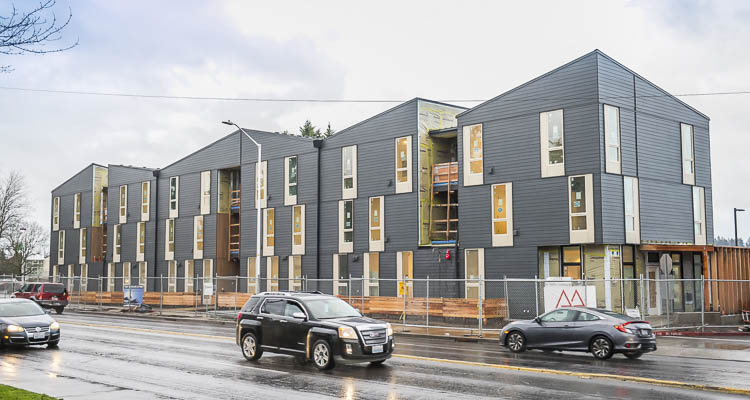
Vancouver is the sole recipient of CCA funds specifically designated for Multifamily Building Efficiency Grants
VANCOUVER – The city of Vancouver has been awarded a $1,030,000 grant from the Washington State Department of Commerce for energy efficiency upgrades in affordable housing. The grant is part of the Multifamily Building Efficiency Grant program and is allocated under the Climate Commitment Act (CCA). Vancouver is the sole recipient of CCA funds specifically designated for Multifamily Building Efficiency Grants.
Sen. Annette Cleveland (D-Vancouver) championed this project, which aims to implement energy efficiency retrofits at six affordable housing locations managed by the Vancouver Housing Authority (VHA). These retrofits will advance the state’s goal of carbon pollution reduction and align with Vancouver’s adopted Climate Action Framework, focusing on high-efficiency appliance upgrades, siding repair, window replacement for increased insulation, air sealing and heat pump installations.
“We are grateful for this significant grant award from the State. This funding not only demonstrates the state’s recognition of the critical intersection between housing and climate resilience, but also underscores our shared commitment to creating safe, sustainable communities for all residents,” said Samantha Whitley, Vancouver Housing program manager. “These upgrades, to be implemented through our housing partner, VHA, will not only enhance the resilience of our housing stock but also improve the quality of life for those we serve, ensuring that they are better prepared to withstand the challenges of a changing climate.”
The project also serves to enhance climate resilience and equity by safeguarding vulnerable residents, particularly seniors and individuals with disabilities, from extreme heat waves and wildfire smoke. The installation of energy-efficient heat pump systems, which provide both air conditioning and heat, will mitigate health risks associated with climate hazards such as extreme heat.
”VHA was very excited to learn that the city was awarded funding. We are working to establish benchmarks to reduce our impact on the environment and this opportunity gets us one step closer to our climate goals,” said Victor Caesar, chief real estate officer at VHA.
Funding for CCA-supported projects is set to be distributed starting Jan. 2025, action that is contingent on the outcome of Initiative 2117 on the November 2024 ballot regarding the Climate Commitment Act.
Information provided by the city of Vancouver.
Also read:
- Vancouver city leaders appreciate the feedback at Monday’s community forum
 Guests filled six tables as Vancouver officials listened to conversations sparked by structured questions touching on connection, barriers, and belonging.
 - Opinion: ‘Stay close, stay informed, stay the course’
 Anna Miller calls on residents to join Clark County Republican Women’s dinner, urging perseverance and unity as local government faces turbulent times.
 - Overnight closure planned on westbound SR 14 Camas Slough Bridge Tuesday
 WSDOT crews will close westbound SR 14 at Exit 14 in Camas to collect bridge deck samples and plan future repairs; detours will be in effect.
 - OII completes investigation of Clark County Sheriff’s Office use of deadly force
 Marc Fogle died after a fatal struggle with Deputy Bryson Layton following a DUI crash; prosecutors will decide on charges after review of OII’s findings.
 - Video: Can accelerated home construction replace need for WA income tax?
 A new report suggests boosting housing production by 20,000 units yearly could bring in over $600 million in revenue, offsetting a portion of proposed income tax revenue.
 - WA Gov. Ferguson to meet with NBA commissioner as hopes rise for Sonics’ return
 The meeting this week comes before a vote that could clear the way for the league’s expansion to Seattle Jake Goldstein-StreetWashington State Standard Washington Gov. Bob Ferguson on Thursday previewed an upcoming meeting with NBA Commissioner Adam Silver ahead of a planned vote on league expansion that could bring men’s professional basketball back to Seattle. …
 - Opinion: Will the income tax cause a drop in charitable giving?
 High-income households leaving Washington after new tax may redirect donations, possibly shrinking local nonprofits’ funding despite the intended deduction benefit.
 wpDiscuz
