



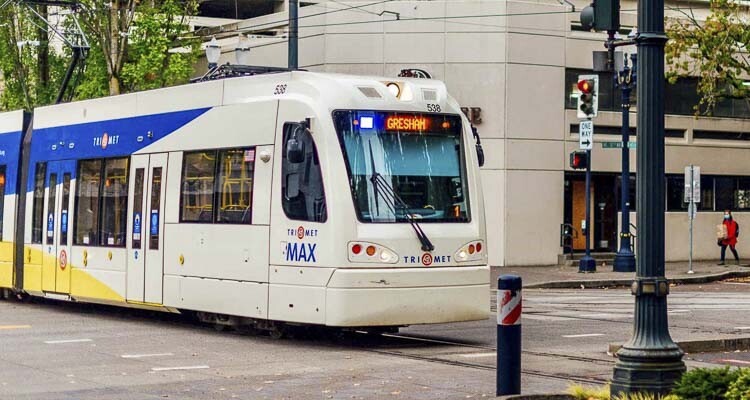
Researchers collaborated with five transit agencies, including TriMet in the Portland metro area
Spencer Pauley
The Center Square Washington
The University of Washington has released a new report that found numerous transit vehicles in the Seattle and Portland areas contained “small amounts” of fentanyl and methamphetamine.
Researchers detected the drugs in the air and on surfaces, according to the the University of Washington School of Public Health’s exposure assessment
Out of 78 air samples collected by UW researchers, 25% had detectable fentanyl and 100% had detectable methamphetamine. Out of 102 surface samples, 46% had detectable fentanyl and 98% had detectable methamphetamine.
However, nearly all of the positive samples contained small amounts of the drugs that are unlikely to cause acute medical conditions, according to the assessment.
It remains unclear to researchers if consistent, long-term exposure poses a risk to health. Transit operators who work full time, 40 hours a week, would be considered under long-term exposure to the trace amounts of fentanyl and methamphetamine.
“A work environment that includes drug use and drug smoke can make it harder for transit operators to safely and effectively do their jobs, regardless of the level of exposure that operators may face,” UW Assistant Professor of Environmental and Occupational Health Sciences Marissa Baker said in a news release. “This research is important, as it draws attention to the stressors and exposures that these essential workers face.”
Researchers collected air and surface samples for fentanyl and methamphetamine from a total of 11 buses and 19 train cars from five transit agencies. Samples were collected over 28 nights between March 27 and June 22.
The assessment was limited in scope and narrowly tailored. Researchers collaborated with five transit agencies, which also provided funding: King County Metro, Sound Transit, Everett Transit and Community Transit in Snohomish County, and Tri-Met in the Portland metro area.
The assessment suggests protective measures including improved ventilation and air filtration, enhanced cleaning practices and operator training on agency protocols around the use of drugs on vehicles.
“Even at a level that is considered ‘safe,’ it can still be stressful to see drug use in your workplace,” Baker added. “Taking steps to protect operators will benefit their physical and mental well-being at work.”
Sound Transit Chief Executive Officer Julie Timm said the agency is relieved to hear from public health officials that the study results indicate there is no public health risk on transit. She added that Sound Transit will continue to enact measures “to continuously, proactively, and equitably improve our safety and environmental conditions.”
This report was first published by The Center Square Washington.
Also read:
- State Representatives McClintock and Ley answer questions at town hall in Battle Ground
 Residents voiced rising concerns about property taxes, school funding debates, the impact of new income tax legislation, and major costs tied to the Interstate Bridge plan.
 - As Washington gets an income tax, the fight to overturn it begins
 Opponents are organizing lawsuits and potential ballot measures to challenge the new 9.9% income tax on Washington households earning over $1 million.
 - Battle Ground Police arrest suspect in fatal 2025 crash
 Laboratory results from a blood sample collected in 2025 provided probable cause for police to arrest Michael T. Smith, more than a year after the Battle Ground crash.
 - Vancouver Police seeking missing person
 Vancouver Police are searching for 62-year-old Carrie Ann Winters, who was last known to be near Frenchman’s Bar in west Vancouver. She has distinctive tattoos.
 - VIDEO: WA diesel hits record $6.53, crushing truckers and school budgets
 With diesel nearing $6.53 per gallon in Washington, trucking businesses and school districts now confront sharply higher fuel expenses affecting budgets and workers.
 - WA’s status solidifies as one of the most expensive places in US
 A new study shows Washington outpaces most states on cost of living, with metrics revealing a sharp rise in daily expenses and major metro areas ranking among the nation’s most expensive.
 - Opinion: Someone explain the Democrat Party to me please
 Lars Larson criticizes Democrat politicians for shutdown threats, Homeland Security funding refusals, and positions on election laws, housing, and gun rights.
