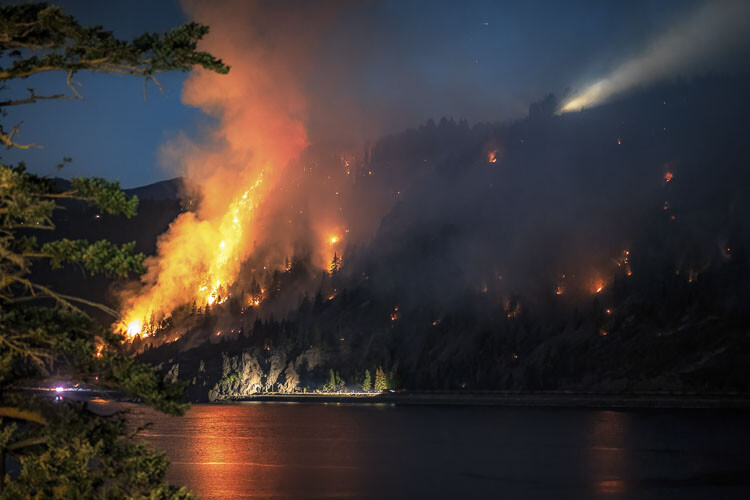
The fire along the Columbia River in Skamania County grew to 556 acres and was just 5 percent contained by Thursday
Logan Washburn
The Center Square Washington
Washington state’s Tunnel 5 wildfire has burned more than 550 acres in less than a week.
“Boy, has it been a week,” said Skamania County Sheriff Summer Scheyer at a Wednesday community meeting. “It was absolutely incredible to see the fire response and how quickly it all fell together.”
The fire along the Columbia River in Skamania County grew to 556 acres and was 5% contained by Thursday, according to the National Wildfire Coordinating Group’s Inciweb database. More than 460 personnel are fighting the fire, and firefighters are preparing for higher winds.
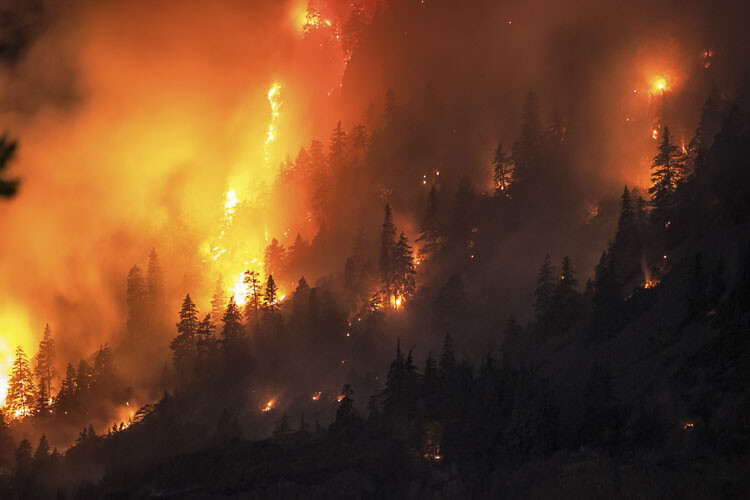
“Firefighters worked to prepare structures in the western portion of the fire in anticipation of increased winds over the next couple days,” reads a fire update. “On the eastern fire edge, fire crews will continue to improve containment lines and construct hoselays to deliver water.”
On Thursday, officials changed Skamania County evacuation orders, with a reduced Level 3 evacuation still around the fire and Level 2 evacuations on its western and eastern edges.
In a Level 1 evacuation, residents should be aware of the danger that exists in their area and monitor local media outlets for information. A Level 2 evacuation indicates a high probability of a need to evacuate. A Level 3 evacuation means danger to the area is current or imminent, and immediate evacuation is advised.
The Skamania County Sheriff’s Office will post updates on its Facebook page. An evacuation center has been set up at the Skamania County Fairgrounds in Stevenson at 710 SW Rock Creek Drive.
Washington State Route 14 is closed from mile markers 56 to 65 due to fire activity, according to the update. Officials also set a temporary flight restriction above the fire. Than includes drones, which are never allowed to fly over wildfires because they could impede first responders.
“Travelers should use caution,” the update reads. “Recreationalists and boaters in the Columbia River in this area should use extreme caution and avoid areas where aircraft are dipping in the river.”
Helicopters, “scooper planes” and “fire boss” air tankers will continue to cool and slow the fire spread. Washington resources fighting the fire include 39 engines, 14 water tenders, 10 crews, six dozers and five helicopters. Responders in “initial attack” teams are prepared to help local agencies.
Scheyer said the fire had escalated to a “Type 2” incident requiring more resources.
“The increase in firefighters came within hours,” she said. “They’re bringing out more state resources.”
The fire started more than 2 miles west of White Salmon on Sunday. Firefighters responded just before 11:30 a.m. that saw hot and windy conditions on “extreme terrain” cause the fire to spread rapidly during the afternoon.
The fire’s cause is currently under investigation.
“I know there are no words to comfort you,” Scheyer said. “We have your backs, we will do everything in our power to help.”
Washington spent $83 million on average on fire suppression annually from 2015 to 2019, according to Oregon Public Broadcasting. In 2021, it dedicated $500 million over eight years to fire preparedness and prevention.
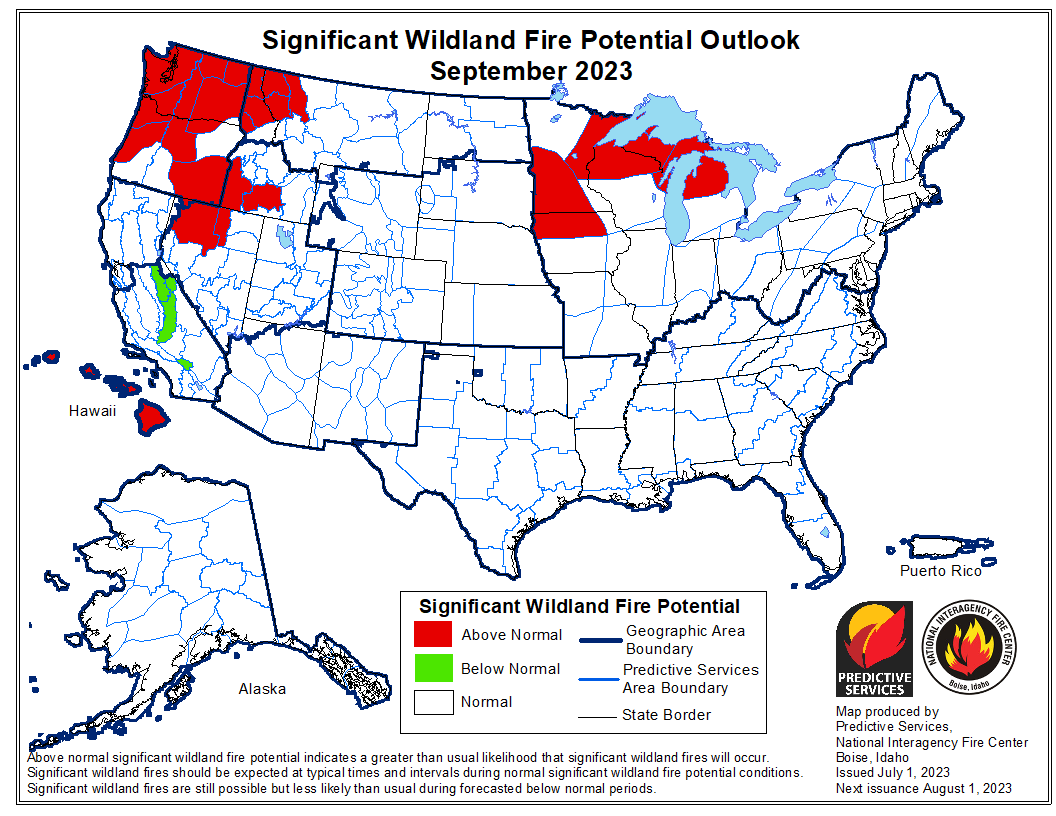
The National Interagency Fire Center predicts virtually all of Washington will see an above normal fire risk from July to September.
This report was first published by The Center Square Washington.
Also read:
- VIDEO: WA diesel hits record $6.53, crushing truckers and school budgets
 With diesel nearing $6.53 per gallon in Washington, trucking businesses and school districts now confront sharply higher fuel expenses affecting budgets and workers.
 - WA’s status solidifies as one of the most expensive places in US
 A new study shows Washington outpaces most states on cost of living, with metrics revealing a sharp rise in daily expenses and major metro areas ranking among the nation’s most expensive.
 - Opinion: Someone explain the Democrat Party to me please
 Lars Larson criticizes Democrat politicians for shutdown threats, Homeland Security funding refusals, and positions on election laws, housing, and gun rights.
 - CCSO to conduct search related to 1971 disappearance of Jamie Grissim
 Clark County Sheriff’s Office is coordinating a targeted search in Dole Valley, aiming to recover the remains of Jamie Rochelle Grissim, missing since 1971.
 - Business Profile: Columbia River volleyball coach teaches The Elite Competitor
 Bre Smedley co-founded The Elite Competitor to help young athletes handle the mental demands of sports by offering support, resources, and ongoing training for players, parents, and coaches.
 - POLL: Do you agree with requiring board members to follow council direction?
 Disagreement among county councilors centers on whether C-TRAN board members should reflect the council’s collective wishes or act independently, highlighting ongoing concerns about public accountability.
 - High-value WA home listings increase by 65% after income tax passage
 After lawmakers approved an income tax targeting millionaires, listings for homes priced at $2 million or more jumped 65 percent compared to last year, with experts urging caution about interpreting the spike.
 wpDiscuz