



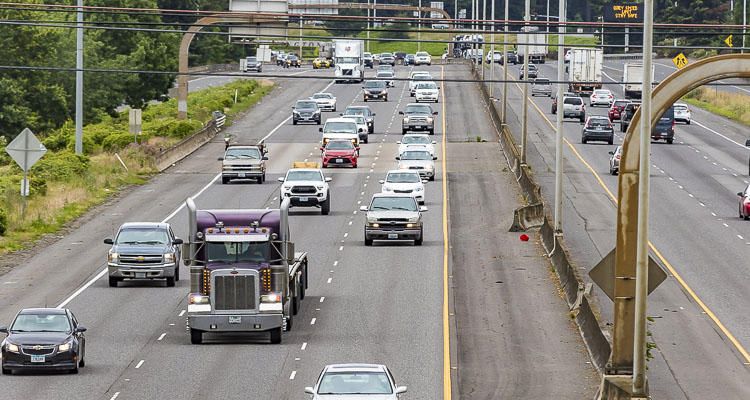
Virtual meeting takes place Dec. 13 and 14
OLYMPIA – The Washington State Transportation Commission will cover several topics at its Dec. 13 and 14 meeting, including statewide traffic safety challenges, a statewide road usage charge program, and approaches to addressing possible shortfalls in fuel funding at Washington State Ferries.
The meeting starts at 9 a.m. both Tuesday, Dec. 13, and Wednesday, Dec. 14. This meeting will be virtual using Zoom. People interested in attending can register on the Commission’s website. TVW will broadcast the meeting live.
The commission will hear from the state Traffic Safety Commission on Tuesday, December 13 about alarming increases in fatalities and injuries on our roadways, suggesting the time has come for significant changes in how to address roadway safety. The Traffic Safety Commission will share current safety trends and possible needed policy changes.
Also on Tuesday, the commission will hold a work session on current research, testing and preparations for a road usage charge program in Washington state. This will include reviewing and selecting recommendations on how to advance a pay-per-mile system. The commission’s recommendations will be provided to the Legislature for consideration in the 2023 legislative session.
Some further highlights of the commission’s two-day meeting include:
- Federal report on the impacts of driver assist vehicle technology: The Insurance Institute for Highway Safety will share findings of a recent study on how people use driver assist technology in their daily driving, and the risks that emerge from over reliance.
- Tolling equity programs across the US: An overview will be provided on the latest approaches to achieving relief for low-income drivers and increasing equity in tolling from across the US.
- Funding potential ferry fuel shortfalls and ferry performance: Results from a recent survey of the Ferry Riders Opinion Group panel around general performance of the ferry system during the summer season will be shared. Also, results will be provided from a recent public outreach process that gathered input statewide on how to address shortfalls in the state ferry fuel budget when resources run short.
- Reconnecting communities: An overview of the impacts created when state highways serve as community main streets will be presented. Recent improvement projects done by the city of Bothell to reconnect and revitalize the downtown and increase housing options will be highlighted.
The commission will take public comment at 11:15 a.m. Wednesday, Dec. 14. Those wishing to speak can sign up during the meeting by posting their name in the Q&A box on-screen. Written comments can also be submitted via email at: transc@wstc.wa.gov.
For more information about the commission and a complete meeting agenda, visit the commission’s website: www.wstc.wa.gov.
Also read:
- Opinion: California’s $20 fast food minimum wage creates less jobs and lower income
 Study data show California fast food workers now face fewer shifts, higher menu prices, and widespread automation after the $20 wage hike.
 - Gov. Ferguson signs law to undo WA estate tax increase enacted last year
 Washington rolls back its estate tax hike, restoring previous rates and prompting uncertainty around $340 million in expected revenue for education.
 - Vancouver house fire displaces residents
 Crews from Vancouver Fire Department stopped a living room blaze from spreading, but five residents were forced out due to lingering smoke.
 - VIDEO: Vote-by-mail rules in WA at risk in SCOTUS election law case
 More than 127,000 Washington ballots postmarked by Election Day but received after could be disqualified under a possible Supreme Court ruling, prompting debate from both parties.
 - Rounding out debate, Gov. Ferguson signs bill addressing retailers’ penny problem
 A new Washington law lets merchants round cash purchases to the nearest 5 cents, aiming to manage change as shortages of pennies affect both businesses and customers.
 - Opinion: State is rightly emphasizing experience and skills, not degrees
 Elizabeth New explains how a new state policy removes unnecessary advanced degree requirements, supporting skills-based employment and broadening opportunities for capable workers.
 - Opinion: The wealth migration is real – which states are benefiting?
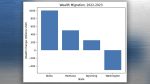 IRS data shows Idaho, Montana, and Wyoming attracted significant wealth from new residents, while Washington state saw a loss of $500 million as its new capital gains tax took effect.
 wpDiscuz
