



Too many drivers don’t seem to care, put others and themselves at risk
Paul Valencia
ClarkCountyToday.com
Frustrated might best describe the feelings of those in law enforcement who deal with impaired drivers.
The message is loud and clear. Don’t drink and drive. Don’t get behind the wheel after smoking weed. Alcohol and prescription drugs do not mix.
The message is out there. Receiving the message, however, is not a sure thing.
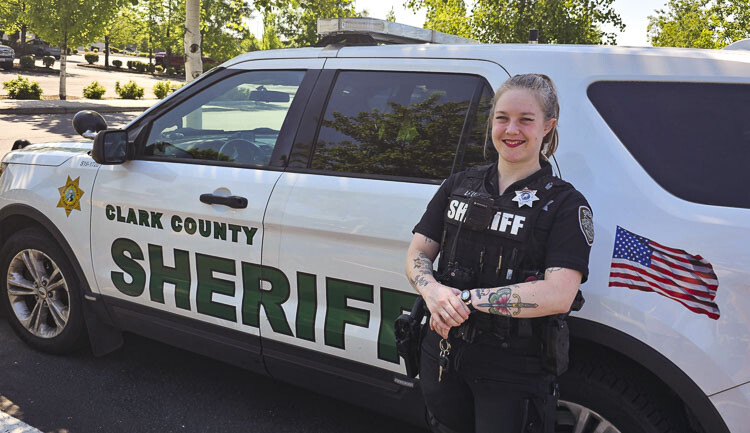
Det. Bethany Lau of the Clark County Sheriff’s Office said she and her colleagues have seen a rise in chargeable cases dealing with impaired driving in recent years. She has heard folks claim they drive better when they are high. Or, being just a little impaired is not significant enough to bring charges.
“If you really think it’s not a big deal, you can come with me to give the death notification to the family,” Lau said. “We can just tell them, ‘They were just driving a little drunk. It’s not a big deal.’ Then you can tell me what you think about that.”
Lau is a trained professional, a detective with the county’s traffic homicide unit and drug recognition expert. She also helps with Target Zero in its mission to get people to be safer on the roadways.
Target Zero is a statewide campaign with a goal to have zero deaths on state highways and roads by 2030. August’s emphasis for Target Zero and law enforcement is impaired driving.
Lau and her colleagues know how to spot impaired drivers. They wish they didn’t have to, but here we are in 2023, and people continue to get behind the wheel when they should not. Just this week, Lau said, a driver was arrested in Clark County with a Blood Alcohol Concentration (BAC) level that was more than four times the legal limit of .08.
“At the end of the day, I don’t want to arrest anyone for DUI. I don’t want to arrest them for anything. I’d rather they just be driving safer,” Lau said. “Because it is not about getting in trouble. It’s about hurting somebody else. It has nothing to do with the trouble you can get into … but can you live with yourself if you hurt somebody else? Can you live with the consequences of killing someone? There’s really no excuse for it.”
The driver that had a BAC of .353 this week? That is an extreme example.
Lau said what is just as frustrating is dealing with drivers who are at, just above, or sometimes just below the legal limit. They are the ones who think they are fine to drive, but they are not.
She made it clear that one can still be impaired even when below the .08 legal standard. Especially when there is a mixed bag of impairments being used.
“Polydrug use is going up,” Lau said. “People aren’t just drinking alcohol and driving. They’re drinking alcohol and smoking weed. Or, they’re smoking weed and taking prescription pills.”
A BAC test cannot determine all of that. Which is why law enforcement officers have other ways to determine impairment.
“It’s really understanding what impairment is, what’s safe,” Lau said.
Someone who has a .05 BAC could still be impaired, too. Lau said she knows that there have been lobbying in the past to get the state to change the law for 0.05 to be considered over the limit for alcohol. She and some of her colleagues would support such a change.
“Even at .05, you can be showing horizontal gaze nystagmus,” she said, referring to the jerking of one’s eyes, a symptom that someone is impaired.
That is why law enforcement officers give suspected drunk drivers an eye test.
“Every time it jerks it is actually your vision not working for a second,” Lau said. “You physically cannot see the roadway. You can be showing signs of impairment at a much lower level than at .08.”
Alcohol also makes one feel better, or invincible. Well, they also feel like they can drive, when they should not.
The plan should be to have a plan. If you know you are going to be drinking, or smoking weed, have an alternative way to get home. Call a taxi. Or a ride share. Designate a sober driver. Make a plan before going overboard.
Sadly, Lau said, too many people who are not four times over the limit, but right at the limit, or maybe just below the legal limit but still impaired, are getting into their cars anyway. Then they don’t see the pedestrian. Or the stop sign.
“That’s going to happen when you have horizontal gaze nystagmus,” Lau said. “You’re going to have a harder time recognizing things. Your response time is slower. You might have seen it, but a lot slower, so instead of putting your brakes on sooner, it’s later, and you still crash.”
Or hit a pedestrian.
People have a misunderstanding that ‘If I’m not an oh-eight (.08), I’m OK.’ You’re not,” Lau said. “They are still making not-great decisions because their mental faculties are impacted. You don’t have to have that high of a BAC to be impacted and impaired.”
Lau and her colleagues visit local high schools to address new and soon-to-be drivers. But all drivers, at any age, should be reminded of the dangers.
“I don’t know how much people honestly think about what would happen if they did get behind the wheel (while impaired),” Lau said.
They could kill a stranger. They could kill a friend. They could kill themselves. The legal troubles, as bad as they can be, are nothing compared to the worst that could happen.
“It’s about getting home alive and making sure everyone else’s family members get home alive,” Lau said.
Also read:
- Former WA Supreme Court justice joins legal effort against income tax
 Phil Talmadge and Rob McKenna have joined forces with the Citizens Action Defense Fund to oppose Washington’s new tax on high-income earners, raising legal and constitutional questions.
 - Makeover in store for Congress with flood of lawmakers headed for the exits
 A wave of exits from Congress—over 65 lawmakers—will usher in unfamiliar faces and decrease veteran expertise, shifting the political landscape in Washington.
 - Opinion: Sheriffs fight back
 Four county sheriffs are suing to block a new law giving a governor-appointed board power to decertify and remove sheriffs, bypassing voter oversight in Washington.
 - Obituary for Lucille ‘Erma’ Christenson Madore – April 22,1924-March 13, 2026
 Known for her love of music and family, Lucille ‘Erma’ Christenson Madore lived through nearly 102 years and leaves a large, grateful legacy in Vancouver.
 - Fiscal fallout: $375 million bond debt indirectly funding operating budget
 Shifting $375 million from a loan fund impacts local infrastructure as Washington state covers operating costs with bond debt, prompting concern among officials and advocacy groups.
 - Lawsuit aims to block new eligibility requirements for WA sheriffs
 Four sheriffs are suing over a state law that sets new eligibility rules, arguing it undermines voter authority by allowing removal for certification issues.
 - Opinion: The growing gap between public voice and political power
 Todd Myers describes how large-scale protest and sign-ins often fail to sway state leaders, and argues authentic influence is most likely found through local action.
