



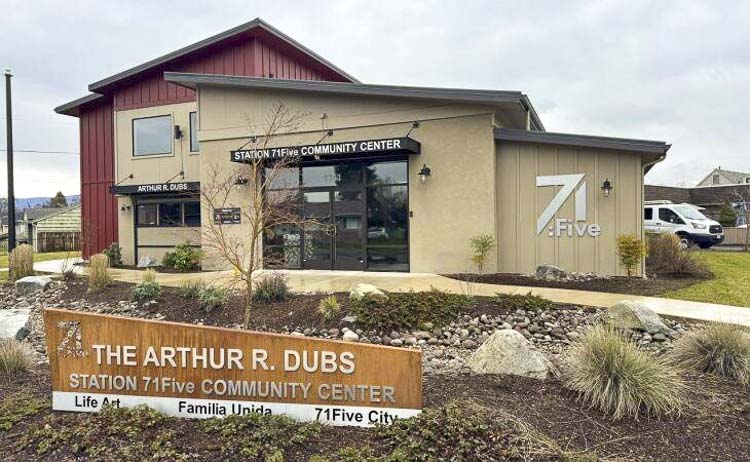
A ministry in Oregon that works with at-risk youth was stripped of its state funding because it requires employees and volunteers at the organization to sign a statement of faith document
Casey Harper
The Center Square
Whether faith-based groups are allowed to solely hire people that agree with their faith is a question again before the courts.
A ministry in Oregon that works with at-risk youth was stripped of its state funding because it requires employees and volunteers at the organization to sign a statement of faith document. Now the issue is before the courts and could set precedent for which faith groups are allowed to hire people who agree with their mission.
Since 2017, Youth 71Five Ministries has been approved to receive funds from Oregon’s biennial Youth Community Investment Grants.
They received another round of grant funding for more than $400,000 for 2023-2025 for youth violence and gang prevention, according to the group’s lawsuit. But they were later disqualified and the award revoked when the state program accused them of discrimination in their hiring practices because of the faith statement.
The ministry filed a suit against the state in March, but their case was dismissed.
“This civil-rights action challenges the constitutionality of Defendants’ decision to exclude a religious organization from an otherwise available government benefit program solely because of its religious character and exercise,” the lawsuit said.
“This New Rule led to Defendants stripping 71Five Ministries of over $400,000 in grant awards just because the Christian ministry expects its employees and volunteers to share its religious beliefs and mission,” the suit continued.
Now, the group has filed an appeal U.S. Court of Appeals for the 9th Circuit.
“71Five provides vital support and care to anyone who needs it, but Oregon state officials are punishing it because it’s a Christian ministry that simply and reasonably asks volunteers and staff to agree to Christian beliefs,” said Jeremiah Galus, a top lawyer for Alliance Defending Freedom, a group helping the ministry in this case.
Galus argues that a recent Supreme Court case gives new precedent for the youth outreach group’s argument.
The U.S. Supreme Court ruled 7-2 in 2017 in Trinity Lutheran Church of Columbia v. Comer that faith-based groups could not be denied state funding simply because of their religious stance.
That case centered around a Christian preschool that was denied state funding for an upgrade to its children’s playground because it was a religious organization.
“By stripping 71Five of its funding, Oregon is putting religious ministries to an impossible choice: hire those who reject your beliefs to receive funding that everyone else can access or go without the funding,” Galus said in a statement. “We will be urging the 9th Circuit to follow U.S. Supreme Court precedent that upholds the First Amendment freedom of faith-based organizations to hire like-minded individuals.”
Alliance Defending Freedom argues the state rule on who faith-based groups can hire is unconstitutional.
“Because the New Rule and Defendants’ actions violate the First Amendment many times over and conflict with well-established Supreme Court precedent, 71Five Ministries is entitled to declaratory and injunctive relief to prevent the ongoing and prospective constitutional violations, as well as damages to remedy the past constitutional violations,” the lawsuit said.
This report was first published by The Center Square.
Also read:
- Opinion: What is the cost of a bridge?
 John Ley argues the I-5 Bridge replacement’s soaring cost stems from costly extras like light rail, noting other states deliver larger, toll-free bridges for much less.
 - POLL: Do you agree with giving a state commission the power to remove an elected sheriff?
 A new poll asks if a state commission—not voters—should have the power to remove an elected sheriff, following concerns raised by Clark County Sheriff John Horch.
 - Opinion: Defending Democracy by denying it?
 Washington voters are blocked from weighing in on new income taxes as state lawmakers and officials bypass public input, drawing criticism from Northwest voices.
 - Camas School District names Ryan Scott as principal of Lacamas Lake Elementary
 Ryan Scott, currently associate principal supporting multiple Camas schools, will become Lacamas Lake Elementary’s new leader following Julie Mueller’s retirement.
 - Ridgefield to host Division I baseball game between UW Huskies and UP Pilots on April 21
 The Ridgefield Outdoor Recreation Complex welcomes two Division I teams this April, offering free entry for local youth players and a rare college matchup in Clark County.
 - Clark County Sheriff shares his concerns with Washington’s new sheriff’s law
 Sheriff John Horch criticizes a new state law allowing a commission to remove elected sheriffs through decertification, arguing it undermines voter authority.
 - VIDEO: Decertified WA sheriffs can now be ousted under controversial new law
 A new Washington law lets an unelected board remove elected sheriffs or police chiefs for misconduct that costs them state certification, raising concerns about free speech and political consequences.
