



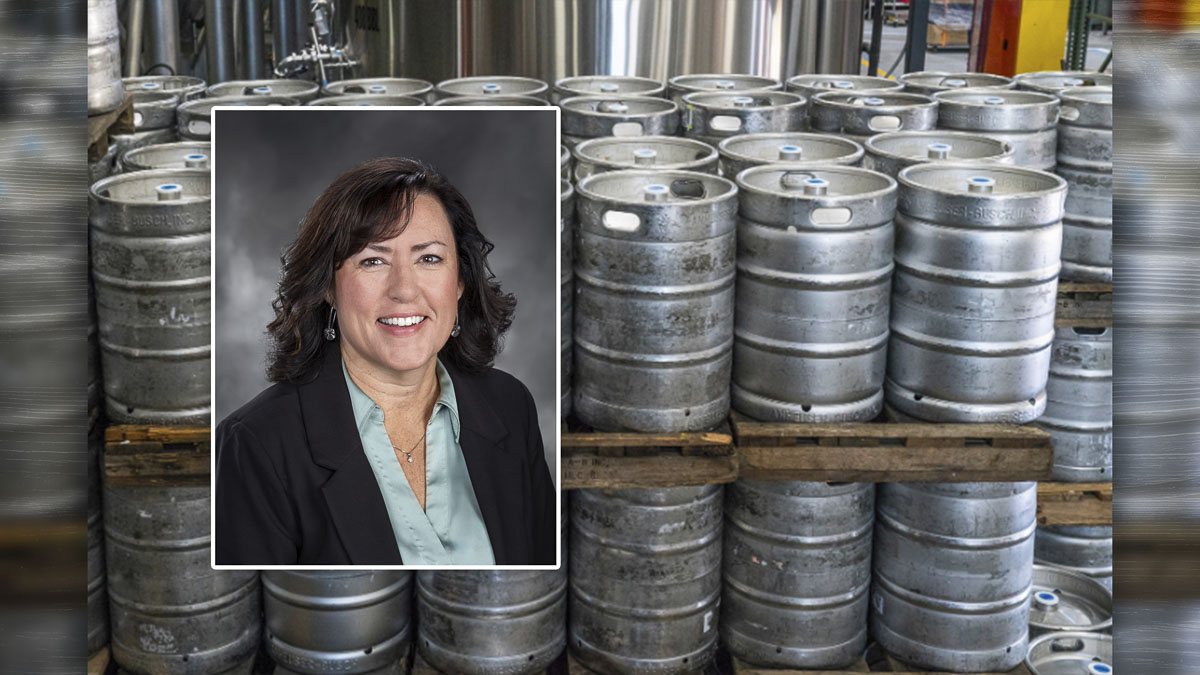
House Bill 2207 is a locally owned business-driven bill, which would allow licensed warehouses to store and handle beer in the same manner as wine and spirits are warehoused
Legislation sponsored by Rep. Stephanie McClintock that would update and clarify Washington’s alcohol warehousing laws to better reflect modern business practices and support the state’s beer industry received a public hearing in the House Consumer Protection & Business Committee on Wednesday.
House Bill 2207 is a locally owned business-driven bill, which would allow licensed warehouses to store and handle beer in the same manner as wine and spirits are warehoused. This legislation would increase flexibility and efficiency for Washington breweries, especially small and mid-sized producers.
“Washington is home to numerous craft breweries,” said McClintock, R-Vancouver. “Our laws should keep pace with how these businesses currently operate. This bill brings clarity, flexibility, and common sense to the system while maintaining strong oversight and consumer protections.”
Under HB 2207, the state would formally recognize two distinct warehouse licenses, one for wine and one for beer. This change clarifies longstanding statute, particularly for breweries that rely on off-site storage and fulfillment.
“This bill would help breweries – particularly smaller operations – operate more effectively by modernizing warehousing rules so their products can be stored off-site under similar conditions already allowed for other alcohol categories,” said McClintock.
The bill would benefit small wineries, craft breweries, logistics providers, and consumers across Washington. It would also encourage growth by allowing producers to share warehousing space and streamline packaging and labeling. This flexibility can reduce costs, expand market reach, and free up limited space at production facilities.
Under HB 2207, state excise taxes would not be due until the product leaves the warehouse, helping businesses manage cash flow while ensuring the state collects taxes appropriately when products enter the marketplace.
The legislation would also allow facilities to store wine, beer, and non-alcohol products in the same secured space if the operator holds both licenses.
“Ultimately, this bill helps Washington producers compete, innovate, and reach customers more efficiently,” McClintock said. “It’s a smart update that would support jobs, small businesses, and consumers while preserving strong regulatory oversight.”
The bill now awaits a vote from the committee.
Information provided by the Washington State House Republicans,houserepublicans.wa.gov

Also read:
- Opinion: Washington passed an income tax to fund education, then the same majority cut education — and left $700+ million on the table
 State officials passed a new income tax to fund education, then approved over $1 billion in cuts—while forgoing $700 million in annual federal scholarships students could have received.
 - Opinion: ‘Washington’s majority party is panicking’
 Nancy Churchill argues that controversial state policies, including new taxes, law enforcement changes, and agency power grabs, are generating a wave of backlash in communities across Washington.
 - Letter: ‘Now we have Engineer Bob telling us the I-5 Bridge needs replacing because it is built on shifting sand with wooden structures’
 Amboy resident Thomas Schenk critiques Democrat leadership, tax policies, and the addition of light rail to the I-5 Bridge, while urging Republican voters to participate more in midterm elections.
 - The I-5 Bridge is vulnerable to collapse, but apparently not that vulnerable
 State leaders and Vancouver’s mayor warn about bridge safety, but insist it’s safe enough for daily use as they focus on moving forward with a costly replacement including light rail—despite decades of public resistance.
 - Opinion: ‘This is not the best and most efficient use of the taxpayers’ funds’
 Ken Vance critiques the announced $14.4 billion I-5 Bridge replacement, questioning funding gaps, the insistence on light rail, unaddressed congestion, and transparency from state officials.
 wpDiscuz
