



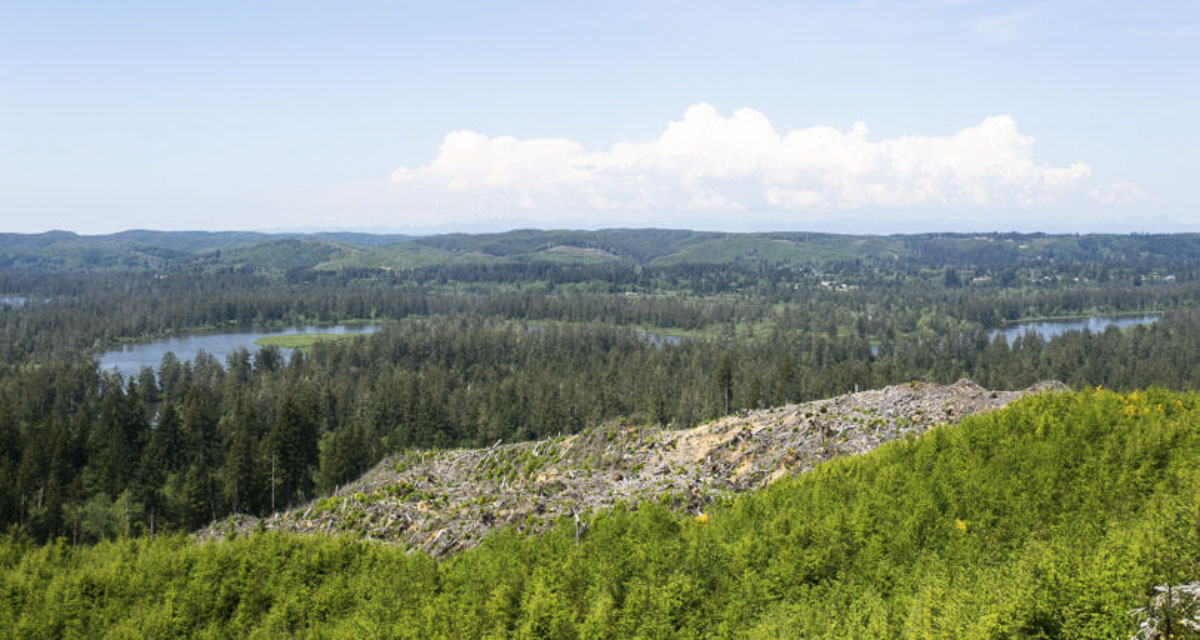
House Bill 2653 would authorize counties to enter into shared stewardship agreements with federal land management agencies, including the U.S. Forest Service, to maintain and manage fuel breaks on federally owned land near roads
Legislation sponsored by Rep. Kevin Waters would give Washington counties new tools to reduce wildfire risk along major roadways while ensuring local governments are fairly compensated for their work managing federal forestlands.

House Bill 2653 would authorize counties to enter into shared stewardship agreements with federal land management agencies, including the U.S. Forest Service, to maintain and manage fuel breaks on federally owned land near roads. Under the bill, counties could manage forestlands up to one mile on either side of a roadway, including interstate highways, state highways, and other roads selected by the county.
“Wildfires don’t stop at jurisdictional boundaries, and counties are often on the front lines of prevention and response,” said Waters, R-Stevenson. “This bill would ensure counties can be real partners in forest management while also protecting taxpayers and critical transportation corridors.”
While shared stewardship agreements already exist at the federal level, Waters said many of those programs fail to allow counties to share in revenue generated from forest management activities. HB 2653 would address that gap by requiring any shared stewardship agreement entered into by a county to include a revenue-sharing provision. Under the bill, counties would retain proceeds from timber sales resulting from fuel reduction and forest health work performed under the agreement.
“For rural counties, timber revenue has declined sharply over the years, and federal forest payments are less reliable than they once were,” Waters said. “At the same time, counties are being asked to do more to prevent catastrophic wildfires, and much of the timber they cut down is going to waste. This bill would balance those responsibilities by allowing counties to recoup some of the costs through responsible timber management.”
The legislation would especially benefit rural counties with large amounts of federal forestland. By allowing counties to retain timber sale proceeds, the bill could help stabilize local budgets, support essential county services, and ease financial pressure on rural school districts affected by the loss of traditional timber revenues.
“This is about smarter forest management, safer communities, and stronger partnerships between local and federal governments,” Waters said. “House Bill 2653 would move us in that direction.”
The bill awaits a public hearing in the House Local Government Committee.
Information provided by the Washington State House Republicans, houserepublicans.wa.gov

Also read:
- Opinion: Tax day is painful enough without Washington adding its own
 Washington’s new 9.9% income tax mirrors federal pattern: start narrow, expand to hit everyone within years.
 - Marie Gluesenkamp Perez seeks federal assistance in combating sea lion predation of salmon & steelhead fishing stock
 Congresswoman pushes for expanded lethal removal authority as sea lions devour Columbia River fish stocks.
 - POLL: What do you believe is the biggest reason school districts are facing budget shortfalls?
 Districts across Washington warn of budget gaps as debate grows over rising costs versus inadequate state funding.
 - Lt. Governor shares his ideas on fixing housing shortage to members of BIA of Clark County
 Lt. Gov. Denny Heck told Clark County builders the state needs one million additional homes in 20 years.
 - Opinion: The high cost of hiding – Why IBR’s delayed revenue study is a $15 billion warning sign
 IBR delays critical toll revenue analysis until June 2027, hiding financial details until after project approval.
