



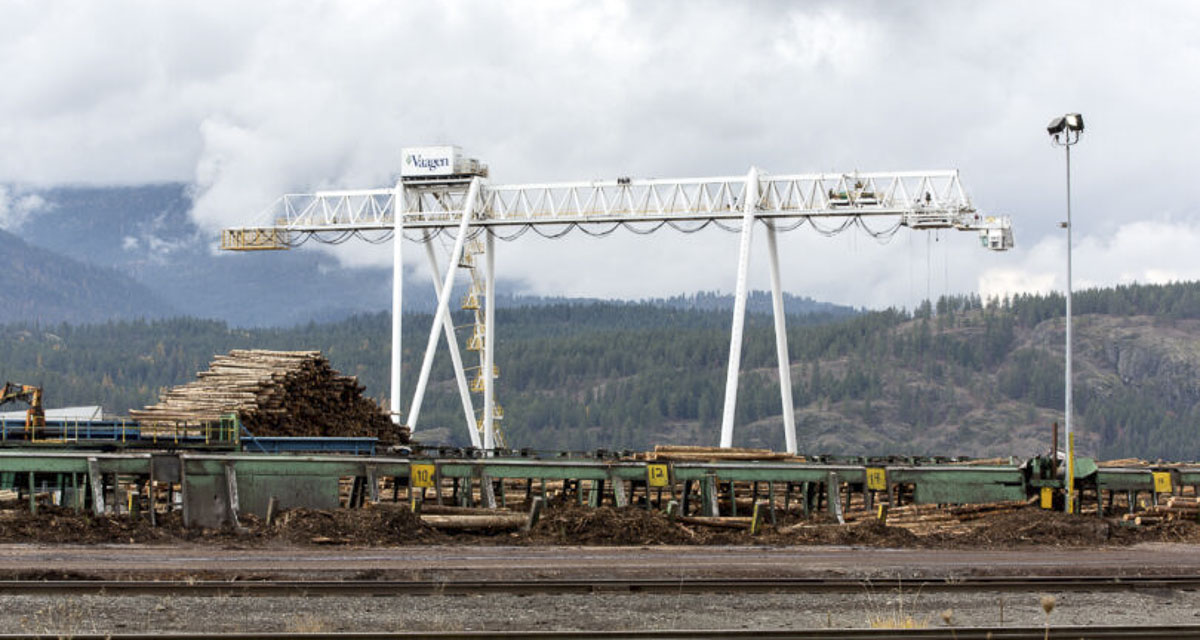
House Bill 1726 would prioritize lumber and wood products from Washington state lumber mills for the purpose of public works projects
17th District legislator, Rep. Kevin Waters, has introduced several new bills in the 2025 session, including one that could significantly impact the Washington timber industry, especially lumber mills.

House Bill 1726 would prioritize lumber and wood products from Washington state lumber mills for the purpose of public works projects.
“This is a big deal to our mills,” said Waters, R-Stevenson. “Prioritizing Washington mills over other mills around the country is a no-brainer. We need to do everything we can to help our mills stay in business and keep our millworkers employed.”
Under HB 1726, whenever the state, a school district, or a municipality has a construction project that uses more than $500,000 of state money, they would have to buy lumber and wood products from Washington mills first. If they could not source it from a Washington mill, they would have to try Oregon next, and if not available there, then the rest of the country, and lastly other countries.”
HB 1726 has been referred to the House Capital Budget Committee, where it waits for a hearing.
Waters is also sponsoring House Bill 1104, which would add a septic engineer to the state board of wastewater engineers.
“Septic systems are widely used in my district, so I’m aware of the work septic engineers do,” said Waters. “This is a simple, commonsense bill that would give septic engineers a rightful voice at the table.”
The House Consumer Protection and Business Committee has already voted HB 1104 out of committee, and now it waits for a vote from the entire House to advance further.
The House Consumer Protection and Business Committee also held a public hearing on House Bill 1602 on Wednesday. The legislation would allow alcohol producers, including breweries, to sub out their kitchen space.
“This bill would help several breweries in limbo, specifically one in Vancouver, that literally cannot open their space until the Liquor Control Board gets this matter fixed,” noted Waters.
Currently, a brewery must meet specific food service requirements if it wants to operate a new location using a restaurant liquor license. However, in most cases, breweries that make and sell beer are not restauranteurs.
“Many would-be breweries are stuck because of the different rules and requirements. This legislation would help them overcome the final hurdle to open for business,” said Waters. “Most breweries do not employ people with restaurant experience or qualifications and don’t want to. They simply want to hire another business to take care of that for them.”
If HB 1602 becomes law, it would allow breweries to subcontract the restaurant part of their business to individuals or entities better suited for running the food service side.
The bill now waits for a vote from the committee.
The 2025 legislative session began on Jan. 13 and will run for 105 consecutive days.
Information provided by Washington State House Republicans, houserepublicans.wa.gov

Also read:
- Opinion: Tax day is painful enough without Washington adding its own
 Washington’s new 9.9% income tax mirrors federal pattern: start narrow, expand to hit everyone within years.
 - Letter: ‘Public trust in elections isn’t maintained by repeating talking points’
 Camas resident demands answers after ballots discovered next to trash can, endorses Quiring O’Brien for auditor.
 - Lincoln Day Gala: Independent journalist Jonathan Choe wants more storytellers
 Investigative journalist Jonathan Choe challenged Clark County Republicans to become citizen reporters at Saturday’s fundraiser.
 - Dollars flowing into a pair of hotly contested WA congressional races
 Amanda McKinney leads 4th District GOP field with $523,892 raised, while Braun trails significantly behind incumbent.
 - Final Supplemental Environmental Impact Statement published for Interstate Bridge Replacement Program
 Federal agencies published the final environmental impact statement for the Interstate Bridge replacement project.
