



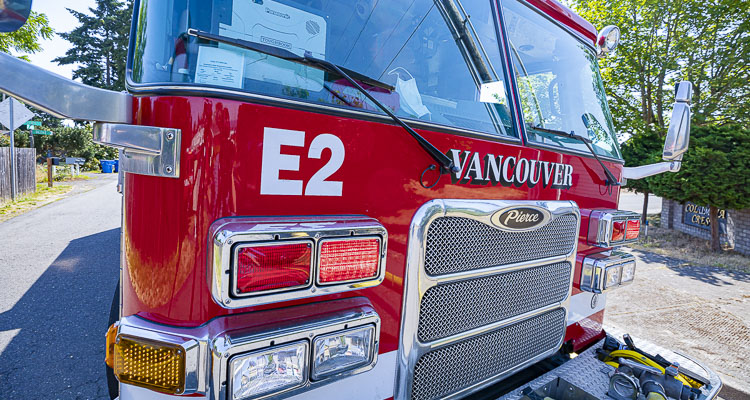
Burn bans in each city lifted effective Tuesday
VANCOUVER – Vancouver Fire Marshal Heidi Scarpelli announced today she is lifting the ban on recreational fires within the city limits effective at 12:01 a.m. Tue., Oct. 25. “Based on the amount (of) rain we have received and the future rain in the forecast, we are lifting the ban.” said Scarpelli.
Also effective Tuesday (Oct. 25), Battle Ground Fire Marshal Chris Drone announced the suspension of the recreational burn ban in the city of Battle Ground. The ban, originally declared on Sept. 9, restricted the use of recreational burning including campfires, fires in outdoor fireplaces or chimney-type devices, and charcoal outdoor cooking.
With the recent rainfall and cooler temperatures in the forecast ahead, the risk of wildfire danger has dropped significantly within the city and the surrounding areas. Nevertheless, there is always potential for fires to grow out of control. Residents are urged to exercise caution when burning outdoors and obey all fire regulations follow some simple safety tips:
- Recreational fires shall not be more than 3 feet wide or exceed 2 feet tall and remain a minimum distance of 25 feet away from structures or combustible materials.
- Only firewood or charcoal may be used in a recreational fire.
- Burning of trash is prohibited.
- Ensure that a mesh screen is in place to prevent ash and/or embers from escaping.
- Keep a bucket of water or a charged garden hose nearby and ready.
- The use of burn barrels is strictly prohibited.
- Portable outdoor fireplaces are required to be used in accordance with the manufacturer’s instructions.
- Residential burning and land clearing burning of vegetation, yard debris, or branches is prohibited within the Battle Ground city limits.
As we transition to colder weather, now is the time to check furnaces, stoves, and chimneys to ensure that they are clear and clean for safe use. Additional tips for maintaining a fire-safe home this fall and winter are available on the city of Battle Ground’s website at www.cityofbg.org/heating-fire-safety.
To learn more about burning regulations in your area, visit www.fire3.org/burning-information/ to view an interactive burn map and to request fire permits.
For those residing outside of the Battle Ground city limits, contact the Clark County Fire Marshal’s Office at (360) 397-2186 for permitted burning rules and regulations in your area.
Information provided by city of Battle Ground and city of Vancouver.
Also read:
- Opinion: Washington’s broken trust
 Dave Upthegrove’s 80,000-acre forest ban is forcing rural school districts into state financial control and massive teacher layoffs.
 - Opinion: Cue the revenuers
 State hiring 300 tax collectors this summer even though income tax revenue won’t arrive until 2029.
 - Opinion: Everything about TriMet screams ‘poor management’
 Rep. John Ley examines TriMet’s $850 million operating loss and 75% cost increase for MAX light rail service.
 - Vancouver City Council approves resolution asking IBR to extend light rail to Library Square
 Council wants light rail extended beyond waterfront to connect with C-TRAN at Library Square station.
 - KinderCare Learning Center set to open center in Battle Ground
 State Representatives McClintock and Ley will speak at the 11 a.m. ribbon-cutting ceremony on April 18.
 - Camas-Washougal Community Chest and partners award 37 grants to local organizations
 Three foundations partner to distribute grants funding emergency food assistance, shelter programs, and watershed monitoring.
 - Camas-Washougal Community Chest and partners award 37 grants to local organizations
 Three foundations partner to distribute grants funding emergency food assistance, shelter programs, and watershed monitoring.
