



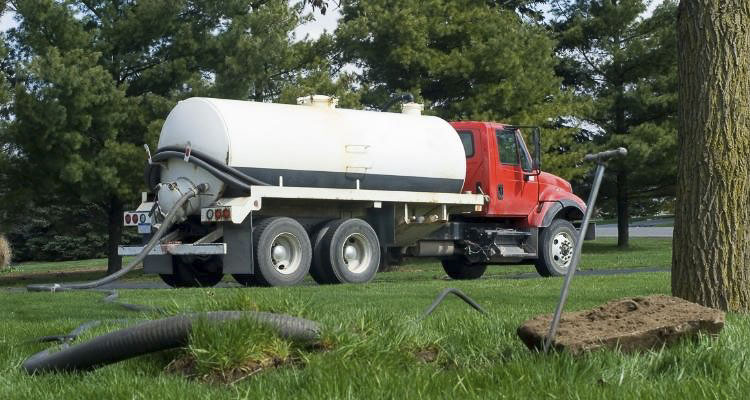
Several financial assistance programs are currently available to help property owners in Clark County pay for inspections, maintenance, and repair or replacement of their systems
VANCOUVER – In advance of Septic Smart Week (Sept. 19-23), Clark County Public Health wants to remind onsite sewage system owners to take action to ensure their personal wastewater treatment systems are maintained and operating at their best leading into fall and winter. Several financial assistance programs are currently available to help property owners in Clark County pay for inspections, maintenance, and repair or replacement of their systems.
“Regular inspection and maintenance of onsite sewage systems is critical to ensuring these systems continue to operate in good condition,” said Chuck Harman, program manager for Public Health’s Onsite Sewage System program.
Regular inspection and maintenance have multiple benefits, including:
- Keeps onsite sewage systems running well and protects against premature failure
- Sustains the performance level of the system’s treatment to protect groundwater, which is important for properties served by individual wells
- Helps to prevent problems that could require an expensive major repair
- Sustains the home’s original investment, which is important both financially and at times of property transfer or sale
Clark County is fortunate to have several financial assistance programs available for onsite sewage system maintenance, repairs, and replacement. Current programs offered by local organizations include:
- Housing Rehabilitation Program – Clark County Community Services assists with deferred, low-interest, flexible loan programs for onsite sewage system repair and replacement. For more information, go to www.clark.wa.gov/community-services/housing-preservation.
- Craft3 – This nonprofit community lender offers flexible loans with competitive rates for the repair and replacement of onsite sewage systems. For more information, go to www.Craft3.org/CleanWater.
- Poop Smart Clark – This local grant-funded program is focused on water quality within the East Fork Lewis River and is administered by Clark Conservation District. The conservation district, along with the local Watershed Alliance, offers direct financial assistance for onsite sewage system inspections, maintenance actions, and minor and major repairs. Assistance is available for property owners in specific watersheds of the East Fork Lewis River. For more information, go to www.poopsmartclark.org/septic.
Clark County Public Health is also developing a financial assistance program, funded through the American Rescue Plan Act, to help homeowners adversely impacted by COVID-19 and the resulting economic strains. Public Health hopes to launch the program in late 2022.
During Septic Smart Week, Public Health will share stories on social media of Clark County residents who benefited from the financial assistance programs outlined above. These stories will also be shared in a news release next week.
“In a county where all of our drinking water comes from groundwater and where we value our beautiful recreational water bodies, the inspection, maintenance, and repair of septic systems throughout the county is incredibly important,” Harman said. “We encourage property owners to take action and, if they need to, take advantage of the financial assistance opportunities that are available to our community.”
For more tips and information about Septic Smart Week, visit www.epa.gov/septic/septicsmart-week.
Information provided by Clark Co. WA Communications.
Also read:
- Opinion: Tax day is painful enough without Washington adding its own
 Washington’s new 9.9% income tax mirrors federal pattern: start narrow, expand to hit everyone within years.
 - Marie Gluesenkamp Perez seeks federal assistance in combating sea lion predation of salmon & steelhead fishing stock
 Congresswoman pushes for expanded lethal removal authority as sea lions devour Columbia River fish stocks.
 - POLL: What do you believe is the biggest reason school districts are facing budget shortfalls?
 Districts across Washington warn of budget gaps as debate grows over rising costs versus inadequate state funding.
 - Lt. Governor shares his ideas on fixing housing shortage to members of BIA of Clark County
 Lt. Gov. Denny Heck told Clark County builders the state needs one million additional homes in 20 years.
 - Opinion: The high cost of hiding – Why IBR’s delayed revenue study is a $15 billion warning sign
 IBR delays critical toll revenue analysis until June 2027, hiding financial details until after project approval.
 - Opinion: The high cost of hiding – Why IBR’s delayed revenue study is a $15 billion warning sign
 IBR delays critical toll revenue analysis until June 2027, hiding financial details until after project approval.
 - Opinion: Washington fails the test for affordability
 Mountain States Policy Center analysis reveals Washington ranks 5th most expensive state as residents migrate to Idaho and Texas.
