



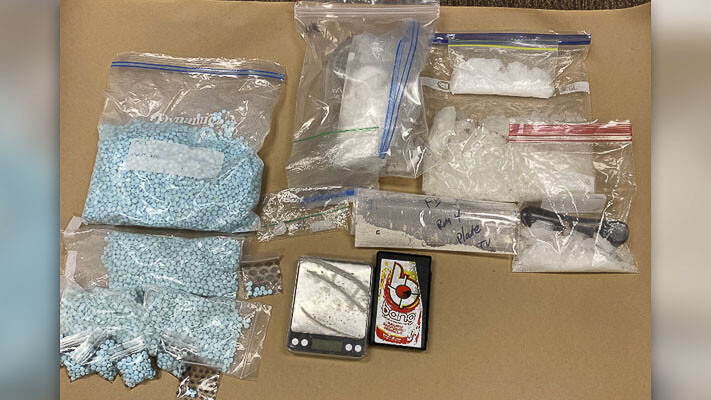
In Washington, the Supreme Court struck down the state’s main drug possession crime, which meant there was no state law making simple drug possession a crime unless the legislature passed one, which it did with ESB 5476
Logan Washburn
The Center Square
As neighboring Washington deals with its own drug law overhaul, Portland Mayor Ted Wheeler has proposed measures to ban hard drug use in public.
“We’ll be passing a ‘time, place and manner’ type restriction that makes it clear it is not legal to use those kinds of drugs openly anywhere in the city of Portland,” he said to KATU. “You cannot openly use drugs in the city of Portland any more than you can pop open a beer and walk down the street.”
He plans to share more about this plan Thursday, but he told the Portland Metro Chamber at its annual meeting that he plans to regulate open-air drug use. Wheeler compared the restrictions to those on public drinking.
“It is legal for people to own alcohol, they can legally carry alcohol containers down the street or transport them in their car, but people can’t legally use them openly in public,” he said. “We’re intending to do the exact same thing with drugs.”
Wheeler said his plan does not contradict Measure 110, passed in 2020, which decriminalized the personal possession of certain amounts of hard drugs like heroin, cocaine and methamphetamines.
“Measure 110 legalizes personal possession of hard drugs, but it does not speak to the actual use in public of those drugs,” Wheeler said to KATU. “This will help us get a handle on the open drug use.”
Measure 110 allows officers to refer individuals to treatment and fine them up to $100 for possessing hard drugs. Part of Portland’s Central City Recovery Plan is to increase patrol visibility and citation issuance for drug-related crimes.
Portland’s fatal overdoses in mid-May had increased 46% since that time last year, according to the Willamette Week. The city saw 158 fatal overdoses in 2022. The state has seen a 210% increase in fentanyl-related deaths since 2020, according to Axios.
The Clackamas County Commission, in the Portland Metro Area, recently passed a measure to ask voters if they support directing state lawmakers to modify or repeal Measure 110, according to KGW.
In State v. Blake, the Washington Supreme Court struck down the state’s main drug possession crime. This meant there was no state law making simple drug possession a crime unless the legislature passed one, which it did with ESB 5476, according to the ACLU.
The bill, however, expires July 1. But Washington’s legislature passed ESB 5536 in May’s special session, making the intentional possession or public use of certain amounts of illegal drugs a modified gross misdemeanor. It made the crime punishable by up to six months in jail for the first two offenses and by up to a year after that.
This report was first published by The Center Square.
Also read:
- WA’s status solidifies as one of the most expensive places in US
 A new study shows Washington outpaces most states on cost of living, with metrics revealing a sharp rise in daily expenses and major metro areas ranking among the nation’s most expensive.
 - Opinion: Someone explain the Democrat Party to me please
 Lars Larson criticizes Democrat politicians for shutdown threats, Homeland Security funding refusals, and positions on election laws, housing, and gun rights.
 - CCSO to conduct search related to 1971 disappearance of Jamie Grissim
 Clark County Sheriff’s Office is coordinating a targeted search in Dole Valley, aiming to recover the remains of Jamie Rochelle Grissim, missing since 1971.
 - Business Profile: Columbia River volleyball coach teaches The Elite Competitor
 Bre Smedley co-founded The Elite Competitor to help young athletes handle the mental demands of sports by offering support, resources, and ongoing training for players, parents, and coaches.
 - POLL: Do you agree with requiring board members to follow council direction?
 Disagreement among county councilors centers on whether C-TRAN board members should reflect the council’s collective wishes or act independently, highlighting ongoing concerns about public accountability.
 - High-value WA home listings increase by 65% after income tax passage
 After lawmakers approved an income tax targeting millionaires, listings for homes priced at $2 million or more jumped 65 percent compared to last year, with experts urging caution about interpreting the spike.
 - 18th District lawmakers to host town hall meeting on Saturday, March 28, in Battle Ground
 Stephanie McClintock and John Ley will meet with Battle Ground constituents to answer questions, review the new income tax, and discuss the effects of the $80 billion budget.
