



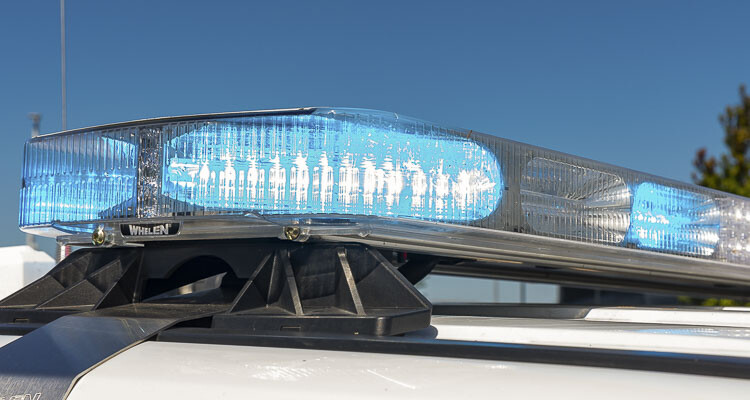
The House Community Safety, Justice, and Reentry Committee passed House Bill 1363, which would allow police more latitude in engaging in pursuits
Senate Republican leaders are encouraged by a House committee’s approval of legislation to loosen restrictions on police pursuits, but are concerned that the bill still would not restore the ability of officers to pursue suspected car thieves.
Thursday (Feb. 16) morning, the House Community Safety, Justice, and Reentry Committee passed House Bill 1363, which would allow police more latitude in engaging in pursuits. It would exempt three more crimes from the current restrictions, adopted in 2021, but not vehicle theft. Also, the measure would expire in July 2025.
The Senate Law and Justice Committee has approved only Senate Bill 5533, which would keep the current pursuit restrictions in place and give the state Criminal Justice Training Commission until November 2024 to study the issue. Neither committee is scheduled to meet again before Friday, which is the initial deadline for policy-committee approval of legislation.
From Sen. Mike Padden, R-Spokane Valley, who is Republican leader on the Law and Justice Committee and prime sponsor of Senate Bill 5034:
“The original version of the House bill was similar to my legislation – it would restore the reasonable-suspicion standard for any suspected crime, and again trust police to rely on their training when deciding whether to engage in a pursuit. What came out of the House committee this morning is closer to the current restrictions, and I’m disappointed that it deliberately preserves the hands-off approach to suspected car thieves.
“Law-enforcement leaders across our state have called for meaningful reforms to the pursuit law, and our Democratic colleagues should listen. They cling to the argument that police pursuits are inherently dangerous yet overlook the idea that the threat of being pursued can deter criminal behavior.”
From Senate Republican Leader John Braun, R-Centralia, a co-sponsor of Padden’s legislation:
“Both of the bills moved forward by Democrats would essentially tell criminals that they can keep stealing cars and catalytic converters and using stolen cars to smash storefronts, without fear of being pursued. That means more people being victimized. We must do better.
“Senate Republicans have been clear about wanting to reestablish public safety and deal with the lawlessness in our communities. We recognize that having a car stolen can be as life-changing as a violent crime, especially for a single mom who loses her job because she can no longer get to work. It’s unfortunate that the Senate doesn’t have something more than a study bill on the table, but we will keep looking for opportunities to work with our Democratic colleagues on the Senate floor to get this right. It’s OK to study the issue and gather data, but there’s also an auto-theft epidemic in our state, and the car thieves aren’t going to wait. We need to fix the pursuit law this year.”
Information provided by Washington State Senate Republicans. Follow Washington State Senate Republicans on Twitter, Facebook, YouTube and Instagram @WashingtonSRC.
Also read:
- POLL: What do you believe is the biggest reason school districts are facing budget shortfalls?
 Districts across Washington warn of budget gaps as debate grows over rising costs versus inadequate state funding.
 - Lt. Governor shares his ideas on fixing housing shortage to members of BIA of Clark County
 Lt. Gov. Denny Heck told Clark County builders the state needs one million additional homes in 20 years.
 - Opinion: The high cost of hiding – Why IBR’s delayed revenue study is a $15 billion warning sign
 IBR delays critical toll revenue analysis until June 2027, hiding financial details until after project approval.
 - Opinion: The high cost of hiding – Why IBR’s delayed revenue study is a $15 billion warning sign
 IBR delays critical toll revenue analysis until June 2027, hiding financial details until after project approval.
 - Opinion: Washington fails the test for affordability
 Mountain States Policy Center analysis reveals Washington ranks 5th most expensive state as residents migrate to Idaho and Texas.
 - Opinion: Washington fails the test for affordability
 Mountain States Policy Center analysis reveals Washington ranks 5th most expensive state as residents migrate to Idaho and Texas.
 - Opinion: How should teachers adapt to AI?
 Washington Policy Center’s Donald Kimball explores balancing AI benefits with preserving critical thinking in classrooms.
