



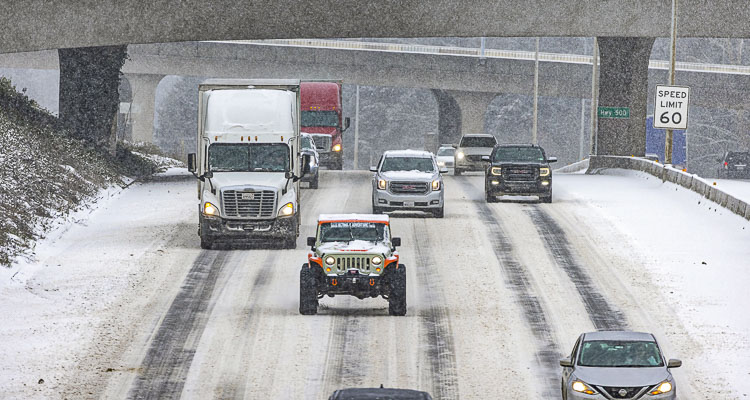
Studded tires allowed in Washington from Nov. 1 to March 31; stud-free winter tire alternatives are legal year-round
OLYMPIA – While many may be thinking about pumpkins and spiced ciders, now is the time for travelers to make sure they’re prepared for winter driving.
The Washington State Department of Transportation urges all travelers to start preparing themselves and their vehicles for winter weather. Drivers can check out WSDOT’s winter driving web page for tips and information. WSDOT also asks travelers to always “know before you go” and get the most up-to-date roadway information before heading out.
“Our crews are ready for the upcoming snow and ice season, but we need travelers to get ready as well.” said WSDOT Maintenance Operations Manager James Morin. “Most pass closures are due to preventable spin outs or crashes from vehicles driven too fast or not having proper equipment. We need everyone to work together, be patient and prepared to help keep traffic moving.”
Crews are already prepping for winter, including hiring additional workers for peak winter months. While significant effort and progress has been made towards hiring, there is still a nationwide shortage of Commercial Driver License drivers for plows and other vehicles. This means it’s even more important for travelers to be prepared to avoid preventable crashes or closures this winter.
Most mountain pass closures are due to preventable spin outs or crashes from vehicles driven too fast or not having proper equipment. WSDOT encourages all travelers to work together, be patient and prepared to help keep traffic moving.
To check conditions and prepare for winter weather:
- Check current travel conditions and download the WSDOT mobile app.
- Follow WSDOT’s regional and pass accounts on Twitter, the agency’s Facebook site and online travel alerts.
- Sign up for email and/or text updates about road conditions.
- Text “468311 with the words “WSDOT Snoqualmie” to receive text message alerts about significant delays on I-90/Snoqualmie Pass.
- Download, print and carry the WSDOT Winter Driving Guide.
- Get vehicles ready and plan extra time to cross all mountain passes, including heavily traveled routes such as Snoqualmie Pass, Stevens Pass and White Pass.
- Carry chains and know current traction and chain requirements for mountain passes, which are also available on highway-advisory signs, highway-advisory radio and by calling 511.
- Preset your radio to 530 AM and 1610 AM for WSDOT’s traffic-information stations.
Alternatives to chains
Although some vehicle manufacturers recommend against the use of tire chains for certain models, that doesn’t excuse travelers from state traction device laws. These requirements exist to help keep all traffic moving safely during extreme winter conditions.
The Washington State Patrol provides an online list of state-approved alternative traction devices on its vehicle equipment webpage under “traction tires.” These approved alternatives meet state traction tire requirements. All travelers are reminded to prepare for changing weather conditions and avoid a costly ticket by carrying chains or approved alternatives whenever crossing mountain passes. Failure to obey a tire chains sign can mean a ticket of up to $500. Special chain enforcement patrols will be keeping an eye on mountain passes this winter.
Studded tires
By law, studded tires are legal for use in Washington state only from Nov. 1 through March 31. This applies to all vehicles in Washington, even those traveling from other states, and no personal exemptions or waivers exist.
WSDOT estimates studded tires cause between $20 million and $29 million in pavement damage to state-owned asphalt and concrete roadways each year. Motorists are encouraged to visit a tire dealer to learn about options, including stud-free, winter tread traction tires. This type of tire is different than an all-season tire, is legal year-round and does not cause the same roadway damage as studded tires. More information about studded-tire restrictions and requirements can be found in the Frequently Asked Questions on the WSP website.
Also read:
- Expect delays on SR 14 in Vancouver for guardrail repairs Wednesday
 State Route 14 travelers in Vancouver should plan for morning delays as WSDOT will close two eastbound lanes for guardrail repairs, affecting mileposts 6.0 to 7.0.
 - Overnight closure planned on westbound SR 14 Camas Slough Bridge Tuesday
 WSDOT crews will close westbound SR 14 at Exit 14 in Camas to collect bridge deck samples and plan future repairs; detours will be in effect.
 - Opinion: Stay in your lane – seriously, it’s the law
 Drivers must choose the nearest lane when turning in Washington, and left turns bring added risk. Even with signals, every driver must help prevent crashes by following law.
 - POLL: After hearing state leaders describe the I-5 Bridge as vulnerable in an earthquake, what is your reaction?
 State and local leaders describe the I-5 Bridge as structurally at risk but recommend drivers continue crossing it while complex replacement plans unfold.
 - WA and OR scale back I-5 Bridge ambitions as cost balloons
 A $14.4 billion price tag prompts Washington and Oregon leaders to delay portions of the I-5 bridge project and prioritize just the main spans.
