



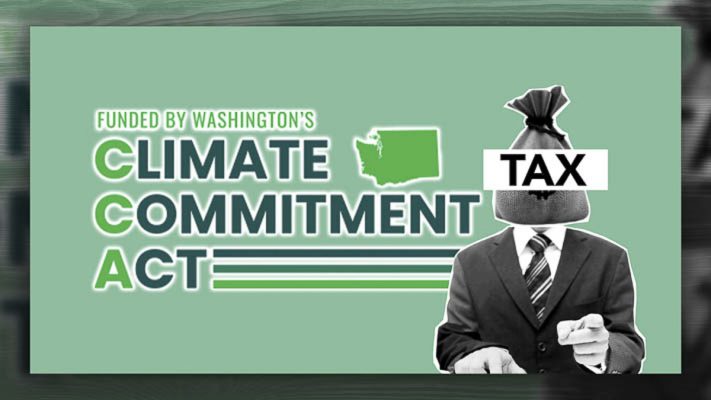
Todd Myers believes Washington should stop wasting billions of taxpayer dollars on politically chosen climate projects and put power in the hands of innovative companies and families
Todd Myers
Washington Policy Center
Washington residents place a premium on environmental protection and the reduction of carbon emissions, but the latest data shows that official claims that Washington state is a “leader” in climate policy are simply not true.

Washington’s CO2 newly released emissions data for 2020 and 2021 show a significant increase in emissions during Governor Inslee’s first nine years. Four key things stand out about the data:
- CO2 emissions between 2012 and 2021 increased by nearly 5 percent – even after the COVID lockdown.
- Washington’s 2021 CO2 emissions are 6 percent higher than the 2020 target set in state law, which makes it extremely difficult to meet the strict 2030 goal.
- To meet the 2030 CO2 targets, Washington residents will have to reduce emissions by the equivalent of more than three additional COVID-sized shutdowns from 2022 to 2030.
- The Department of Ecology’s release is in violation of state law which requires that “By December 31st of each even-numbered year beginning in 2010, the department and the department of commerce shall report … greenhouse gases for the preceding two years.” The agency should have also released data for 2022 and 2023. (*The U.S. Environmental Protection Agency has already released CO2 emissions data for 2022 for all states – including Washington.)
Climate regulations and the billions spent on politically selected climate projects over the past twelve years added cost but did not produce results. This failure of top-down climate policy during Governor Inslee’s first nine years puts Washington residents in the position of having to make drastic cuts to meet the 2030 CO2 target. Washington now has a CO2 tax designed to accelerate emissions reduction to meet those targets. Unfortunately, the billions in new tax revenue generated by that tax are being spent in the same wasteful and unaccountable way that led to the state’s failed climate results. Politicians should target expenditures based on results, not political agendas or return the revenue to taxpayers.
The fact that the most recent CO2 data is three years old is a clear indication that political leaders and agency staff simply don’t have the information necessary to make rational decisions about effective climate policy. By way of contrast, Microsoft releases a more comprehensive accounting of its CO2 emissions data within months of the end of the year.
Washington’s leaders need to learn the lesson of this failure and become serious about reducing emissions.
Washington should stop wasting billions of taxpayer dollars on politically chosen climate projects and put power in the hands of innovative companies and families.
Todd Myers is the vice president for research at the Washington Policy Center.

Also read:
- POLL: Do you agree with requiring board members to follow council direction?
 Disagreement among county councilors centers on whether C-TRAN board members should reflect the council’s collective wishes or act independently, highlighting ongoing concerns about public accountability.
 - Opinion: In plain sight – yielding to pedestrians
 Drivers often fail to see pedestrians due to inattentional blindness, which highlights the need for more focused awareness at intersections and stronger safety practices.
 - Opinion: The legislature has committed $2.4 billion to recurring pension increases since 2018
 Six legislative COLAs have raised public employer costs by $2.38 billion since 2018, driving up unfunded pension liabilities and increasing burdens on county and city budgets.
 - Opinion: ‘Just because they got away with it doesn’t mean they weren’t wrong’
 A Skamania County deputy’s report found violations of county rules and the Open Public Meetings Act, but no prosecutor acted on the findings.
 - Opinion: Small things grow great by concord
 Washington’s initiative process gives citizens direct power to challenge lawmakers. Failed restrictions and new measures on girls’ sports, parental rights, and citizenship prove the influence of grassroots action.
