



A 2025 change to statute unintentionally limited local flexibility and sparked disputes over who gets a seat at the table when major transit decisions are made
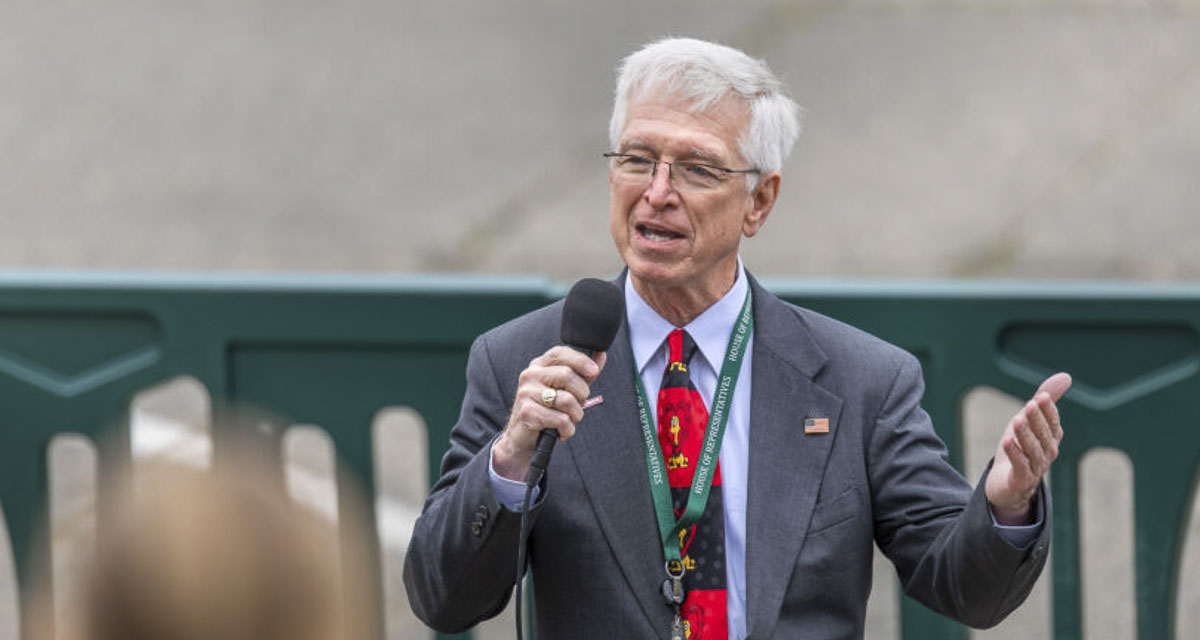
Rep. John Ley has introduced legislation to fix a flaw in state law that has created confusion and inequity in how public transportation benefit areas (PTBAs) are governed across Washington state.
A 2025 change to statute unintentionally limited local flexibility and sparked disputes over who gets a seat at the table when major transit decisions are made. House Bill 2226 would correct that problem by providing communities with more flexibility in structuring transit governing boards, ensuring fair and balanced representation that reflects local needs.
The bill is scheduled for a public hearing next week in the House Local Government Committee on Friday, Jan. 30, at 10:30 a.m.
“Public transportation systems are regional by nature, and their governing boards should reflect that reality,” said Ley, R-Vancouver. “This policy is about fairness, balance, and local decision-making. It ensures that no single city can dominate a board and that smaller cities and unincorporated areas are not pushed aside.”
The legislation would update state law to allow more equitable, population-based representation on PTBA governing boards, rather than forcing rigid formulas that don’t work for every region. It clarifies how cities, counties, and unincorporated areas are represented and reinforces safeguards to ensure broad participation from across a service area.
HB 2226 would also create a tailored framework for certain large counties west of the Cascade Mountains that border another state, placing reasonable limits on representation so all communities continue to have a voice. In addition, the bill would preserve the option to include transit-using members on governing boards, ensuring that riders’ perspectives remain part of the decision-making process.
“People who rely on transit deserve to be heard, and communities deserve boards that actually represent them,” Ley said. “This bill strikes that balance.”
Ley pointed out that for nearly four decades in Southwest Washington, the C-TRAN Board composition was split evenly, with three seats to the largest city, three seats shared among small cities, and three seats held by the county, which worked just fine.
The legislation would repeal an outdated and conflicting statute governing PTBA grant eligibility that no longer aligns with current law, thereby eliminating unnecessary confusion for transit agencies. Ley said the changes are especially important as transit agencies work to meet the needs of workers, students, seniors, and families while managing limited resources.
“When the rules are unclear or unfair, agencies end up spending time and money on internal conflicts instead of improving service,” Ley said. “By clarifying the law now, we give transit agencies the stability they need to focus on safety, reliability, and affordability.
“I hope people come to Olympia or share their testimony online to make their voice heard,” concluded Ley.
For those wishing to testify, there are three options: in-person in Olympia, virtually, or provide written testimony.
Information provided by the Washington State House Republicans, houserepublicans.wa.gov

Also read:
- VIDEO: WA income tax signed into law with legal challenge right behind
 A 9.9% income tax affecting high earners in Washington faces swift legal opposition and a proposed citizen initiative seeking repeal.
 - Income tax signed in Washington with a legal challenge close behind
 A new law will tax households earning over $1 million, with funds aimed at expanding credits for lower-income residents. Lawsuits and challenges are already underway.
 - Peter Silliman announces candidacy for Clark County Council
 Peter Silliman, small business owner and Charter Review Commissioner, is seeking the District 5 seat and promises action on transparency, housing, and park development.
 - Opinion: Defend bail now or face more chaos on our streets
 A proposed Washington court rule would cap bail for most misdemeanors and allow defendants to bypass bondsmen, raising concerns about accountability and public safety.
 - State Representatives McClintock and Ley answer questions at town hall in Battle Ground
 Residents voiced rising concerns about property taxes, school funding debates, the impact of new income tax legislation, and major costs tied to the Interstate Bridge plan.
