



Federal law prohibits the use of federal funds to pay for abortions except in cases of rape, incest or to save the life of the pregnant woman
Lawrence Wilson
The Center Square Washington
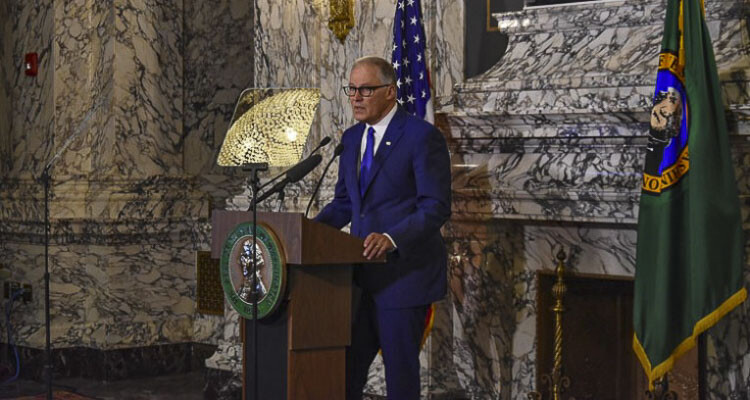
Gov. Jay Inslee’s proposed budget for the upcoming biennium includes $15 million in taxpayer money to be spent on providing abortion services and training for abortion providers.
Inslee’s proposed budget for 2023-2035, released Wednesday, will be submitted to the Legislature but is not binding on lawmakers.
The proposal calls for $70.4 billion in government spending. Of that amount, nearly $1.2 billion is allocated for the Department of Health.
Included in the DOH distribution is “$7,407,000 of the general fund — state appropriation for fiscal year 2024 and $7,603,000 of the general fund — state appropriation for fiscal year 2025 is provided solely to provide reimbursement for abortion services to providers of abortion care, to provide funding for travel costs for abortion care, including but not limited to childcare and meals, and to provide grants to public four year higher education institutions that offer advanced degree programs in nursing, medicine, and pharmacy to develop and offer abortion care training.”
Although more than half the state’s proposed DOH budget, 50.74%, is provided by federal appropriations, the provision for abortion services and training would be paid directly by Washington taxpayers, if the proposal were to pass the Legislature.
Federal law prohibits the use of federal funds to pay for abortions except in cases of rape, incest or to save the life of the pregnant woman.
The governor characterized the budget as prioritizing housing, homelessness and behavioral health in Wednesday’s statement accompanying its release.
State Sen. Lynda Wilson, R-Vancouver, ranking member of the Washington Senate’s Ways and Means Committee, criticized the proposed budget as ineffective and focused on the wrong priorities, though she did not mention the abortion provision.
“The governor’s support for behavioral health is appropriate, at least on the surface, but that will do nothing in the short term to deal with the record number of murders and fatal drug overdoses in our state, or help hire law-enforcement officers to fight crime in our communities,” Wilson said in a statement.
State Senate Ways and Means Chair Sen. Christine Rolfes, D-Bainbridge Island, did not reply to a request for comment.
This report was first published by The Center Square Washington.
Also read:
- Opinion: The wealth migration is real – which states are benefiting?
 IRS data shows Idaho, Montana, and Wyoming attracted significant wealth from new residents, while Washington state saw a loss of $500 million as its new capital gains tax took effect.
 - Expect delays on SR 14 in Vancouver for guardrail repairs Wednesday
 State Route 14 travelers in Vancouver should plan for morning delays as WSDOT will close two eastbound lanes for guardrail repairs, affecting mileposts 6.0 to 7.0.
 - Clark County Fire District 10 responds to fatal structure fire on NE Fargher Drive
 Emergency crews from multiple agencies responded to a structure fire on NE Fargher Drive in Amboy, where two victims lost their lives despite rescue and medical efforts.
 - Opinion: Voting with the Democrat Party – Back to the future!
 Lars Larson connects the history of election rules to today’s debates, highlighting Supreme Court concerns over counting ballots after Election Day.
 - County seeks applicants for two positions on Community Action Advisory Board
 Clark County seeks two volunteers to advise on funding strategies for basic needs, housing, and economic self-sufficiency programs serving local residents.
 - Michelle Belkot fired up over judge’s decision to dismiss her case against Clark County Council
 A federal judge dismissed Michelle Belkot’s claims that the Clark County Council violated her rights and public meeting laws by removing her from the C-TRAN Board after she opposed light rail funding.
 - Vancouver city leaders appreciate the feedback at Monday’s community forum
 Guests filled six tables as Vancouver officials listened to conversations sparked by structured questions touching on connection, barriers, and belonging.
 wpDiscuz
