



Bill would allow incarcerated murderers and rapists to serve as jurors, vote, run for office
On Tuesday (Jan. 16), the House State Government and Tribal Relations Committee held a public hearing on a bill that would allow convicted serial murderers and rapists to serve as jurors, vote, and run for elected office while in prison.
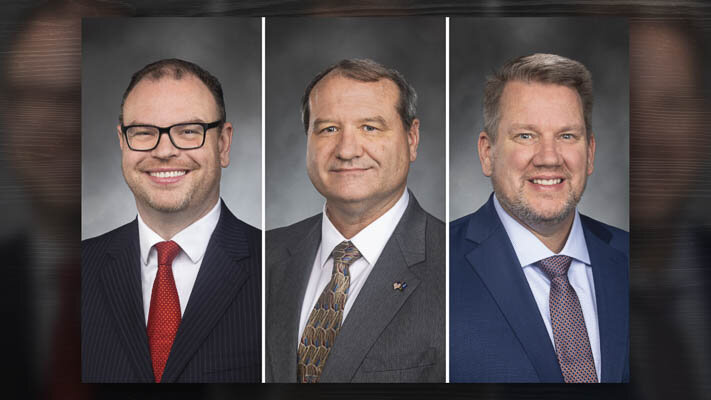
The three Republicans on the committee, ranking member Rep. Greg Cheney, R-Battle Ground, assistant ranking member Rep. Leonard Christian, R-Spokane Valley, and Rep. Sam Low, R-Lake Stevens, issued the following joint statement in response to the hearing:
“House Bill 2030 is the latest in a long list of radical proposals that prioritize criminals at the expense of victims. Restoring the voting rights of convicted murderers and rapists – including serial killers such as Gary Ridgway – would revictimize thousands of Washington families still suffering from the immeasurable pain and lifelong scars that forever haunt the loved ones of crime victims.
“Under this proposal, someone convicted and serving a felony sentence for vehicular homicide could sit on a juror panel on a DUI charge – that’s absurd on its face. At a time when violent crime is on the rise here in Washington, we should be focused on restoring law and order, not empowering convicted felons.”
Background
In Washington, those convicted of an “infamous crime” are not allowed to vote or serve as a juror. House Bill 2030 would redefine infamous crime to only include state crimes punishable by death; however, in 2018 the Washington Supreme Court determined that the death penalty is unconstitutional.
Legislative Democrats subsequently repealed statutes allowing for the death penalty. The effect of passing House Bill 2030 would be to restore the voting and juror rights of every incarcerated person.
The committee hearing can be viewed here on TVW: tvw.org/video/house-state-government-tribal-relations-2024011303/?eventID=2024011303
Information provided by Washington State House Republicans, houserepublicans.wa.gov
Also read:
- Dollars flowing into a pair of hotly contested WA congressional races
 Amanda McKinney leads 4th District GOP field with $523,892 raised, while Braun trails significantly behind incumbent.
 - Final Supplemental Environmental Impact Statement published for Interstate Bridge Replacement Program
 Federal agencies published the final environmental impact statement for the Interstate Bridge replacement project.
 - Belkot appeals judge’s decision to dismiss her case against Clark County
 Belkot’s attorney says the federal appeals court will hear the case in several months after judge dismissed all five claims.
 - Union baseball, softball teams honor military, veterans, and first responders
 Baseball and softball teams combined efforts to recognize military heroes and first responders with ceremonial pitches.
 - Union baseball, softball teams honor military, veterans, and first responders
 Baseball and softball teams combined efforts to recognize military heroes and first responders with ceremonial pitches.
 - Speed cameras designed to bring added safety to work zones
 WSP issued 65,000 infractions in first year, with 59,000 being penalty-free first offenses as program expands statewide.
 - Cathy Doriot retiring as the Ridgefield Chief of Police
 Chief Cathy Doriot expanded Ridgefield PD with detective, sergeants, officers and drone program during her tenure.
