



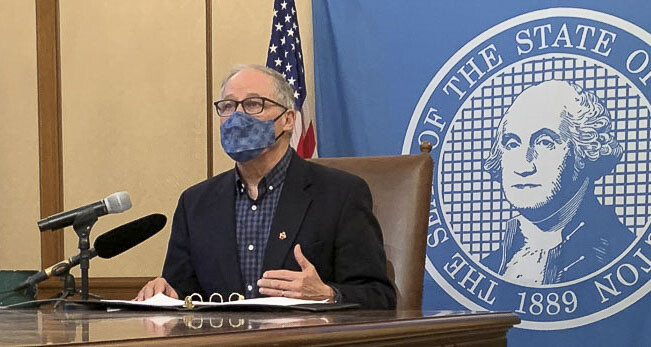
Emergency powers reform legislation also failed to pass in each of the previous three legislative sessions
Brett Davis
The Center Square Washington
Two bills seeking to exercise some legislative oversight of the governor’s powers during an emergency appear to be dead in the Washington State Legislature, with neither receiving a public hearing halfway through the legislative session.
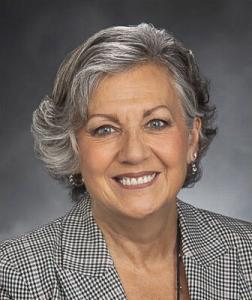
Senate Bill 5063, cosponsored by Sen. Lynda Wilson, R-Vancouver, and Sen. Mark Mullet, D-Issaquah, is known as the Bipartisan Approach to Legislative Authority Necessary in Continuing Emergencies, or BALANCE Act of 2023.
SB 5063 has three main provisions: 1) Allow an in-session Legislature to pass a concurrent resolution terminating an emergency declaration; 2) Allow all four members of the House and Senate leadership the ability to terminate an emergency declaration in writing when the Legislature is out of session and more than 90 days have passed since the declaration; and 3) Require restrictive declarations and suspension of law to expire after 30 days unless extended by the Legislature. When out of session, all four legislative leaders could extend such measures in writing.
The other piece of legislation, House Bill 1535, would limit a state of emergency to 60 days unless extended by the Legislature and allow lawmakers to terminate specific restrictions enacted under that emergency order. HB 1535 was introduced by Reps. Chriss Corry, R-Yakima, and Peter Abbarno, R-Centralia.
“There was hope that with the Governor’s nearly 1,000-day governance by emergency orders finally expired, the legislature this year would give a fresh look at the statutory imbalance concerning checks and balances present in our emergency powers statute,” Jason Mercier, director of the Center for Government Reform at the free market Washington Policy Center, wrote in a Tuesday blog post.
On February 29, 2020, Gov. Jay Inslee declared a statewide emergency in response to the novel coronavirus that was spreading across the globe during the COVID-19 pandemic. Under the state of emergency, the governor issued scores of additional proclamations ranging from shelter-in-place orders to school closures to a moratorium on evictions to vaccine and mask mandates.
Inslee ended his COVID state of emergency on Oct. 31, after 975 days of it being in effect.
That does not sit well with Mercier.
“The Governor should not fear being required to make the case to lawmakers why a particular emergency restriction is appropriate to continue, and the legislature should not hide from its constitutional responsibility to debate and adopt policy,” he said. “At some point, the executive branch should be required to receive permission from the legislative branch to continue making far-reaching policies under an emergency order.”
Mercier didn’t mince words on what he considers a power imbalance between state government branches when it comes to emergency situations.
“Our system of governance is not meant to be the arbitrary rule of one behind closed doors,” he said. “Hopefully, someday soon, majority legislative leadership will finally agree and act to require meaningful oversight and accountability for Washington’s emergency powers.”
The Center Square reached out to the governor’s office about the apparent death of the two emergency powers reform bills.
“We previously said we’d take a deeper look and weigh in on the legislation if they were advancing through the Legislature,” Mike Faulk, Inslee’s deputy communications director/press secretary said in an email. “These bills never came close to advancing and we don’t have anything more to add on them.”
Inslee has said he used his authority to save lives during the pandemic and that his authority has been upheld every time it has been challenged in court.
Emergency powers reform legislation also failed to pass in each of the previous three legislative sessions.
Also read:
- VIDEO: Rejected – WA SOS will not process referendum to repeal income tax law
 State officials stopped Let’s Go Washington’s referendum to overturn the new tax, citing constitutional limits. Legal and political battles, including a Supreme Court challenge, are expected next.
 - Washington’s studded tire deadline is March 31
 Drivers must remove studded tires by March 31 or face a $137 fine, with WSDOT urging early action due to busy service centers and no planned deadline extension.
 - Community in Action: Police cruisers ‘crammed’ with snacks to benefit local students
 Nearly 8,500 snacks filled police cruisers at Fred Meyer as the community rallied to stock high school pantries and build new relationships.
 - Southwest Washington lawmakers to hold a series of town hall meetings throughout the 17th Legislative District
 Sen. Paul Harris, Rep. Kevin Waters, and Rep. David Stuebe will answer questions and discuss the state’s expanded operating budget and newly passed income tax at five April town halls.
 - Can your wellness routine be harming your teeth?
 Dental enamel can’t regenerate once damaged, but steps like using a straw, rinsing with water, and choosing fluoride toothpaste can help protect your teeth from acidic beverages.
 - Vancouver Police investigate attempted murder
 A 29-year-old man suffered critical injuries in a stabbing incident on NE 12th Street, with the alleged assailant Jason Johnson now facing multiple felony charges after release from medical care.
 - Project 42: It is an income tax, not a millionaire’s tax
 Project 42 co-founder Dann Mead Smith urged Clark County residents to organize against the new income tax law, emphasizing it can be expanded to reach more than just millionaires.
 wpDiscuz
