



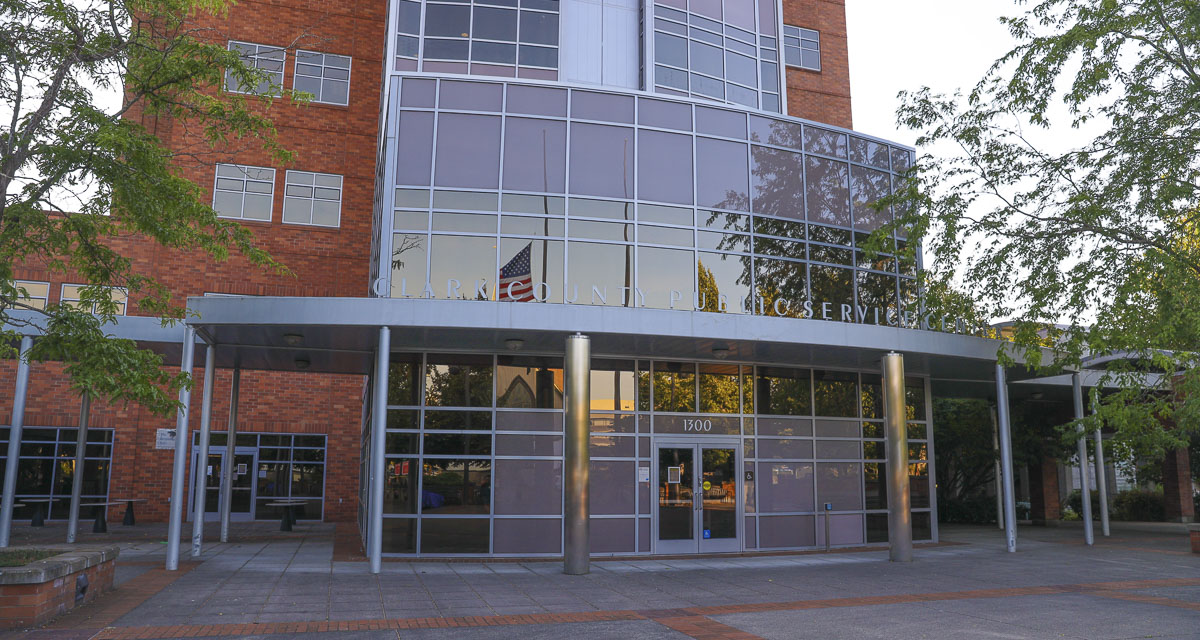
Clark County Council discusses changes to language in Rules of Procedure, and councilor Michelle Belkot says councilors should not have to vote in ‘lockstep’ while on boards, and the proposed changes are really about her removal from the C-TRAN board last year
Paul Valencia
Clark County Today
 See Grok’s analysis of this story
The Clark County Council still appears to be on the verge of making changes to its Rules of Procedure that will try to justify what it did to Councilor Michelle Belkot last year when it removed her from the C-TRAN Board of Directors.
Last week, while discussing changes, enough councilors were on board with revising the language on two fronts associated with the Belkot removal: The board wants, in writing, the authority to remove a councilor from a board or commission, and the board wants to force each councilor to vote the way the council wants when the council has taken a position on a particular issue.
In the past, councilors on boards, commissions, or committees voted independently of each other.
That discussion continued this week during Council Time on Wednesday, with Belkot participating in the meeting via streaming service.
If you recall, last year, other councilors wanted Belkot to vote one way — to force Clark County taxpayers to pay for operations and maintenance costs for light rail should light rail be part of the new Interstate Bridge — and Belkot voiced that she was going to vote her conscience and the will of her constituents.
That did not go over so well, so the other councilors kicked her off the C-TRAN board, leading to a criminal investigation and lawsuits.
As reported last week by Clark County Today, the proposed changes to the Rules of Procedure could be interpreted by some that the council did not have the authority to remove Belkot from the C-TRAN board last year.
Last week, Belkot was out of town and unavailable. This week, fighting a cold, she was not in downtown Vancouver but was part of the meeting through her computer.
Belkot said she does not believe the proposed language aligns with the county charter, noting that councilors have never had to vote in unity in the past.
“What would even be the point of any of you being elected if we’re all supposed to think-tank, lockstep vote? That has never been the county council,” she said.
In fact, if that is going to be the case, Belkot wanted to add language that council members could be removed from boards, commissions if they have been convicted of a crime.
None of the other councilors agreed with that.
“So if anybody is convicted of a crime, you’d be completely fine with them staying on a board?” Belkot asked.
“No, as a matter of fact, I’m not. We would elect to take our authority and remove the councilor in that specific situation,” Councilor Glen Yung said. “That is what this draft language gives us authority to do.”
Belkot then noted the current proposed language, with no clarification such as a criminal act, is not definitive. She said cannot find any other time when a councilor had been removed from a board, noting that her colleagues “made history” last year with her removal.
“It’s talking about, if you don’t like the way that someone votes, then you will remove them,” Belkot said. “What is the point of even having a voice to vote?”
County Chair Sue Marshall said if the council comes up with a position on any particular item, the representative of the council on a board should be forced to vote that way.
Again, this is new language the council is discussing. If this was not in Rules of Procedure last year, why was Belkot removed from the C-TRAN board?
Belkot wondered how the new language would be enforced.
“So are you going to appoint councilors to more boards and committees to watch other councilors on how they vote, to make sure that we are a collective voice on every board and committee?
“And obviously this is all stemming from you all removing me from C-TRAN. Let’s be real here,” Belkot said.
Marshall said last year it was “clear” that the board expected Belkot to vote to force taxpayers to be on the hook for O&M costs associated with light rail.
“No, it wasn’t,” Belkot said.
A criminal investigation that was conducted after Belkot’s removal from the C-TRAN board concluded that the other members of the Clark County Council did, in fact, violate the Open Public Meetings Act during the process of removing Belkot and placing Councilor Wil Fuentes to that board.
Back to this year’s proposed changes to the language, Yung said he wants it to be clear moving forward that if the council comes to a position, a councilor will follow those orders and vote accordingly. If a councilor does not vote that way, he wants the ability to restrict that councilor from being on a board.
“You want to control people,” Belkot said.
This is an ongoing process. The discussion on Wednesday will be used by county staff to draft revised language for the council to discuss in the future. Marshall did say there will be a public hearing on Rules of Procedure.
It should be noted that while all four other councilors initially voted to remove Belkot from the C-TRAN board last year, Matt Little changed his vote, agreeing with Belkot that there was nothing in Rules of Procedure that mandated she vote a certain way.
Little said Wednesday he is against the new language proposal allowing the council to remove a colleague from a board or commission but he is OK with the proposal to force a councilor to vote when the council comes to a position on a specific item.

This independent analysis was created with Grok, an AI model from xAI. It is not written or edited by ClarkCountyToday.com and is provided to help readers evaluate the article’s sourcing and context.
Quick summary
The Clark County Council continued debating proposed updates to its Rules of Procedure on Jan. 22, 2026. The changes discussed include explicit authority to remove councilors from boards or commissions and language requiring councilors serving on those bodies to vote as directed by the council on issues where the council has taken a position. Councilor Michelle Belkot argued the revisions are a response to her 2025 removal from the C‑TRAN board and would reduce independent, district‑specific representation.
What Grok notices
- Includes direct quotations from councilors such as Sue Marshall, Glen Yung, and Michelle Belkot on the proposed language and its relationship to last year’s C‑TRAN board dispute.
- Recounts key background points raised in the reporting, including Belkot’s removal, OPMA violation findings referenced in connection with the dispute, and Matt Little’s change in vote, tying earlier events to the current rule‑revision effort.
- Frames the debate as a governance question: clarifying authority and expectations for council-appointed board roles versus preserving independence for councilors representing individual districts.
- Highlights Belkot’s characterization of “lockstep” voting and her argument that requiring directed votes would limit independent judgment on regional boards or commissions.
- Points readers toward upcoming hearings, drafts, and enforcement details as the place where the practical mechanics (when directives apply, how removal would occur, and what due process exists) would become clearer.
Questions worth asking
- If councilors are required to vote as directed, how might that affect their ability to represent unique district priorities or respond to new information during meetings?
- Would explicit removal authority increase transparency and accountability for appointees, or could it create incentives for political pressure in board assignments?
- How might these rule changes intersect with ongoing litigation connected to Belkot’s C‑TRAN removal, including arguments about authority and procedure?
- How do other Washington counties define the balance between council oversight and appointee independence when council members serve on regional bodies?
- What safeguards—clear standards, notice, recorded votes, or an appeal process—could reduce the risk of selective or politically motivated application?
Research this topic more
- Clark County Council – agendas, minutes, and Rules of Procedure updates
- Clark County Code – council authority and appointment provisions
- Washington State OPMA – compliance guidance and violation information
- C‑TRAN – board composition and governance documents
- MRSC – local government board appointment and governance resources

Also read:
- Opinion: Lawsuit filed against the unconstitutional income tax in Washington state
 Former Attorney General Rob McKenna and Supreme Court Justice Phil Talmadge challenge the 9.9% income tax in Klickitat Superior Court.
 - Letter: ‘Oregon and Washington aren’t refusing to clean their rolls — they’re contesting federal jurisdiction and timing’
 Camas resident challenges Lars Larson’s fraud claims, explaining legal disputes over federal jurisdiction.
 - County Council to hold hearing on preferred land use alternative for comprehensive plan update
 Clark County Council will select preferred land use alternative from three options studied in environmental review.
 - Opinion: ‘When are we going to get the full and complete details of the Interstate Bridge Replacement Program’s I-5 Bridge replacement project?’
 IBR team buried key details about light rail ending at waterfront with massive elevator system required.
 - County seeks public comment on plans tied to CDBG and HOME funding
 Clark County proposes $2.4 million in federal funding for dental care, affordable housing, and sidewalk improvements.
