



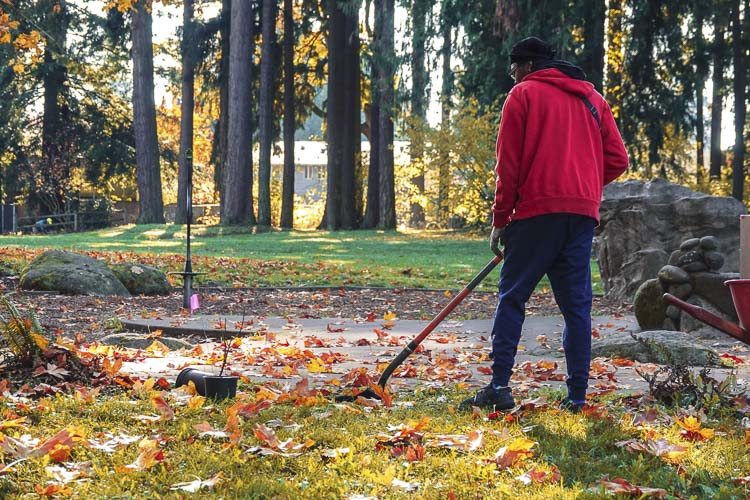
The Minnehaha neighborhood was identified as a high priority for tree planting due to its low Tree Equity score
VANCOUVER – Clark County Public Works is working to increase the tree canopy in the Minnehaha neighborhood via a collaborative effort of Clark Conservation District, several Public Works divisions, local partners and state agencies. The Minnehaha neighborhood was identified as a high priority for tree planting due to its low Tree Equity score, which identified Minnehaha as having a lower percentage of tree canopy compared to other neighborhoods in Clark County, combined with the greatest socio-economic need. Additionally, a recent tree canopy assessment found that the neighborhood lost approximately 25 acres of trees between 2011 and 2023, a total tree canopy loss of nine percent.
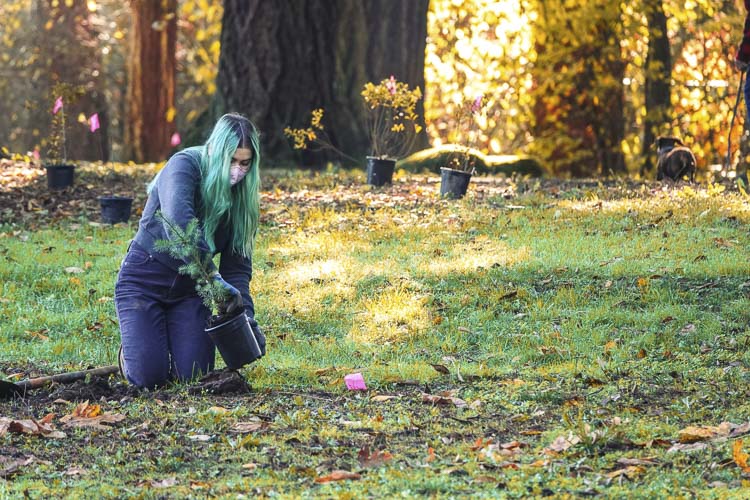
Trees will be planted in county road right of way, parks property and in the right of way in front of homes. At least 250 Minnehaha residents will be recruited for a free tree giveaway program in addition to 650 trees planted in parks, county right of way, and throughout the neighborhood. The goal of the program is to plant up to 1,000 trees in Minnehaha by June 30.
To support tree planting efforts, the Clean Water, Roads Maintenance and Operations, and Parks and Nature divisions of Public Works are collaborating with the Clark Conservation District. Funds for this project were provided by the State of Washington Department of Natural Resources Urban and Community Forestry Program.
Three volunteer tree planting events are being held in January.
- Noon to 4 pm on Thursday, Jan. 23 at Road’s End Neighborhood Park
- 9 am to noon and noon to 3 pm on Saturday, Jan. 25 at Bosco Farm Neighborhood Park (volunteers can sign up for one or both shifts)
- Noon to 4 p.m. on Friday, Jan. 31 at Douglas Carter Fisher Neighborhood Park
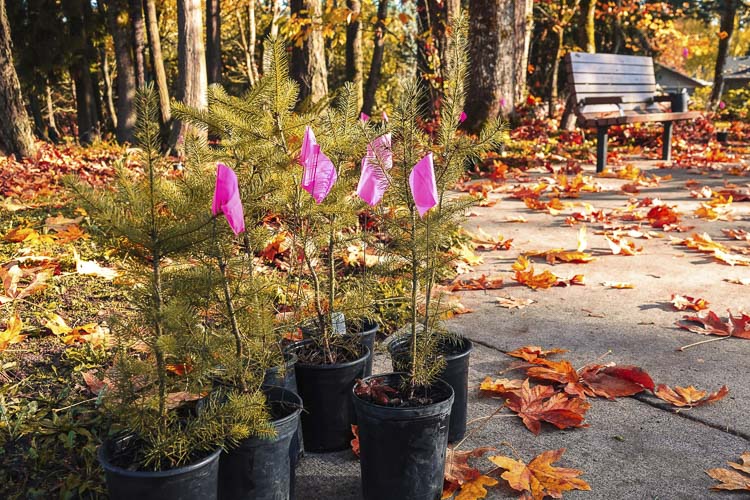
Urban areas benefit from increased tree canopy in multiple ways. Trees can reduce a community’s temperature 11-19 degrees Fahrenheit. Relief from extreme summer temperatures is increasingly important, and low-income urban areas are more likely to suffer from urban heat island effects (where buildings, pavement and lack of shade trees increases the temperature in an urban area). Additionally, each 100 trees removes 430 pounds of air pollutants and catches about 139,000 gallons of stormwater annually. Studies show that urban tree canopy also provides economic, health and social benefits such as increased property values, increased visitation to businesses, mental health improvements, and increased social connection among residents.
This project is part of a long-term goal to replicate and implement urban tree canopy programs in other neighborhoods throughout the Clark County Urban Growth Area.
More information about the volunteer events, including links to register, can be found at clark.wa.gov/public-works/volunteer#calendar.
For information about road and park projects, closures, opportunities for community input, and more, residents can follow Public Works on X (formerly known as Twitter), Facebook and Instagram and view information on Nextdoor.
Information provided by Clark County Public Works.
Also read:
- Vancouver house fire displaces residents
 Crews from Vancouver Fire Department stopped a living room blaze from spreading, but five residents were forced out due to lingering smoke.
 - VIDEO: Vote-by-mail rules in WA at risk in SCOTUS election law case
 More than 127,000 Washington ballots postmarked by Election Day but received after could be disqualified under a possible Supreme Court ruling, prompting debate from both parties.
 - Rounding out debate, Gov. Ferguson signs bill addressing retailers’ penny problem
 A new Washington law lets merchants round cash purchases to the nearest 5 cents, aiming to manage change as shortages of pennies affect both businesses and customers.
 - Opinion: State is rightly emphasizing experience and skills, not degrees
 Elizabeth New explains how a new state policy removes unnecessary advanced degree requirements, supporting skills-based employment and broadening opportunities for capable workers.
 - Opinion: The wealth migration is real – which states are benefiting?
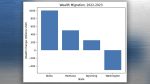 IRS data shows Idaho, Montana, and Wyoming attracted significant wealth from new residents, while Washington state saw a loss of $500 million as its new capital gains tax took effect.
 - Expect delays on SR 14 in Vancouver for guardrail repairs Wednesday
 State Route 14 travelers in Vancouver should plan for morning delays as WSDOT will close two eastbound lanes for guardrail repairs, affecting mileposts 6.0 to 7.0.
 - Clark County Fire District 10 responds to fatal structure fire on NE Fargher Drive
 Emergency crews from multiple agencies responded to a structure fire on NE Fargher Drive in Amboy, where two victims lost their lives despite rescue and medical efforts.
