




Enrollment at community colleges nationwide dropped sharply during the pandemic and the push to move most classes to online delivery during the shutdown
VANCOUVER — Enrollment at Clark College increased 10.4% in state full-time equivalency this fall term compared to fall 2022. That news comes as the college releases its official enrollment numbers at the end of the 10th day of class this fall term on Oct. 6, 2023.
Clark College President Dr. Karin Edwards said, “After several years of enrollment decline, and the impact of the global pandemic, it’s heartening that our state full-time equivalency (FTE) this fall has increased by at least 10% over last fall, surpassing our local enrollment goal for state-funded FTE. We’ve welcomed over 8,600 students to start the term, exceeding our college-budgeted targets across enrollment categories.”
Enrollment at community colleges nationwide dropped sharply during the pandemic and the push to move most classes to online delivery during the shutdown. As enrollment starts to turn around, data from the National Student Clearinghouse Research Center demonstrated a 0.5% gain in enrollment at community colleges nationwide during spring term 2023. In comparison, following the pandemic, enrollment plummeted 10.1% in spring 2021 and 8.2% in 2022.
Clark College’s enrollment is in line with national enrollment trends as we started to see small enrollment increases of under 5%, starting last fall. Enrollment numbers are provided by the Washington State Board for Community and Technical Colleges (SBCTC), which tracks enrollment data for the 34 public colleges in its system.
Clark College enrolled a total of 8,683 students, an 8.4% increase from the previous fall. This translated to the full time equivalent (FTE) enrollment numbers at 5,932 which breaks down as following:
- State FTEs (without Running Start) include Bachelor of Applied Science (BAS), International and “other” showed enrolled FTEs of 4,278, a 10.4 percent increase from previous year. This also reflected an increase of 6 percent from the budgeted FTEs of 4,033 projected for the fall term.
- Running Start showed 1,587 enrolled FTEs, a 10.7% increase from fall 2022 and a 7% increase from our budgeted FTEs.
- 237 athletes in volleyball, cross-country, soccer, basketball, baseball, softball and track.
Student demographics as shared at the last board of trustees work session on Sept 27:
- Gender – 56.7% female; 33.9% male; 9% nonbinary; 10.5% unreported
- Age – 41.5% younger than 19; 30.9% between 20-29; 13.7% between 30-39; 13.6% 40 or older; 0.2% unreported
- Race/ethnicity – 60.4% white; 13.7% multi-racial; 10.5% Latinx; 6.8% Asian; 2.9% Black/African American; 0.8% Pacific Islander; 0.4% Native American; and 4.4% unreported
- Student types – 24.1% first-time college students; 75.9% returning students
- Modality — 51.3% full-time; 48.7% part-time
- Veterans: 223 students are military veterans
- Students in program types – 55.3% transfer; 20.3% career and technical education (CTE); 12.7% transitional studies (ESL and college prep); 4.9% non-award seeking; 3.5% bachelor of applied sciences; 3.2% continuing education
- Modality: 6,514 students in-person; 10,999 students online; and 4,407 hybrid
- Faculty – 70% full-time faculty; 30% part-time or adjunct faculty.
During fall term 177 full-time faculty are teaching.
Dr. Jim Wilkins-Luton, interim vice president of instruction, attributes the college’s growth to caring staff and committed faculty. “Our faculty works hard to provide students with learning experiences that meet their needs,” said Wilkins-Luton. “Whether it is developing our new bachelor of applied science in teacher education degree or our pending new bachelor of science in computer science degree, Clark’s faculty strive to prepare students for productive lives and living-wage jobs in our community.”
About Clark College
Founded in 1933 and celebrating its 90th year, Clark College is Southwest Washington’s largest public institution of higher education and serves over 8,000 students per term. Clark College provides residents of Southwest Washington with affordable, high-quality academic and technical education.
Clark College offers more than 100 degree and certificate programs, including bachelor’s and associate degrees; professional certificates; high school diplomas and GED preparation; and non-credit community and continuing education. Clark serves a wide range of students including high school students, displaced workers, veterans, parents, non-native English speakers, and mature learners. Approximately three-quarters of its students are in the first generation of their families to attend college.
Clark College currently offers classes at two satellite locations: Washington State University Vancouver campus and Columbia Tech Center in East Vancouver, in addition to its 100-acre main campus in downtown Vancouver. Additionally, the college broke ground this June on its new auxiliary campus, Clark College at Boschma Farms, in Ridgefield, Wash.
About Washington SBCTC
The Washington State Board for Community and Technical Colleges (SBCTC) makes higher education accessible and affordable by advocating, coordinating, and directing Washington state’s system of 34 public community and technical colleges. SBCTC collectively serves over 262,000 students each year, which makes it the largest system of public higher education in Washington. They serve over 50% of students of color. They are accessible, affordable, and connected to K-12 schools, universities, and employers.
Also read:
- VIDEO: WA income tax signed into law with legal challenge right behind
 A 9.9% income tax affecting high earners in Washington faces swift legal opposition and a proposed citizen initiative seeking repeal.
 - Income tax signed in Washington with a legal challenge close behind
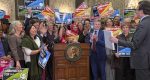 A new law will tax households earning over $1 million, with funds aimed at expanding credits for lower-income residents. Lawsuits and challenges are already underway.
 - Peter Silliman announces candidacy for Clark County Council
 Peter Silliman, small business owner and Charter Review Commissioner, is seeking the District 5 seat and promises action on transparency, housing, and park development.
 - Opinion: Defend bail now or face more chaos on our streets
 A proposed Washington court rule would cap bail for most misdemeanors and allow defendants to bypass bondsmen, raising concerns about accountability and public safety.
 - County seeking young people to fill 10 volunteer positions on Youth Commission
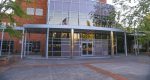 Young people ages 12-19 from across Clark County can now apply for at least 10 open seats on the Youth Commission, providing input on community decisions.
 - State Representatives McClintock and Ley answer questions at town hall in Battle Ground
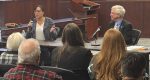 Residents voiced rising concerns about property taxes, school funding debates, the impact of new income tax legislation, and major costs tied to the Interstate Bridge plan.
 - As Washington gets an income tax, the fight to overturn it begins
 Opponents are organizing lawsuits and potential ballot measures to challenge the new 9.9% income tax on Washington households earning over $1 million.
