



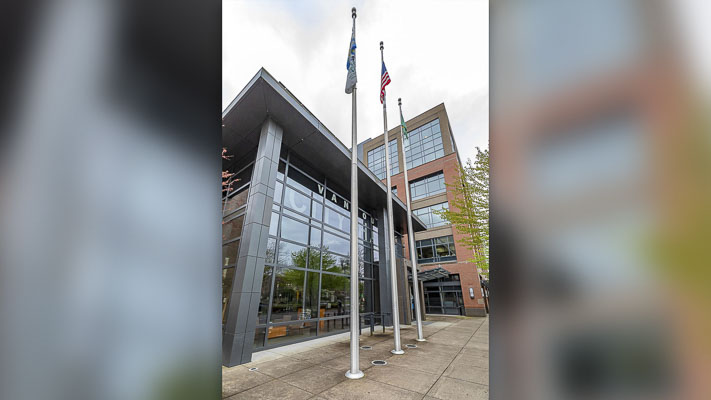
The proposed budget includes approximately $1.7 billion in total expenditures across all funds for the biennium
VANCOUVER – Vancouver City Manager Eric Holmes has submitted his recommended biennial budget for 2023-24 to the City Council.
“The projects and priorities included in the recommended budget will help propel Vancouver toward becoming a safer, healthier, more resilient, equitable and inclusive community for all,” said City Manager Eric Holmes.
The recommended budget was built around the city’s universal policy themes of safety, equity, and climate action and reflects City Council’s policy priorities for this biennium, which include Improving Community Safety and Wellbeing, Reducing Carbon Footprint, Improving Equity and Inclusion, Growing Economic Opportunity, and Exceptional Public Spaces and Places.
Community input came from a variety of sources, such as direct engagement with community and neighborhood groups, a community survey, an on-line budget engagement and prioritization tool, as well as the assessment and analysis associated with the Stronger Vancouver initiative. Capital and program investments were also informed by Vancouver’s newly developed Social Vulnerability Index as well as consultation with relevant boards and commissions.
“The recommended budget reflects and advances high priority initiatives of both the City Council and the community,” said Holmes. “We’re tackling immediate challenges while planning for future generations of Vancouver residents.”
The balanced budget includes approximately $1.7 billion in total expenditures across all funds for the biennium, including $707 million for the general, street and fire funds and $277 million in capital project expenditures. Highlights from the recommended budget include:
- Increases in staffing by 110.35 FTEs in multiple areas across the organization. More than half are for police and fire services (52 in police and fire and 10 in departments that support public safety). These public safety positions are directly funded by recently voter-approved property and sales tax increases from Proposition 2 and Proposition 11 respectively.
- Updating the business license fee and business license surcharge to generate additional funding for transportation, public safety, parks upgrades, homeless services and economic development.
- Recommending the Transportation Benefits District Board approves a 0.1 percent sales tax to fund and implement the Complete Streets Plan.
- Funding for efforts to respond to homelessness, including one new Safe Park, two additional Safe Stay Communities and expansion of the Homeless Assistance and Resources Team (HART).
- A new citywide trail program to build connections between existing trails and improve mobility by all forms of transportation.
- A proactive outreach program to small and historically disadvantaged businesses, including those owned by minorities and women.
- New and updated parks in areas of the community with historically underserved residents, including activities for pre-teens and teenagers.
- Significant capital investments into water, wastewater and sewer infrastructure system building resiliency into the future, supported by a proposed aggregate 6 percent annual increase on city-utility rates (sewer, water, draining and garbage).
- Key strategic projects that will play a transformative role in Vancouver’s growth, including projects in the Fourth Plain Corridor, the Heights, Section 30, Waterfront Gateway, and a $64 million investment in city streets.
A series of meetings with the Vancouver City Council will provide highlights of the operating and capital budgets. Members of the City Council will then review and vote on the budget at a regular meeting and hold a separate public hearing:
- Mon., Oct. 10, City Manager delivers recommended Biennium Budget
- Mon., Oct. 17, Budget Workshop: Operating Budget
- Mon., Oct. 24, Budget Workshop: Capital Program (utilities, parks, and general) and Transportation
- Mon., Nov. 7, Budget Workshop: Complete Budget
- Mon., 14, First reading of Budget Ordinances
- Mon., Nov. 21, Second Reading/Hearing, City Council adoption of 2023-24 Biennium Budget
The recommended budget document, city manager’s budget message, map of proposed capital projects, budget dashboard of the city’s proposed operating and capital budget, and other related information is available at www.citofvancouver.us/budget.
Information provided by city of Vancouver.
Also read:
- Opinion: Let’s make Washington state affordable for everyone
 Rep. David Stuebe criticizes state lawmakers’ spending increases and calls for tax relief, budget reforms, and restored funding for essential services across Washington.
 - Winners, losers and takeaways from WA’s legislative session
 Funding reductions affect Transition to Kindergarten and Running Start, while free school lunches are set for 2029 using new income tax revenue.
 - ‘An upward trajectory’: Petroleum expert on Iran conflict’s impact on gas prices
 Drivers in Washington are facing steeper costs at the pump due to supply disruptions, increased taxes, and a closed oil shipping route, which together raise expenses for businesses and consumers.
 - Opinion: Legislature agrees to increased spending in Supplemental Budget
 Washington lawmakers approved an $80.2 billion supplemental budget, banking on an income tax that is uncertain to withstand legal and electoral tests despite increasing spending beyond revenue projections.
 - Letter: ‘Only Florida has a more regressive tax structure than Washington’
 Washington households earning the least pay 13.8% in taxes, while the wealthiest 1% pay only 4.1%, according to Camas resident Anthony Teso’s letter.
 - Battle Ground Citizen of the Year for 2025 announced & celebration planned
 Johanna Hyatt has helped lead fundraising events, library initiatives, and aid for multiple local nonprofits during over a decade of community service in Battle Ground.
 - Clark College State of the College Address highlights achievements, challenges and regional impact
 Clark College’s annual address showcased student achievements, rising enrollment, robust scholarships, and workforce-driven academic programs influencing the regional economy in Southwest Washington.
