



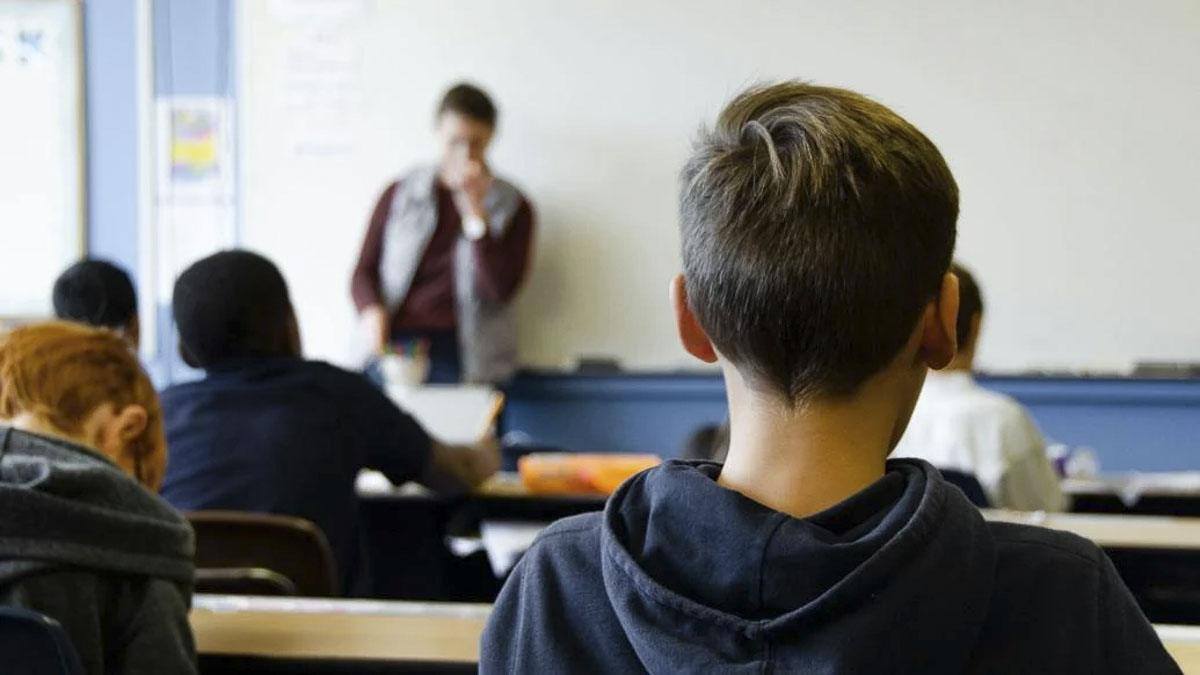
According to the latest Education Recovery Scorecard, Washington ranks 34th in math recovery and 26th in reading among the states in relation to their recovery from pandemic-era learning losses
TJ Martinell
The Center Square Washington
A bill filed in the Washington State House of Representatives seeks to reverse what the sponsor argues is a trend of poor student academic performance by making changes to the K-12 system, with an emphasis on the third grade.
According to the latest Education Recovery Scorecard, Washington ranks 34th in math recovery and 26th in reading among the states in relation to their recovery from pandemic-era learning losses. According to the scorecard, Washington student achievement remains 53% of a grade below 2019 levels in math and 46% below in reading, while chronic absenteeism has increased from 15% in 2019 to 30% in 2023.
House Bill 1832 sponsored by Rep. Michael Keaton, R-Puyallup, seeks to incentive improved student learning by offering additional funding to schools that meet certain academic improvement metrics, while creating a grant program for elementary-level reading coaches. The bill also tasks the Office of the Superintendent of Public Instruction to consider the Singapore math method, which is a teaching approach intended to promote problem-solving skills.
Testifying on the bill at its Tuesday afternoon public hearing in the House Education Committee, Keaton said the bill is meant to be “inspirational and make changes within reading academics to reverse some trends recently.”
“We all agree that the most important thing, when you first arrive at school, is to feel welcome and to feel safe,” he said. “Just as importantly, academic rigor is necessary to get focus to the classroom. When you learn to overcome things that you’ve had that you’ve maybe done poorly and they’re difficult … it actually helps you get strengthened yourself and pride in your pathways to future accomplishments.”
Among the bill’s other provisions is a requirement to notify third grade students and their parents about academic improvement strategies if the student either scores or is expected to score below their grade level on the state English Language Arts assessment.
Keaton said he included this provision because “all studies talk about the fact that at the time of third grade, if they’re not ready for fourth grade, that they’ve lose the time from going from learning to reading to learning.”
Also testifying in favor of the bill was Vicki Murray, the director of the Center for Education at the Washington Policy Center. She told the committee the latest “report card” for the state’s K-12 system “should be a clarion call for us all to restore our focus on what matters most in schools, student learning, academic rigor, and excellence in teaching. Early targeted interventions can help increase student performance in the near term and importantly prevent costly a remediation and grade retention later on.”
Another individual testifying in favor of the bill was Sharon Hanek, who described it as a “good start. We have several problems and parents are very concerned that the schools are not educating our children, whether it’s in ELA, English language, or if it’s in mathematics.”
However, she added that “state standards are not rigorous enough, and so I would just kind of recommend taking a look at tweaking maybe more of the system.”
HB 1832 is not scheduled for any further committee action.
This report was first published by The Center Square Washington.
Also read:
- State Representatives McClintock and Ley answer questions at town hall in Battle Ground
 Residents voiced rising concerns about property taxes, school funding debates, the impact of new income tax legislation, and major costs tied to the Interstate Bridge plan.
 - As Washington gets an income tax, the fight to overturn it begins
 Opponents are organizing lawsuits and potential ballot measures to challenge the new 9.9% income tax on Washington households earning over $1 million.
 - Battle Ground Police arrest suspect in fatal 2025 crash
 Laboratory results from a blood sample collected in 2025 provided probable cause for police to arrest Michael T. Smith, more than a year after the Battle Ground crash.
 - Vancouver Police seeking missing person
 Vancouver Police are searching for 62-year-old Carrie Ann Winters, who was last known to be near Frenchman’s Bar in west Vancouver. She has distinctive tattoos.
 - VIDEO: WA diesel hits record $6.53, crushing truckers and school budgets
 With diesel nearing $6.53 per gallon in Washington, trucking businesses and school districts now confront sharply higher fuel expenses affecting budgets and workers.
 - WA’s status solidifies as one of the most expensive places in US
 A new study shows Washington outpaces most states on cost of living, with metrics revealing a sharp rise in daily expenses and major metro areas ranking among the nation’s most expensive.
 - Opinion: Someone explain the Democrat Party to me please
 Lars Larson criticizes Democrat politicians for shutdown threats, Homeland Security funding refusals, and positions on election laws, housing, and gun rights.
 wpDiscuz
