



Once the pandemic hit, transit operational costs increased while passengers abandoned public transportation for various reasons
Elyse Apel, Tom Gantert and Brett Rowland
The Center Square
In 2019, transit agencies across the U.S. for all modes of transportation took in 32.3 cents in fares for every dollar they spent on operating costs.
Those transit agencies recovered 18.4 cents in fares on the dollar in 2020 and just 12.8 cents in 2021.
Once the pandemic hit, transit operational costs increased while passengers abandoned public transportation for various reasons – including fear of COVID-19, working from home and having some transportation shut down.
That loss in farebox revenue was made up by an injection of federal taxpayer dollars. The federal government gave transit agencies $71.7 billion in four relief packages in response to the COVID-19 pandemic, according to a report from rating agency S&P.
The National Transit Authority stated 852 transit agencies across the U.S. spent $13.1 billion in federal pandemic relief funds mostly on operational expenses in 2021, a 95 percent increase from the previous year.
All forms of transit saw the percentage of farebox revenue compared to operating expenses drop in 2021. For example, farebox revenue was 49.1 percent of operating expenses in 2019, the year before the pandemic hit. In 2021, the farebox revenue dropped to 19 percent.
Recently released data from the Federal Transit Administration sheds light on how the COVID-19 pandemic continued to cripple public transportation throughout 2021 and how federal taxpayer funding kept it running.
Federal funding was the predominant source of funding for transit, something the report says was due to the “COVID-19 public health emergency.”
From 2021 to 2020, federal funding for transit operating expenses rose dramatically. In 2020, federal funding made up 25.8 percent of the funding, while in 2021 that percentage rose to 36.2 percent.
In 2019, federal funding made up only 7.1 percent of funding for operating expenses.
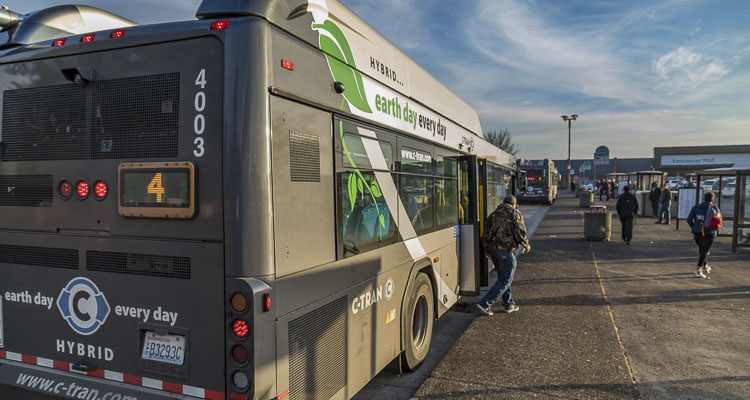
In Southwest Washington, C-TRAN’s percent of operating revenue to operating costs were as follows:
2021
- Fixed Route: 5.9 percent
- Demand Response: 1.7 percent
- Vanpool: 37.7 percent
2020
- Fixed Route: 7.3 percent
- Demand Response: 2.2 percent
- Vanpool: 28.3 percent
2019
- Fixed Route: 14.2 percent
- Demand Response: 3.5 percent
- Vanpool: 35.3 percent
This story was first published by The Center Square.
Also read:
- Area Agency on Aging & Disabilities in Southwest Washington announces the Senior Farmers Market Nutrition Program
 AAADSW opens applications for $80 benefit cards to help eligible seniors buy fresh produce at farmers markets.
 - Free in-person workshops promote composting and sustainable living
 Clark County’s free workshops teach residents worm composting, green cleaning, and smart recycling through April and May.
 - Keeping afloat: A bittersweet chronicle of two women who endured the sinking of the Titanic
 Local historian Peri Muchich shares the story of Pacific Northwest Titanic survivor Anna Warren at Sunday’s museum event.
 - Letter: ‘This is the worst thing that ever happened to the region’
 A Hayden Island resident Sam Churchill is criticized in a letter calling the $14 billion Interstate Bridge Replacement project a “boondoggle” that destroys local businesses.
 - Washougal ramps up efforts to support small businesses
 Washougal launches Gateway to Success Series with free workshops starting April 15 at Best Western Plus Convention Center.
 - Vancouver woman displaced by apartment fire
 Fire crews responded to 1806 E Fourth Plain Blvd where one woman was displaced and received Red Cross aid.
 - Former WA Supreme Court justice joins legal effort against income tax
 Phil Talmadge and Rob McKenna have joined forces with the Citizens Action Defense Fund to oppose Washington’s new tax on high-income earners, raising legal and constitutional questions.
 wpDiscuz
