



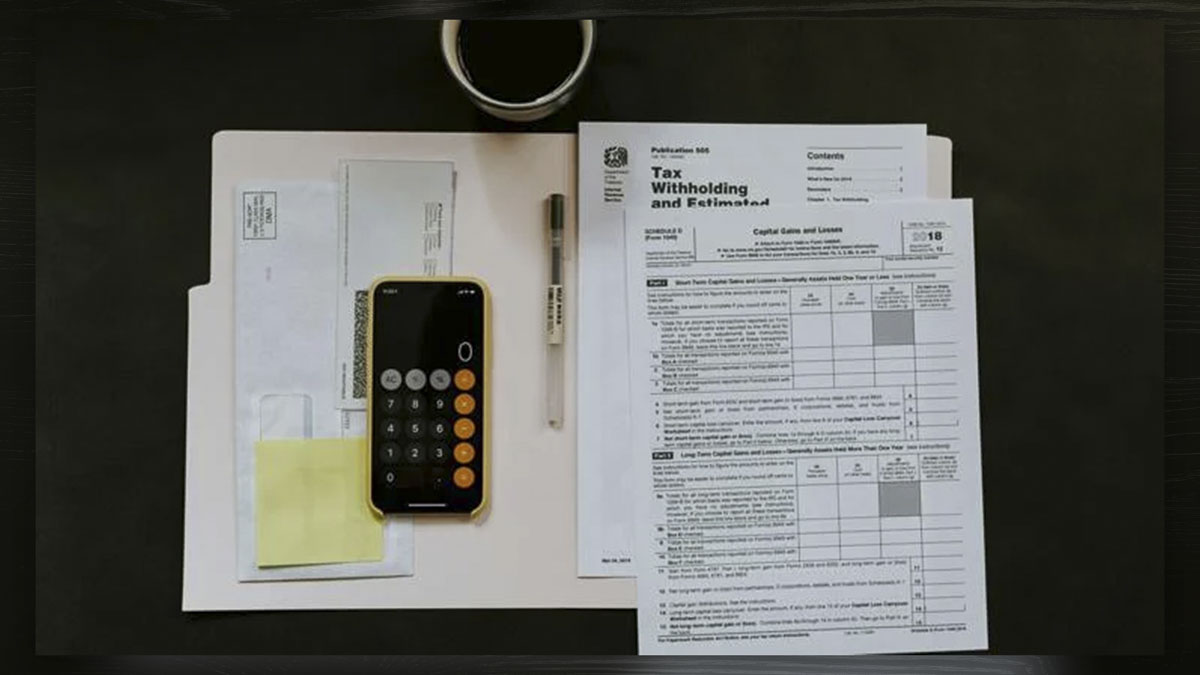
One member of a prominent Washington think tank suspects lawmakers are considering modifying the capital gains tax to generate more revenue for state coffers
Brett Davis
The Center Square Washington
A general income tax in Washington state appears to be off the table for now, even as voters retained the state’s capital gains tax by failing to pass Initiative 2109 on Nov. 5, which would have repealed it.
Passed by the 2021 state Legislature and signed into law by Gov. Jay Inslee, Senate Bill 5096 created a 7% tax on any gain in excess of $250,000 – now $262,000 as the floor is tied to inflation – in a calendar year from the sale or exchange of certain long-term capital assets, including stocks, bonds, and business interests.
However, one member of a prominent Washington think tank suspects lawmakers are considering modifying the capital gains tax to generate more revenue for state coffers.
Passing a general income in Washington state at this time is an uphill battle for a few reasons.
Earlier this year, the state Legislature passed Initiative 2111, which prohibits local and state governments from introducing any taxes on personal income. It went into effect on June 6.
The state Supreme Court’s controversial March 2023 decision upholding the capital gains tax as a constitutional excise tax applying only to the trade of investment assets such as stocks and bonds but no other forms of capital gains such as dividends or interest also complicated the possibility of an income tax in the Evergreen State.
Incoming Senate Majority Leader Jamie Pedersen, D-Seattle, who in the past has made no secret of his desire to leverage a capital gains tax into an income tax, said the high court’s decision not to reverse itself on income taxes altogether is a major factor.
“The short answer is no,” he told The Center Square in an email responding to a question about the possibility of the Legislature pursuing an income tax in the upcoming session. “In upholding the capital gains tax, our state Supreme Court declined to revisit its existing case law finding that income is property and so an income tax would be subject to the constitutional restrictions on property tax (i.e. 1% cap and no graduated rates). We are not even close to the 2/3 majority that would be required to amend the constitution.”
Todd Myers is vice president for research at the Washington Policy Center, a free-market think tank. He has a different take on the capital gains tax itself.
“The most likely scenario is a reduction in the threshold for the income tax on capital gains,” he said.
He also mentioned Washington’s cap-and-trade program that seeks to limit the amount of planet-warming greenhouse gases polluters produce over time by having businesses purchase allowances at quarterly auctions to cover their emissions.
A little over two weeks ago, voters decided not to pass Initiative 2117 which would have, in part, prevented state agencies from implementing or enforcing any carbon tax trading system as part of a plan to reduce greenhouse gas emissions.
Cap-and-trade opponents say it has substantially increased gas prices in Washington.
“The price of CO2 allowances is also likely to increase significantly,” Myers predicted as a result of voters rejecting I-2117. “That additional revenue could either be swept or funding for environmental projects could be cut in the general fund and shifted to the CO2 taxes.”
Motivating state lawmakers and other officials in trying to come up with new sources of revenue is the fact that according to the Office of Financial Management, the state faces a budget deficit of between $10 billion and $12 billion over the next four-year outlook period.
This report was first published by The Center Square Washington.
Also read:
- He Is Risen: An Easter Message from Clark County Today
 Families and congregations throughout Clark County observe Easter in unique ways, highlighting moments of renewal and togetherness for the community.
 - White House govt. Funding request for 2027 cuts $73 billion
 President Trump’s budget seeks to boost defense funding while cutting $73 billion from agencies like the EPA, NASA, and Agriculture, prompting sharp criticism from Democratic leaders.
 - Heywood asks WA Supreme Court to allow referendum effort on income tax
 Brian Heywood is petitioning the state Supreme Court after the Secretary of State rejected a referendum to repeal Washington’s new 9.9% tax on income over $1 million.
 - Opinion: Half the road, full stop – Understanding pedestrian right-of-way
 Doug Dahl explains how Washington’s law requires drivers to stop when a pedestrian is within one lane of their half of the road, not just when directly in front.
 - Clark County seeks volunteer for Law and Justice Council
 Applicants with experience in mental health services are encouraged to help guide Clark County’s coordination of local criminal justice and corrections planning.
 - VIDEO: Families at center of WA transgender sports debate face-to-face with OSPI
 Two Washington high school students and their parents met with Superintendent Chris Reykdal to discuss concerns about sports policies after one student faced an investigation for harassment.
 - As Washington lawmakers punt on school cellphone ban, some want more action
 At Robert Eagle Staff Middle School, all-day phone removal led to fewer conflicts and more student engagement, but some parents and lawmakers argue a ban should not be imposed statewide.
