
Editor’s note: Opinions expressed in this letter to the editor are those of the author alone and may not reflect the editorial position of ClarkCountyToday.com
For years, I have documented the problems around the Men’s Share House area with my own photos.

Peter Bracchi
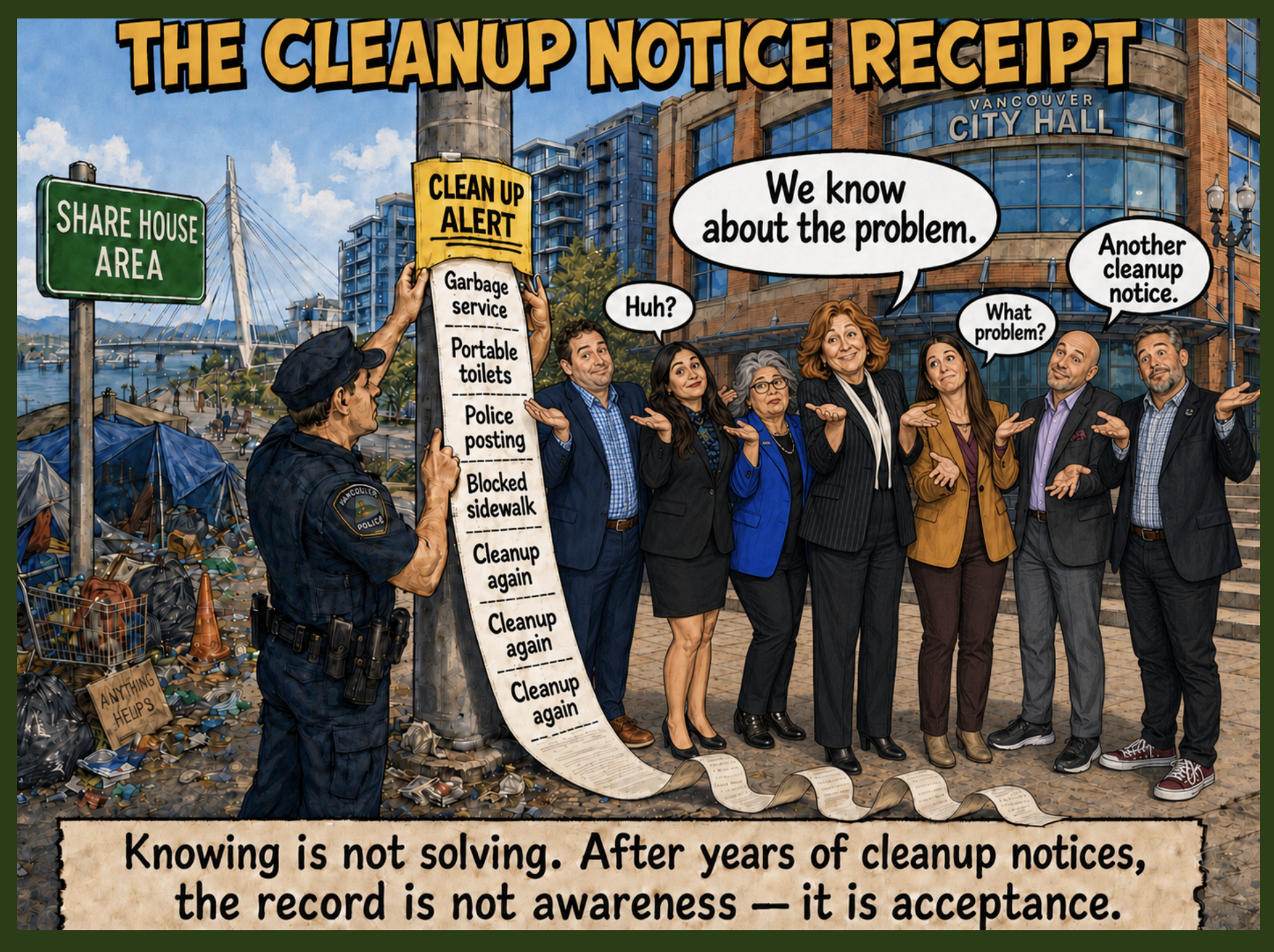
The response from city officials has often been: “We know about it.”
Now the public record proves they do. (Freedom of Information Act records)
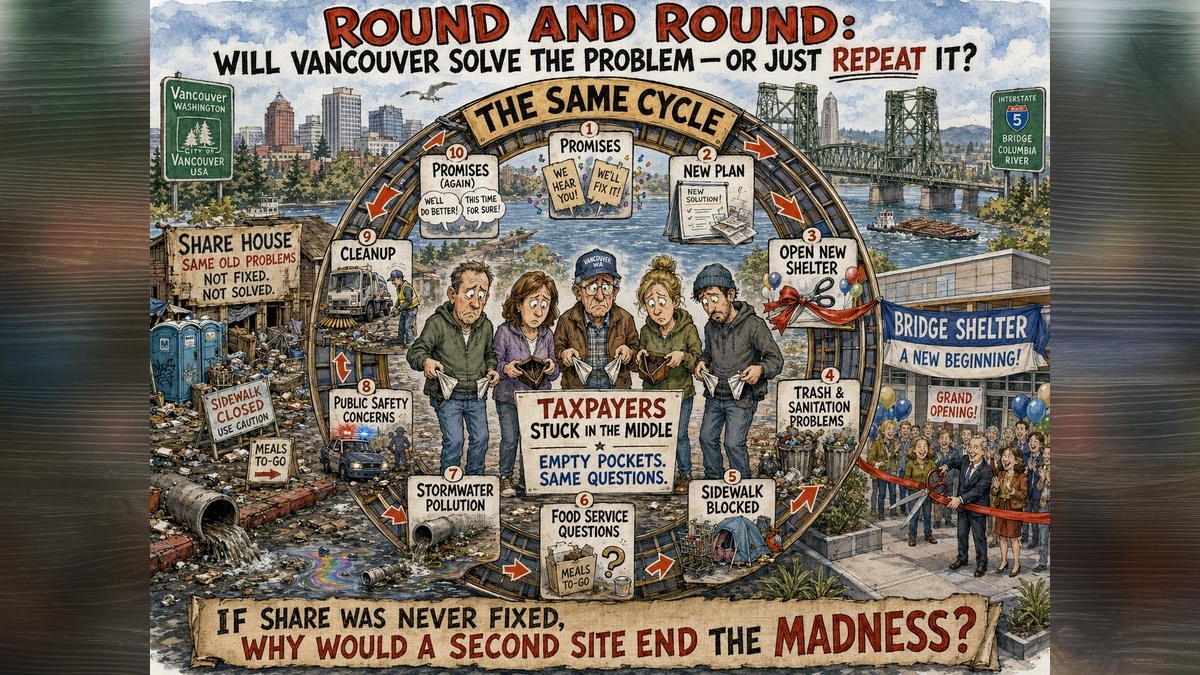
A photo collection obtained through public records shows over 5000 of the city’s own police photos of repeated cleanup notices, tents, tarps, carts, garbage, blocked sidewalks, debris, and the same basic conditions returning again and again. These are not just my pictures. These are Vancouver’s records. The city photographed it, posted notices, cleaned it, paid for it, and watched the cycle repeat.
That changes the issue.
This is no longer a resident complaint. It is official documentation of a repeated failure.
The public cost is larger than the cleanup bill:
- BLOCKED SIDEWALKS & LOST ADA ACCESS
- GARBAGE & SANITATION RISKS
- STORMWATER POLLUTION CONCERNS
- PFAS CONCERNS FROM OUTDOOR GEAR, TARPS, TENTS & STREET DEBRIS
- POLICE TIME SPENT POSTING REPEAT NOTICES
- IMPACTS ON NEARBY RESIDENTS & BUSINESSES
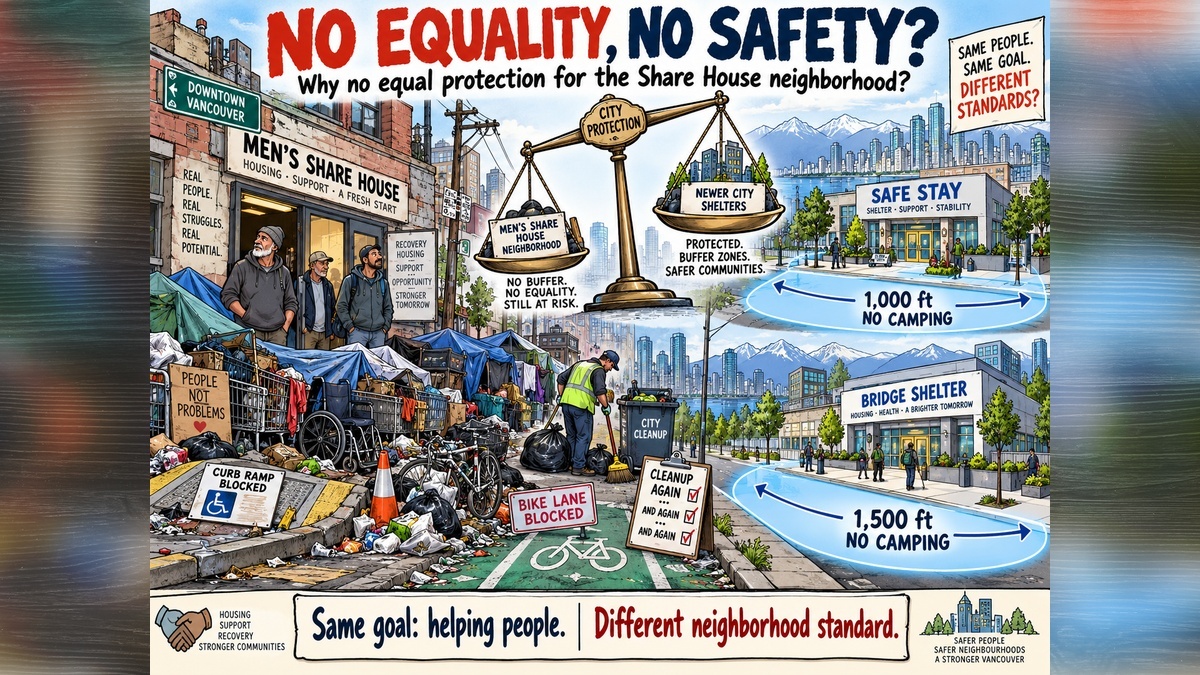
- UNEQUAL ENFORCEMENT OF BASIC LAWS & RULES
- LOSS OF PUBLIC TRUST
Most residents and businesses follow the rules because we are required to. We keep sidewalks clear. We manage garbage. We pay taxes, permits, fees, utility bills, and cleanup costs. If we created the same conditions year after year, the City would not treat it as normal.
But the Share House area appears to have been managed under a different standard.
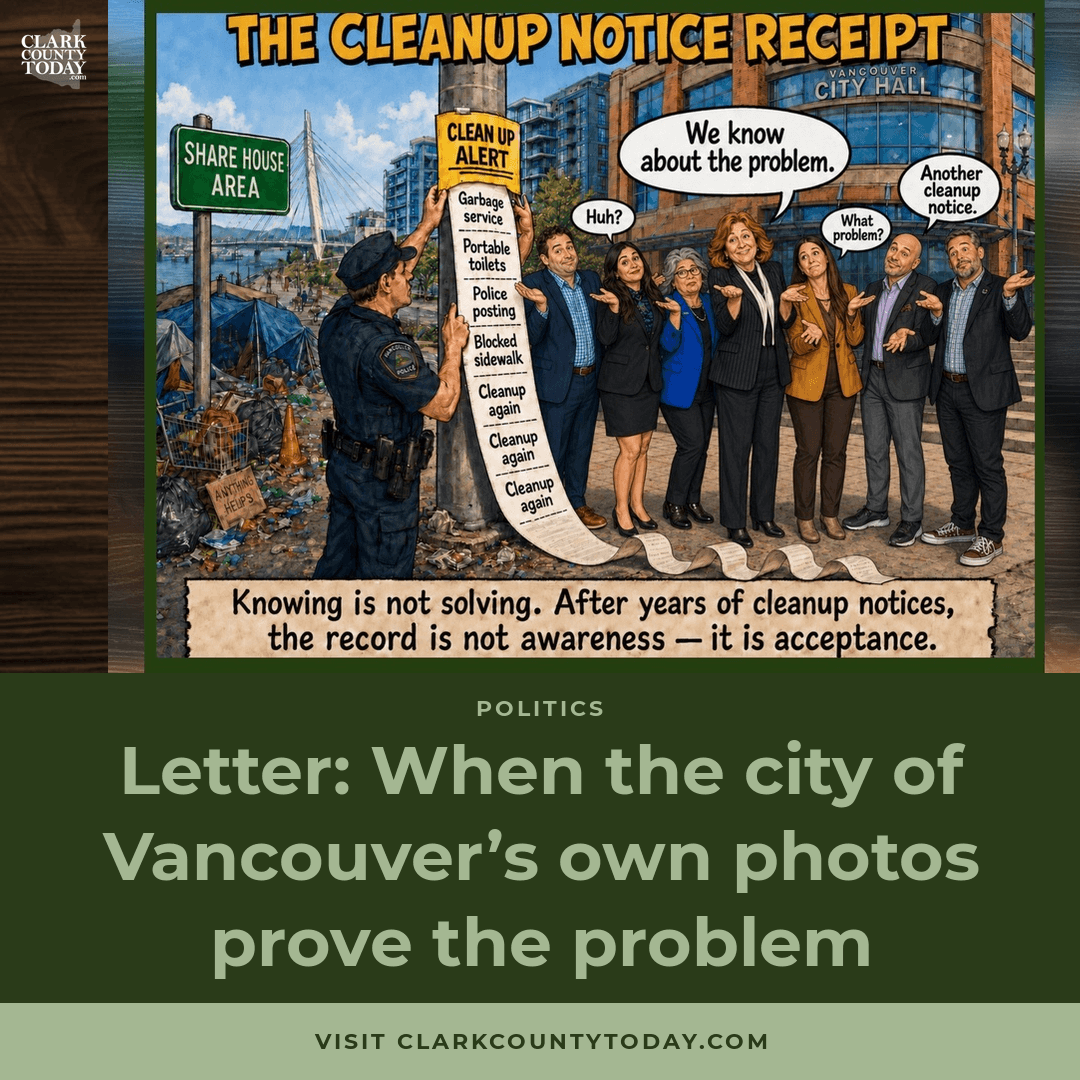
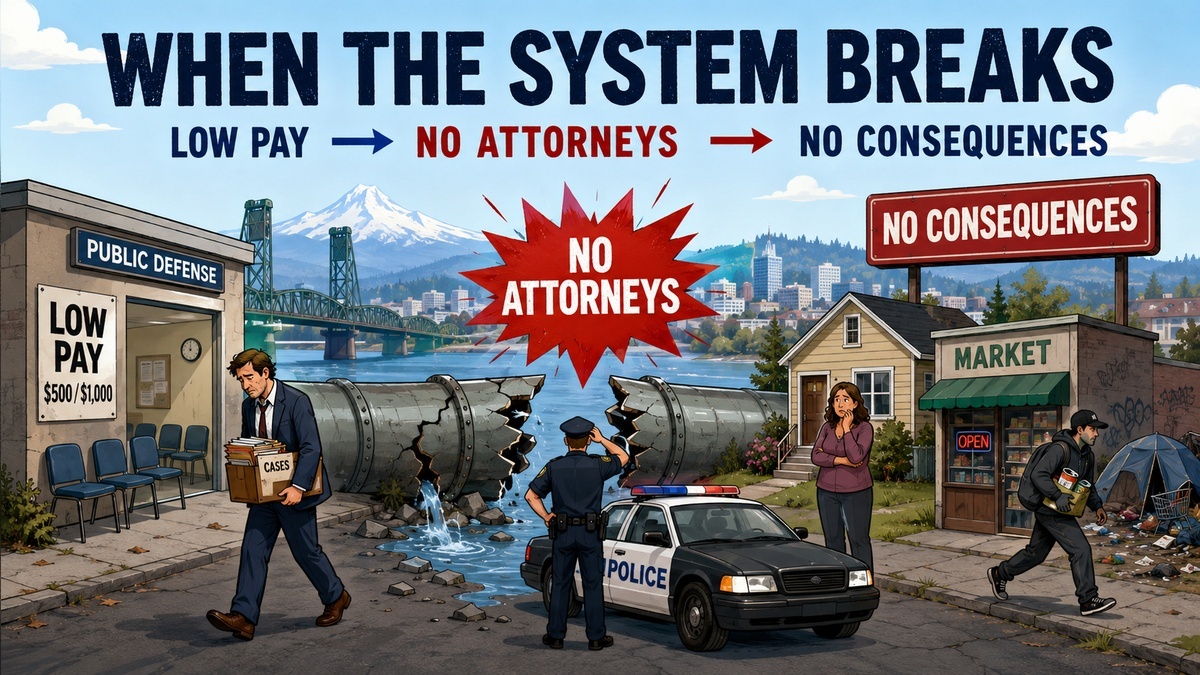
A cleanup notice is not a solution.
It is a receipt.
It proves the city knew the problem existed.
The question for City Hall is simple:
What is the true public cost of not enforcing basic rules against repeated behavior?
Not just in dollars.
In pollution. In blocked sidewalks. In public health. In police time. In neighborhood decline. In unequal enforcement. In trust.
Compassion should mean helping people move out of unsafe conditions. It should not mean allowing sidewalks, stormwater systems, neighborhoods, and taxpayers to carry the same burden year after year.
The City’s own pictures now tell the story.
Vancouver has documented the problem.
Peter Bracchi
Vancouver
Comments
Loading comments…