
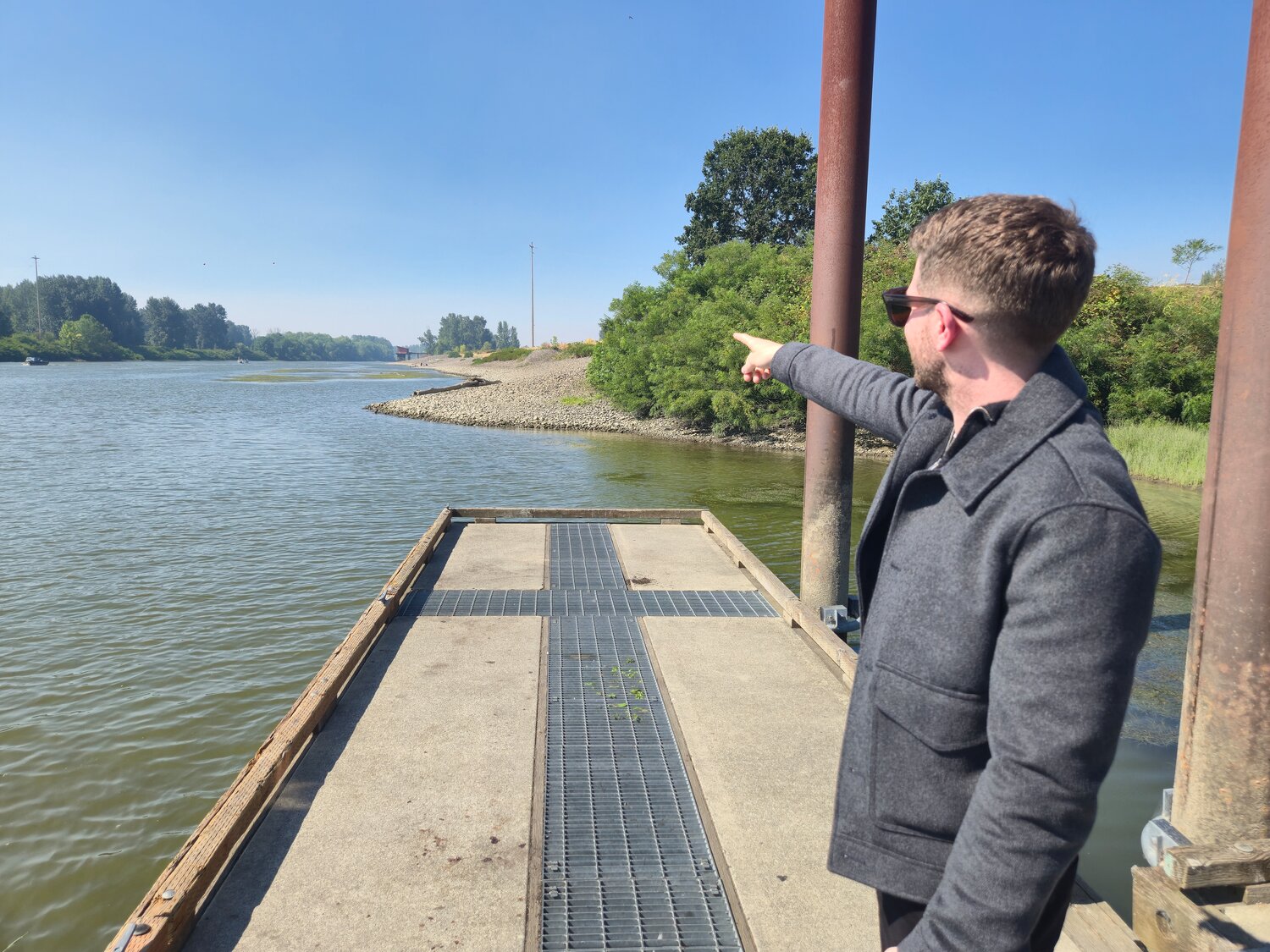
Ethan Perry discusses desired improvements to the current day dock to add capacity. Photo courtesy of the Port of Ridgefield
The port's vision for the waterfront has evolved since the commission first outlined it more than 20 years ago
Summer Sorenson
for The Reflector Newspaper
Ethan Perry, executive director for the Port of Ridgefield, has a phrase he returns to when explaining the port’s waterfront plans: a "21st century working waterfront."
The land where hotel guests, office workers and residents may one day walk once housed Pacific Wood Treating, an industrial operation whose contamination was capped rather than fully removed — leaving covenants on what can be built, and where, that still apply today.
Going back to an industrial model, Perry says, was never really on the table.
"That is not what the community wants," he said. "If we were to go back to industry, we would have to close off the park."
The port's vision for the waterfront has evolved since the commission first outlined it more than 20 years ago, shaped along the way by market demand data, community feedback and Washington state growth mandates. The waterfront is zoned for mixed use, supporting the port’s mission for economic development.
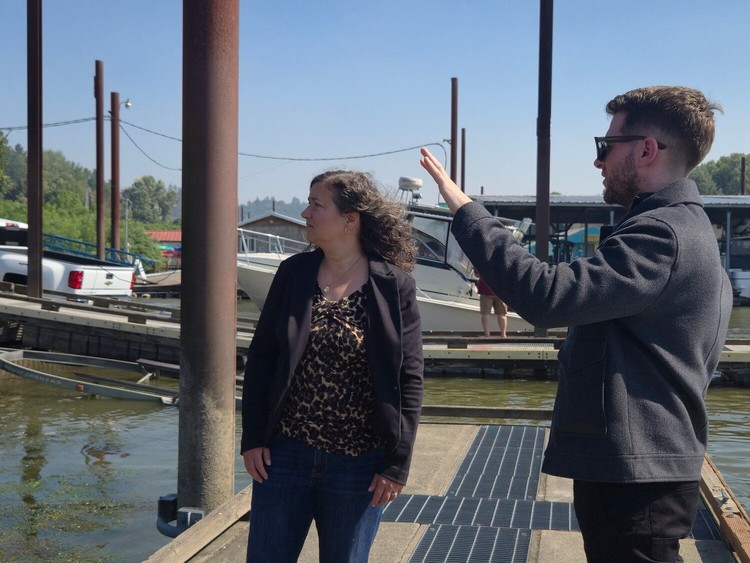
Ethan Perry explains planned boat launch improvements to Summer Sorensen of The Reflector. Photo courtesy of the Port of Ridgefield
Abbi Russell, the port’s administration and operations manager, cited market data drawn from an annual survey conducted by the Urban Land Institute (ULI) showing that mixed-use waterfronts with residential outperform those without, because residents "activate the space" beyond the eight-hour office day or transient hotel traffic — visiting coffee shops and restaurants, walking trails throughout the day.
Among several comparable waterfront projects Russell cited, she pointed to Independence, Oregon — a former concrete plant redeveloped into a mixed-use waterfront district — as one of the more directly comparable projects, calling it "kind of a mid-century downtown, much like Ridgefield."
Growth mandates and land stewardship
The waterfront redevelopment is shaped in part by a citywide growth mandate. Washington's Growth Management Act requires cities and counties to plan for future development, and Ridgefield's 2025-2045 comprehensive plan calls for the city to accommodate more than 10,600 new residents and roughly 5,800 new housing units over the next 20 years. The port has pointed to that mandate as one reason its waterfront property has a role to play in meeting the city's housing and job needs.
The Port of Ridgefield has worked with the city, the Washington Department of Ecology and the U.S. Fish and Wildlife Service — which oversees the adjacent Ridgefield National Wildlife Refuge — as it refines its plans, addressing environmental oversight tied to the site's contaminated past and its proximity to protected wildlife habitat.
Public access and amenities
The port's boat launch has long been accessible to the public, even before 2015, when the port opened the rest of the waterfront site to the community for the first time in nearly a century. But the launch is already showing its limits. It has room for only one boat to queue at a time; Perry said a planned extension would allow space for two or three, cutting down on backups during peak days. Parking is similarly strained: the lot's 28 spaces are sufficient about 90% of the time, Perry said, but overflow is needed on about 70 days a year, driven largely by regional fishing seasons and a broader shortage of boat access points along the Columbia River corridor.
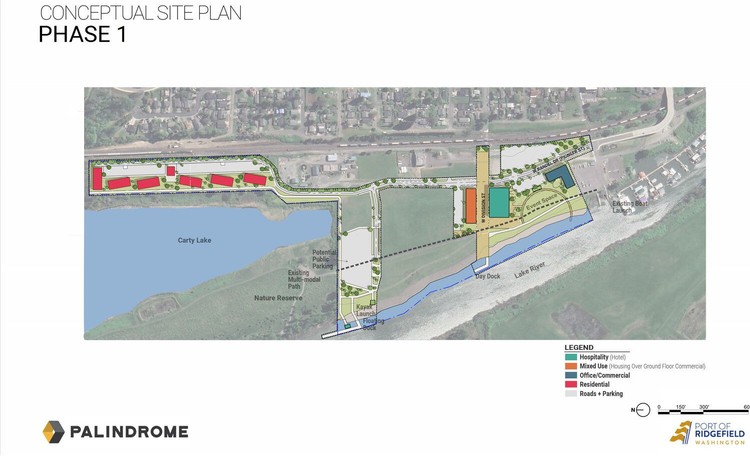
Current conceptual site plan for Phase 1 of development. Photo courtesy of the Port of Ridgefield
The port's redevelopment plans include an ADA-accessible kayak launch and additional day dock capacity, improvements Russell said depend on lease revenue generated by the waterfront development itself. Financially, the boat launch operates at a loss: it generates roughly $120,000 a year in annual and daily use pass sales, against about $180,000 a year in maintenance, staffing and operating costs.
"It's a loss leader," Perry said, one the port subsidizes with tax dollars to keep the service available.
Residential density
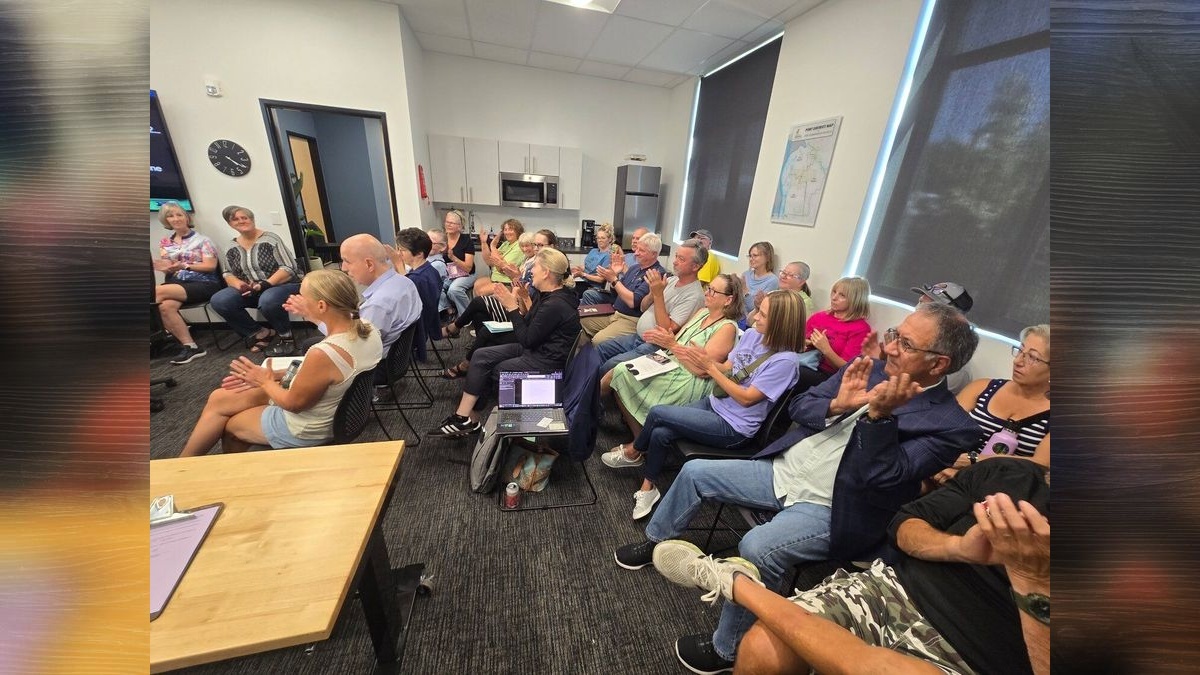
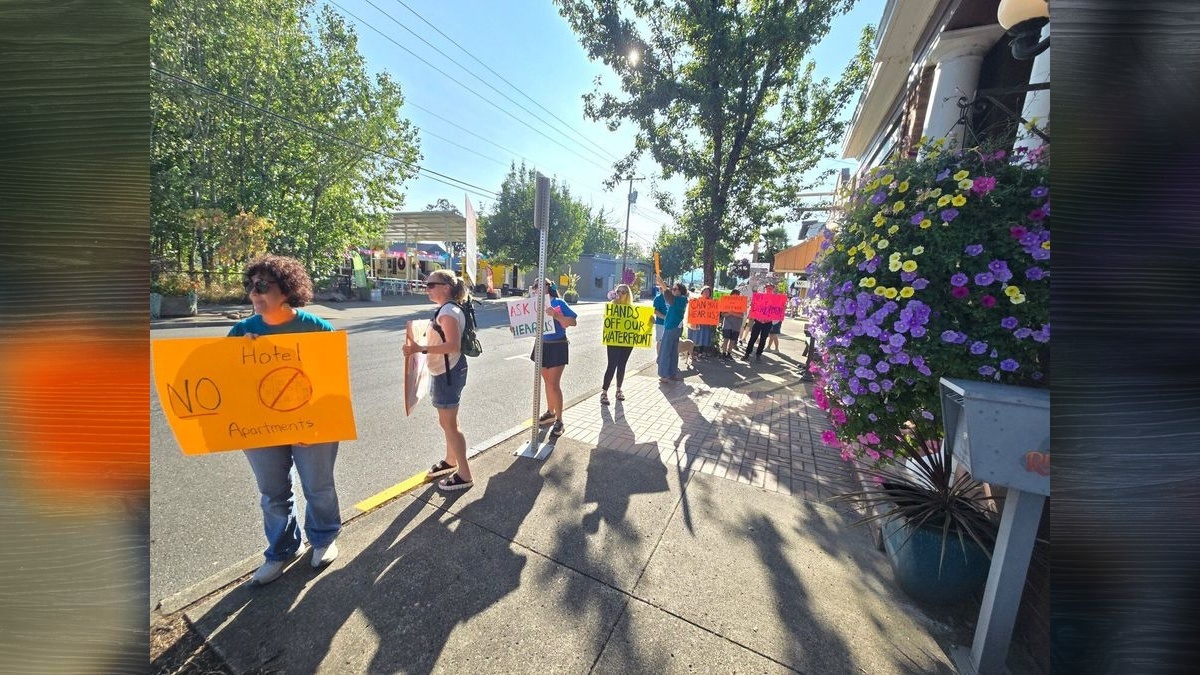
Building residential space on the waterfront has drawn consistent pushback — in questions raised at a recent Lions Club meeting, in comments on social media, and in letters to the editor — with many residents opposed to the idea. The number of residential units to be built in Phase 1 is still undecided, but the port did confirm that the total buildout for the project will be 250-350 overall.
Responding to criticism
The port has heard the criticism that the public engagement period amounts to little more than a formality — feedback collected after the plans are effectively already set.
Russell called that "an incorrect assumption."
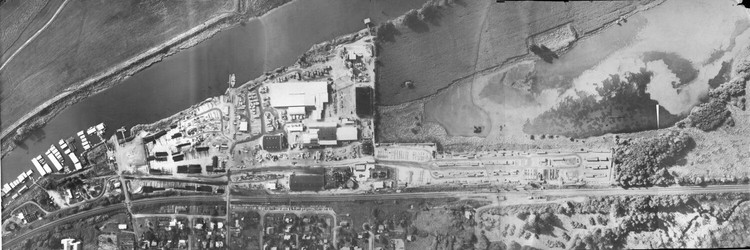
Earlier aerial shot of the property when it was Pacific Wood Treating. Photo courtesy of the Port of Ridgefield
"We are listening," she said, noting the port represents 26,000 people across a 55-square-mile district and is working to reach as many perspectives as possible.
She added that the port doesn't make major decisions "under pressure" and doesn't expect the final plan to satisfy everyone:
"We won't get everything we want ... but we believe that we can find middle ground and address many of the concerns and move forward with a great development."
Perry echoed that the pace is deliberate, not evasive. Reaching a decision means coordinating with multiple parties before the port can respond to specific concerns.
"People want us to make adjustments or respond immediately," he said, "but we need to hear from everyone."
What’s next
The port continues to gather public feedback until Aug. 17, when its waterfront development survey closes. After that time, it will take a month or so to analyze the results of the feedback they’ve received and set a community meeting for this fall to share the results and how they have impacted the planning process. Residents are encouraged to share their opinions on the survey, hosted on portridgefield.org.
Comments
Loading comments…